Stories
Yunus and the Whale
The Quranic account of the Prophet Yunus (Jonah): his mission to Nineveh, his departure before permission was given, the ship and the sea, the darkness inside the whale, the supplication "There is no deity except You, glory be to You; indeed I was among the wrongdoers", and the rescue that ended with the faith of his people.

The story narration voice is machine-generated. The text is human-written and reviewed, and Quran verses are recited by a verified reciter.
Chapter 1
Nineveh: A City on the Edge of Punishment
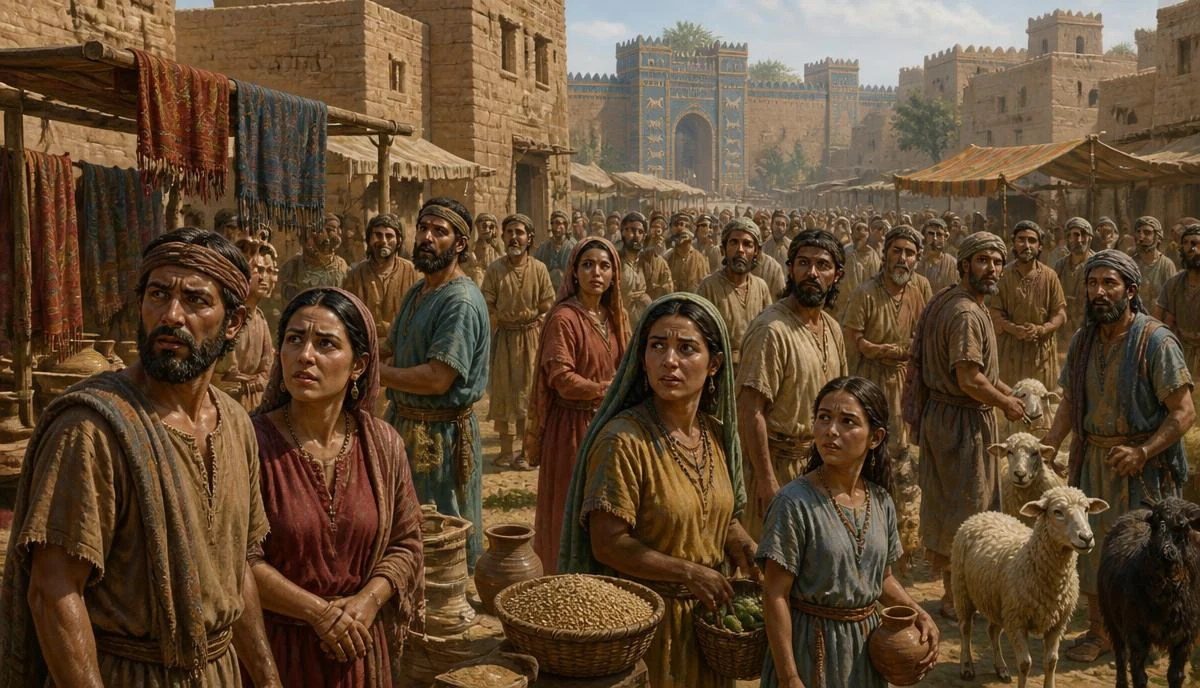
God sent His prophet Yunus (Jonah), peace be upon him, to the people of Nineveh, a great city in the land of Mosul. They had fallen into idolatry and turned away, so a prophet came to remind them, to warn them, and to call them to the worship of God alone.
Years passed with the same call repeated: a reminder of blessings, a warning against heedlessness, an invitation to abandon what brings no benefit. Their answer was persistence and mockery, until it seemed to their prophet that the hearts had closed and that the argument had run its full course.
Here appears the first lesson of the story: the one who calls to God is human, he grows tired and grieves, and the weight of repeated rejection is not light. Yet the measure of success in calling to God is not the number who respond, but steadfastness in delivering the message until God's decree arrives.
God mentioned this city in His Book in a distinctive way, making its outcome an exception among the nations: an entire people who recognised the danger at the last moment and were saved. For that reason this is not read as a story of punishment, but as a story of mercy opened to whoever returns.
To see the full context, begin from the source: read Surah As-Saffat in full, the chapter that presents the scene of this story from beginning to end.
Lessons
- Calling to God is a duty to convey, not a guarantee of response
- Repeated rejection does not mean the door of mercy is shut
- Nineveh is the model of a nation saved by returning at the last moment
Chapter 2
Departure Before Permission and a Ship in a Raging Sea

Yunus, peace be upon him, left his people in anger, thinking the punishment had already fallen upon them, and he did not wait for God's permission to depart. God described that departure as a leaving in anger, by one who thought the matter would not be tightened upon him.
He travelled until he reached the coast, where he found a loaded ship preparing to sail, and he boarded it. Then the wind rose, the waves grew high, and the ship became so heavy that those aboard feared drowning. They drew lots to decide who should go overboard to lighten the load, and the lot fell upon him, as God recounts:
Open surahSurah As-Saffat 37:141
Verified recitation
فَسَاهَمَ فَكَانَ مِنَ ٱلْمُدْحَضِينَ
And he drew lots and was among the losers.
Notice how destiny moves without a sound: a departure carrying haste, then a ship, then a lot, then the sea. There is no announced punishment, only an arrangement that leads the servant to the place of his training.
The verses make clear that Yunus was neither a disbeliever nor a rejecter of his mission; he was a noble prophet who hastened a matter before its time. The correction therefore came through gentle mercy, not through a seal of wrath. This is an essential difference between the shortcoming of a believer and the insistence of one who turns away.
A practical lesson follows: haste runs ahead of knowledge, and waiting for permission is part of obedience. When your heart is unsettled at a moment of decision, return to the prayer times and stand before God before you move.
Lessons
- Haste before permission opens the door to a flawed decision
- Destiny leads the servant to the place of his training without noise
- A believer's shortcoming is corrected by mercy, not by rejection
Chapter 3
Three Layers of Darkness: Inside the Whale

Yunus, peace be upon him, went down into the water, and God sent a great whale that swallowed him. God said:
Open surahSurah As-Saffat 37:142
Verified recitation
فَٱلْتَقَمَهُ ٱلْحُوتُ وَهُوَ مُلِيمٌۭ
Then the fish swallowed him while he was blameworthy.
This was not death, but a temporary confinement in a place no human being can reach.
Picture the situation: the darkness of the night, the darkness of the sea, the darkness inside the whale. No sound, no light, no direction to guide by. Every material means was cut off at once, and nothing remained except God.
Here a subtle truth appears: the narrowest of places can be the widest door of mercy. When the means are stripped away, the heart has no refuge but the Creator of means, and this is the purest form of monotheism.
The whale was not a blind punishment; it was a wall that preserved and carried. The sea that had threatened destruction became a path, and the creature that inspired fear became a vessel. This is how God rearranges things for the one He wills to save.
A lesson follows: states of hardship are not always a sign of displeasure; they may be preparation for a great act of worship. If you find yourself in darkness, begin where he began: with remembrance. Browse the azkar and supplications and let your tongue work when every other means has stopped.
Lessons
- When means are cut off, the reality of monotheism in the heart is revealed
- The narrowest place can be the widest door of mercy
- Hardship may be preparation for great worship, not a sign of wrath
Chapter 4
The Supplication of the Distressed: No Deity Except You

In that darkness Yunus called upon his Lord with words that became, ever after, a method for every afflicted soul:
Open surahSurah Al-Anbya 21:87
Verified recitation
وَذَا ٱلنُّونِ إِذ ذَّهَبَ مُغَٰضِبًۭا فَظَنَّ أَن لَّن نَّقْدِرَ عَلَيْهِ فَنَادَىٰ فِى ٱلظُّلُمَٰتِ أَن لَّآ إِلَٰهَ إِلَّآ أَنتَ سُبْحَٰنَكَ إِنِّى كُنتُ مِنَ ٱلظَّٰلِمِينَ
And [mention] the man of the fish, when he went off in anger and thought that We would not decree upon him, and he called out within the darknesses: There is no deity except You; glory be to You. Indeed, I have been among the wrongdoers.
Consider the structure of this supplication. It begins with monotheism, placing nothing before his need except his Lord alone. Then comes glorification, declaring God free of every deficiency and accepting that what happened was justice and wisdom. Then comes confession of his own wrongdoing, with no excuse, no justification, and no blame placed on anyone else.
He did not explicitly ask for rescue. This is a high courtesy: whoever truly knows his Lord knows that confession is itself a request, and that monotheism is the strongest intercession a servant can bring.
God then said:
Open surahSurah Al-Anbya 21:88
Verified recitation
فَٱسْتَجَبْنَا لَهُۥ وَنَجَّيْنَٰهُ مِنَ ٱلْغَمِّ ۚ وَكَذَٰلِكَ نُـۨجِى ٱلْمُؤْمِنِينَ
So We responded to him and saved him from the distress. And thus do We save the believers.
The verse was made general rather than particular, meaning this door remains open to every believer until the Last Day. A hadith records that no Muslim supplicates with the supplication of the man of the fish about anything without being answered.
Had he not already been in a state of glorification, the matter would have been heavier, which is why God said:
Open surahSurah As-Saffat 37:143-144
Verified recitation
فَلَوْلَآ أَنَّهُۥ كَانَ مِنَ ٱلْمُسَبِّحِينَ لَلَبِثَ فِى بَطْنِهِۦٓ إِلَىٰ يَوْمِ يُبْعَثُونَ
And had he not been of those who glorify God, he would have remained inside it until the Day they are resurrected.
Glorification before affliction is a balance spent at the time of hardship. Keep a daily portion of azkar and recitations before you need it.
Lessons
- Supplication begins with monotheism and glorification, then confession
- Admitting fault without justification is the nearest path to a response
- Glorification in ease is a balance spent in hardship
Chapter 5
The Shore and the Plant: Mercy After Rescue

God answered his supplication and commanded the whale to cast him onto the shore. God said:
Open surahSurah As-Saffat 37:145
Verified recitation
۞ فَنَبَذْنَٰهُ بِٱلْعَرَآءِ وَهُوَ سَقِيمٌۭ
But We threw him onto the open shore while he was ill.
He came out weak, like a featherless chick, unable to move, unable to bear heat or wind.
Mercy did not stop at rescue from drowning; the care continued into the details:
Open surahSurah As-Saffat 37:146
Verified recitation
وَأَنۢبَتْنَا عَلَيْهِ شَجَرَةًۭ مِّن يَقْطِينٍۢ
And We caused to grow over him a gourd vine.
A plant with broad leaves to shade him and protect his body. The One who brought him out of the darkness is the One who grew the shade for him.
This carries a precise meaning: God's generosity does not merely solve the great problem, it attends to what comes after it. Many people are saved from a crisis and then forget that the stability which follows is a second blessing requiring its own gratitude.
In Surah Al-Qalam the Prophet, peace be upon him, is directed to be patient with a mention of Yunus:
Open surahSurah Al-Qalam 68:48-49
Verified recitation
فَٱصْبِرْ لِحُكْمِ رَبِّكَ وَلَا تَكُن كَصَاحِبِ ٱلْحُوتِ إِذْ نَادَىٰ وَهُوَ مَكْظُومٌۭ لَّوْلَآ أَن تَدَٰرَكَهُۥ نِعْمَةٌۭ مِّن رَّبِّهِۦ لَنُبِذَ بِٱلْعَرَآءِ وَهُوَ مَذْمُومٌۭ
So be patient for the decision of your Lord, and be not like the companion of the fish, when he called out while he was distressed. Had a favour from his Lord not reached him, he would have been thrown onto the open shore while blamed. But his Lord chose him and made him of the righteous.
It was that reaching favour which turned the situation from blame into being chosen.
A lesson follows: returning to God does not lower one's rank; it may raise it. God did not dismiss His prophet after the incident, but chose him and returned him to his mission.
Lessons
- God's mercy attends to the details that follow rescue
- Stability after a crisis is a second blessing deserving gratitude
- Returning to God raises one's rank rather than lowering it
Chapter 6
The Nation That Was Saved: The Faith of Nineveh
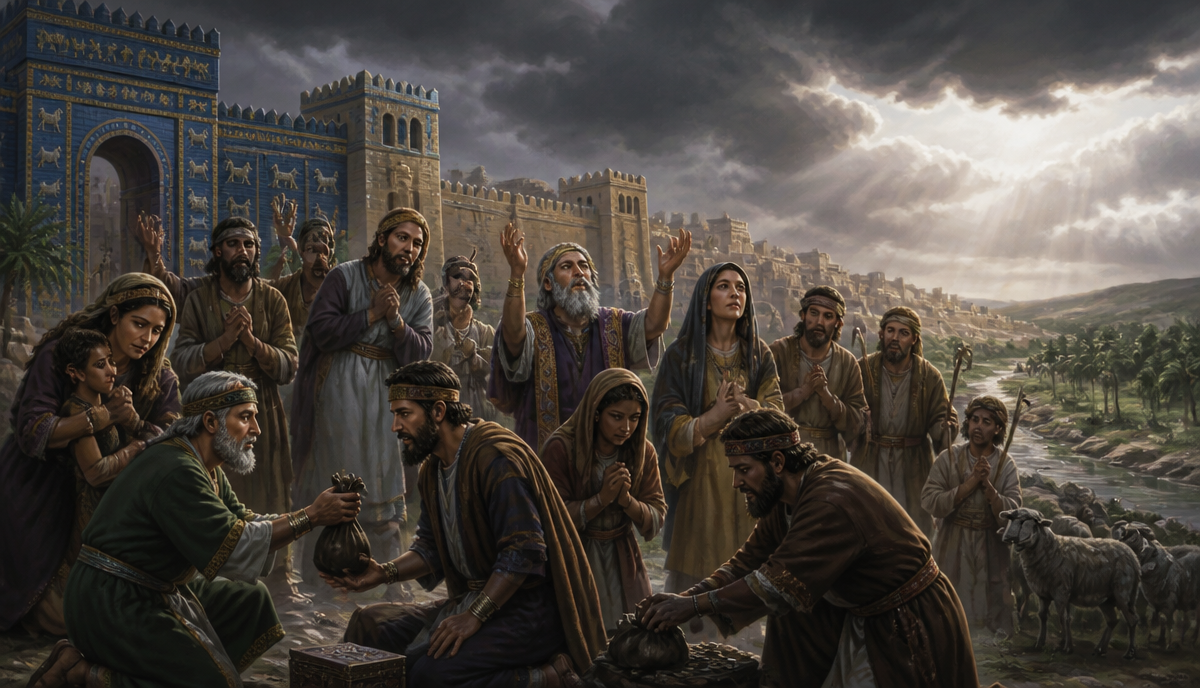
As for his people, something happened among them that had not happened to any nation before. They saw the signs of the coming punishment, so they all went out, young and old, raising their voices in repentance, restoring what they had wrongfully taken and abandoning what they had been upon, and God lifted the punishment from them.
God said:
Open surahSurah Yunus 10:98
Verified recitation
فَلَوْلَا كَانَتْ قَرْيَةٌ ءَامَنَتْ فَنَفَعَهَآ إِيمَٰنُهَآ إِلَّا قَوْمَ يُونُسَ لَمَّآ ءَامَنُوا۟ كَشَفْنَا عَنْهُمْ عَذَابَ ٱلْخِزْىِ فِى ٱلْحَيَوٰةِ ٱلدُّنْيَا وَمَتَّعْنَٰهُمْ إِلَىٰ حِينٍۢ
Then has there not been a town that believed so that its faith benefited it, except the people of Yunus? When they believed, We removed from them the punishment of disgrace in worldly life and gave them enjoyment for a time.
They were the exception mentioned in order to prove that the door of repentance stays open until the final moment.
Their prophet then returned to them and found what he had not expected: a people who believed. Here the lesson is completed, for what he took to be an ending was a beginning, and what he counted as a closed door was a delay in timing rather than a refusal of the message.
In summary the story teaches three things: perfect the delivery of the message and do not hasten the result, keep a portion of glorification before affliction descends, and think well of God, for His mercy is wider than our calculations.
Continue reading from the source: read Surah As-Saffat and read Surah Yunus, listen to the recitations, and follow other stories with the same meaning: the People of the Ditch, Nuh and the Flood, and the Islam of Umar ibn al-Khattab.
Questions people often ask
Which prophet was swallowed by the whale?
Yunus, peace be upon him. The Quran calls him Dhun-Nun, the companion of the great fish, and an entire chapter carries his name.
How long did he stay inside?
The Quran gives no fixed period, saying only that had he not been among those who glorify God he would have remained until the Day of Resurrection. Reports naming a number of days are the estimates of commentators, not definitive texts.
What was the prayer that saved him?
In the darkness he called out: "There is no god but You, glory be to You, I have indeed been among the wrongdoers" - oneness, praise and admission together.
Lessons
- The door of repentance stays open until the final moment
- What a caller takes to be an ending may be a beginning
- God's mercy is wider than human calculations
Interactive quiz
Answer the questions below, then check your answers. No account needed.
1. To which city was Yunus sent?
2. How did those on the ship decide who would go overboard?
3. What was cut off from Yunus inside the whale?
4. How did Yunus begin his supplication?
5. What did God grow over him after he was cast onto the shore?
6. What distinguished the people of Yunus from other nations?
The illustrations are our own, free of copyright restrictions, and do not depict identified religious figures.
Related stories

Data sources
- Surah Yunus 10:98
- Surah Al-Anbiya 21:87-88
- Surah As-Saffat 37:139-148
- Surah Al-Qalam 68:48-50
- Tafsir Ibn Kathir
- Tafsir al-Tabari