Stories
Nuh (Noah) and the Flood
The story of Prophet Nuh (Noah), peace be upon him, and the Flood: a patient call to God that lasted centuries, an ark built on dry land, a flood that cleansed the earth, and deliverance for the believers. Seven chapters with Quranic references, lessons, and an interactive quiz.
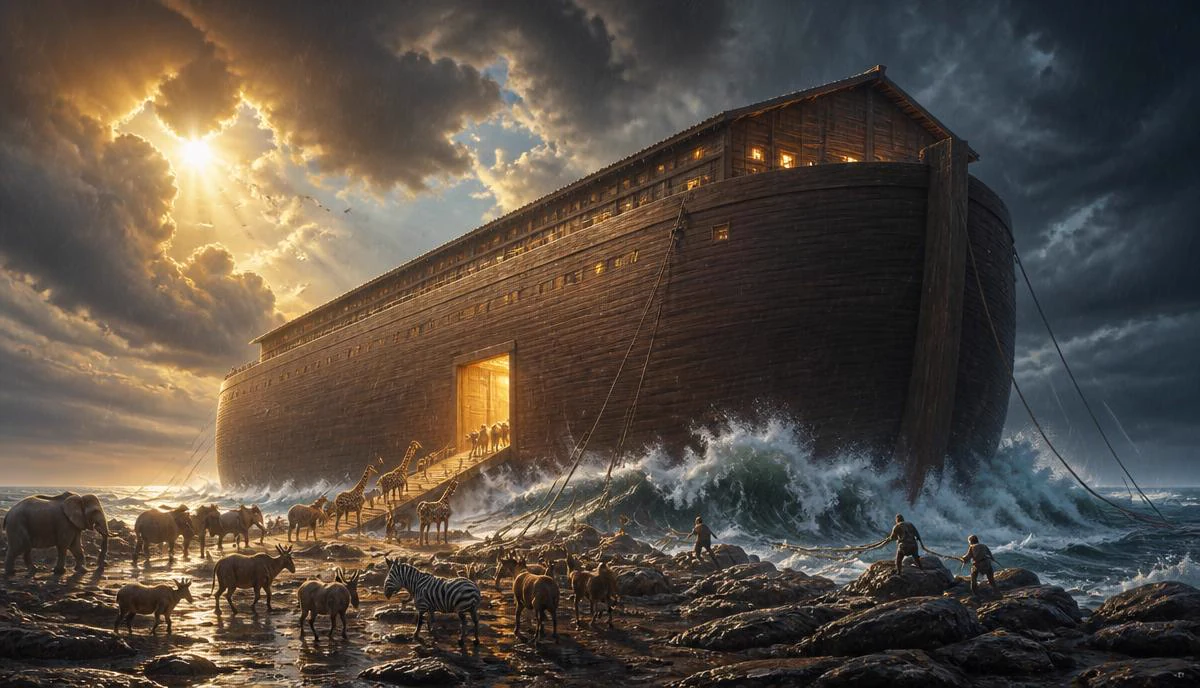
The story narration voice is machine-generated. The text is human-written and reviewed, and Quran verses are recited by a verified reciter.
Chapter 1
The First Messenger to the Earth
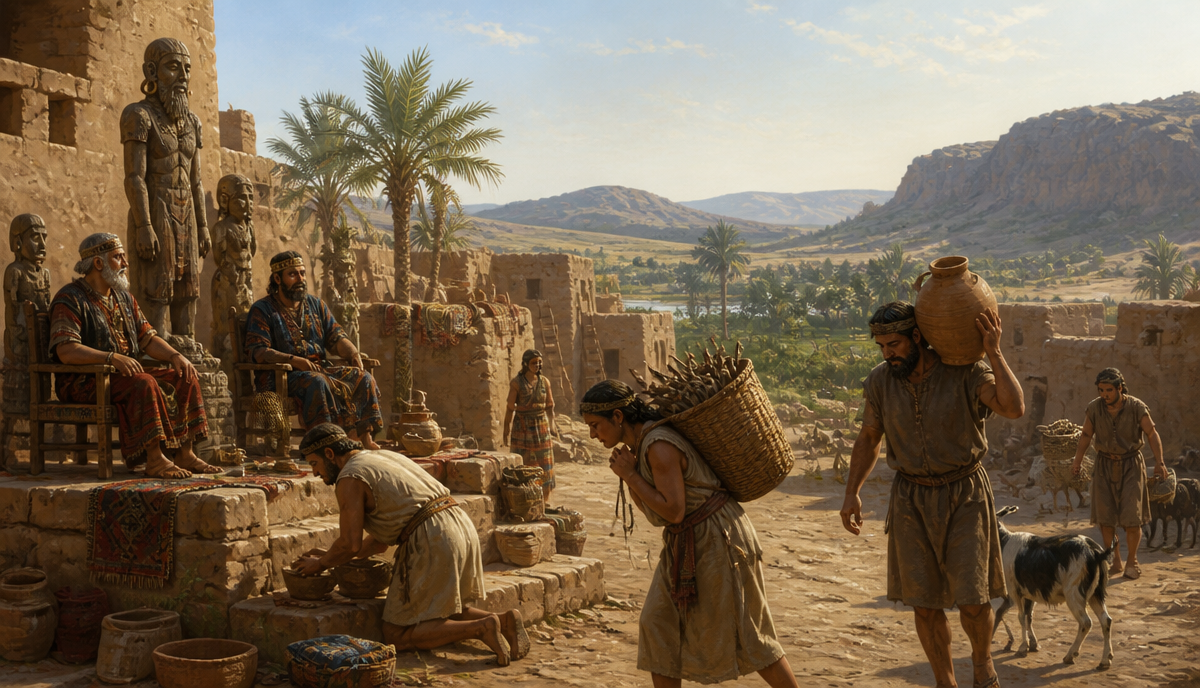
Long generations passed between Adam, peace be upon him, and Nuh, peace be upon him, and during them people held to the oneness of God. Then deviation crept in little by little: people exaggerated the honour they gave their righteous men, then made images of them, then worshipped those images after them, until idols were being called upon and hoped in besides God. The Quran names some of them: Wadd, Suwa, Yaghuth, Yauq and Nasr.
In that darkness God chose Nuh, peace be upon him, and he became the first messenger sent to the people of the earth after idolatry had spread. He came to them with one clear word: worship God alone, He has no partner and no equal. He asked them for no wealth and no status, and he did nothing beyond sincere advice and clear conveyance.
Lessons
- Deviation from the oneness of God starts small and grows with time
- The first thing prophets call to is the oneness of God, not only material reform
- A call to truth begins with clarity, not with flattery
Chapter 2
A Thousand Years Less Fifty
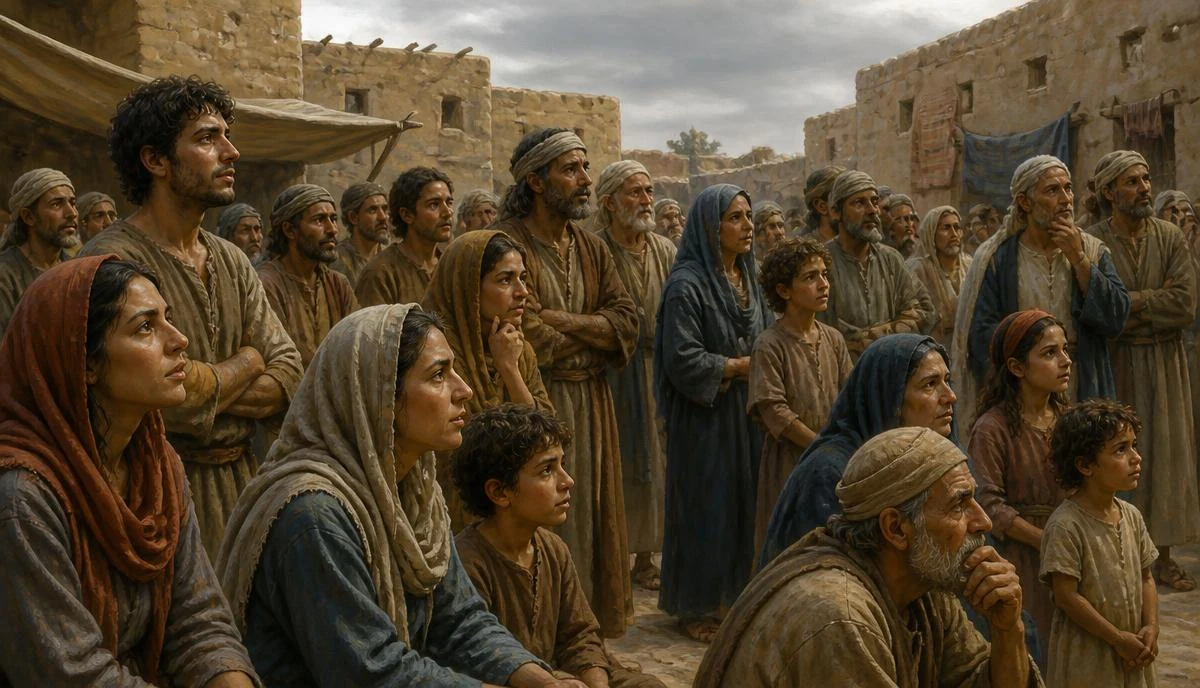
Nuh, peace be upon him, called his people by night and by day, in secret and openly. He tried every door with them: encouraging them with forgiveness and abundant provision, and warning them of the punishment of a mighty day. He told them that seeking forgiveness would open the sky to them with rain and increase them in wealth, children, gardens and rivers.
And what was their answer? They put their fingers in their ears, wrapped themselves in their garments so as not to see him, and grew utterly arrogant. They said: we see you as nothing but a man like us, and we see none following you but the poor and the weak. They accused him of error and madness, and mockingly demanded the punishment.
He remained among them a thousand years less fifty, never wearying and never changing his message. That number alone is a lesson in what patience means: nine hundred and fifty years of calling, and only a few believed with him.
Lessons
- Patience in calling to God is measured in years, not days
- The number of opponents does not make the truth weak
- Arrogance is the first veil that blocks guidance
Chapter 3
Build the Ark
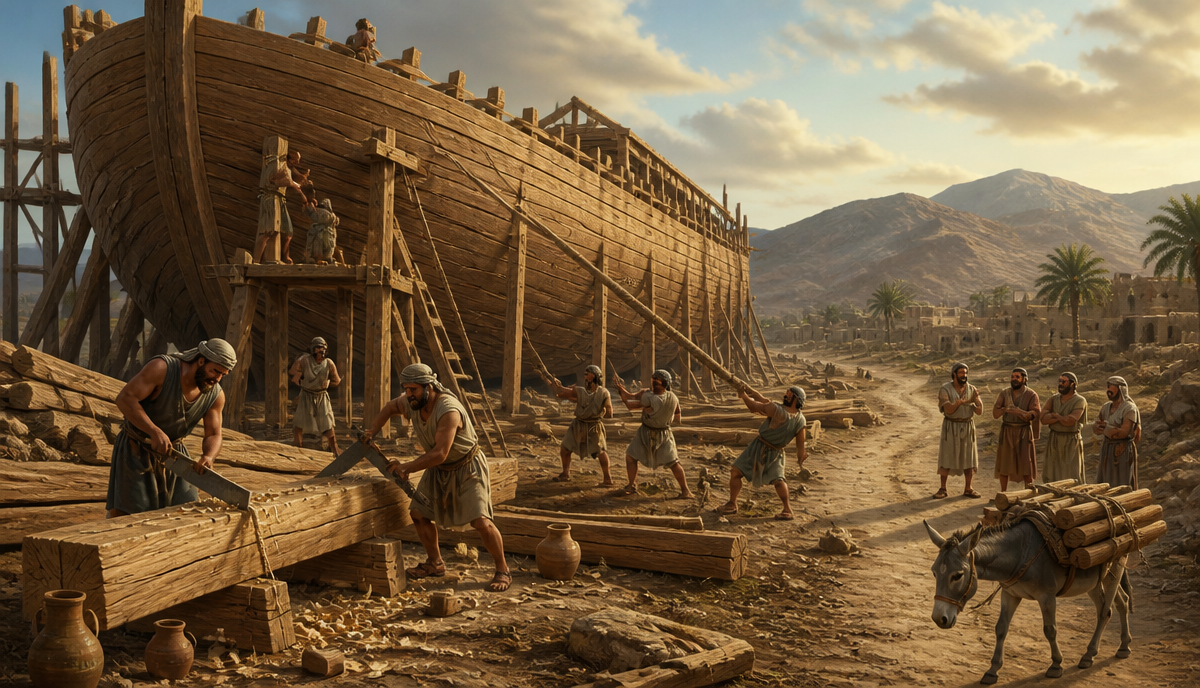
When there was no longer any hope that they would believe, God revealed to Nuh that he should not grieve: none of your people will believe except those who have already believed. He was commanded to build the ark under God's watchful care and revelation, and told not to plead any further for the wrongdoing people.
So he began building a great ship on dry land, far from the sea. Every time a group of his people passed by they mocked him: a prophet turned carpenter, a ship in the desert. His answer was calm: if you mock us, we will mock you as you mock, and you will come to know who will receive a lasting punishment.
Building the ark was itself a test: long, hard work with no visible result, accompanied by daily ridicule. But Nuh worked because God commanded it, not because people understood it.
Lessons
- Obedience is carried out when God commands, not when people are convinced
- Mockery is the weapon of the one who has no argument
- Righteous work can look meaningless until its time arrives
Chapter 4
The Water Gushed Forth
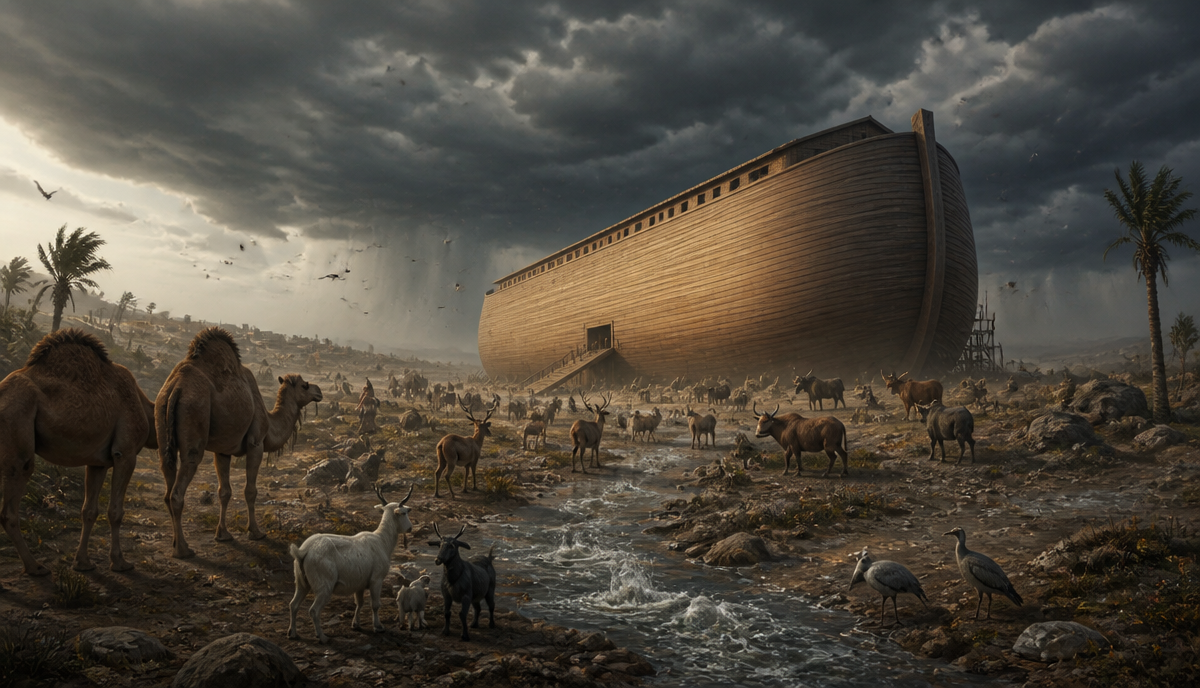
The promised sign came: the oven gushed forth, the gates of the sky opened with pouring water, and the earth burst with springs, so the descending water met the rising water by a decree already measured.
Nuh was commanded to carry in the ship a pair of every kind, and his family except those against whom the word had already gone forth, and those who believed with him. They boarded as he said: in the name of God is its sailing and its mooring. It carried them through waves like mountains, with the sky pouring down and the earth bursting open, and no refuge except a small ship in a raging ocean.
That scene divided two eras: the long era of warning, and the era of a judgement that is not reversed.
Lessons
- God's promise arrives in its own time, not in ours
- Safety is built before the trial comes, not after it
- Reliance on God begins with action, then with His name and trust
Chapter 5
My Son, Embark With Us

In the hardest moments a painful human dimension appeared. Nuh saw his son standing apart from the ship, and called him with the tenderest words a father can use: my son, embark with us and do not be with the disbelievers.
The son answered like someone who trusts in means but not in God: I will take refuge on a mountain that will protect me from the water. Nuh said: there is no protector today from the command of God except for the one He has mercy on. The waves came between them, and he was among the drowned.
Afterwards Nuh asked his Lord about his son, and God made clear to him that ties of blood do not transfer faith, and that deeds are the deciding factor. So Nuh sought forgiveness, turned to God, and submitted to his Lord's judgement.
Lessons
- Kinship does not save without faith and action
- Material means give no protection against God's decree
- Proper manners with God in asking, and submission to His judgement
Chapter 6
It Rested Upon Mount Judi
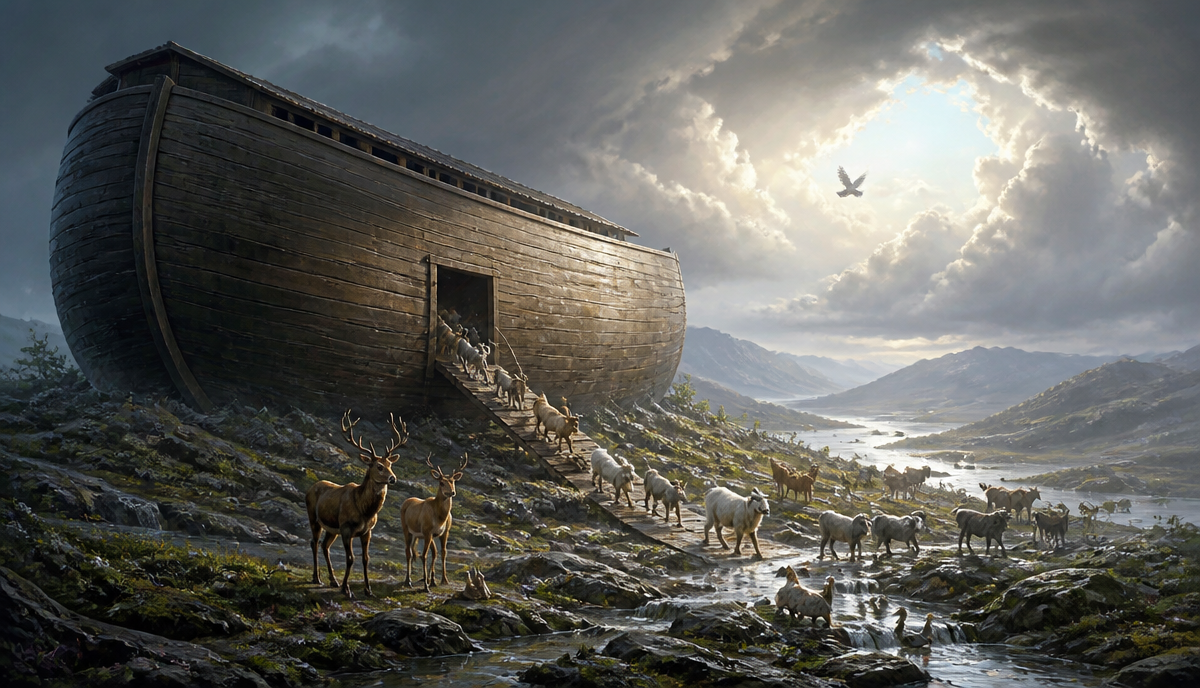
Then came the command of cleansing and mercy: O earth, swallow your water, and O sky, withhold. The water receded, the matter was decreed, and the ship came to rest upon Mount Judi.
Nuh and those with him descended onto a new land, calm and free of tyranny. He was commanded to descend in peace and blessing: descend with peace from Us and blessings upon you and upon the nations with you. Humanity was beginning again on the foundation of the oneness of God, and for this reason many scholars called Nuh the second Adam.
Part of his excellent manner in that moment was his prayer: my Lord, let me land at a blessed landing place, and You are the best of those who bring to land. He did not boast about being saved; he asked for blessing in what came after it.
Lessons
- After hardship comes relief, and after the flood a new land
- Deliverance is thanked with prayer, not with pride
- Reforming the earth starts with correct belief
Chapter 7
What Remains of the Story in Us
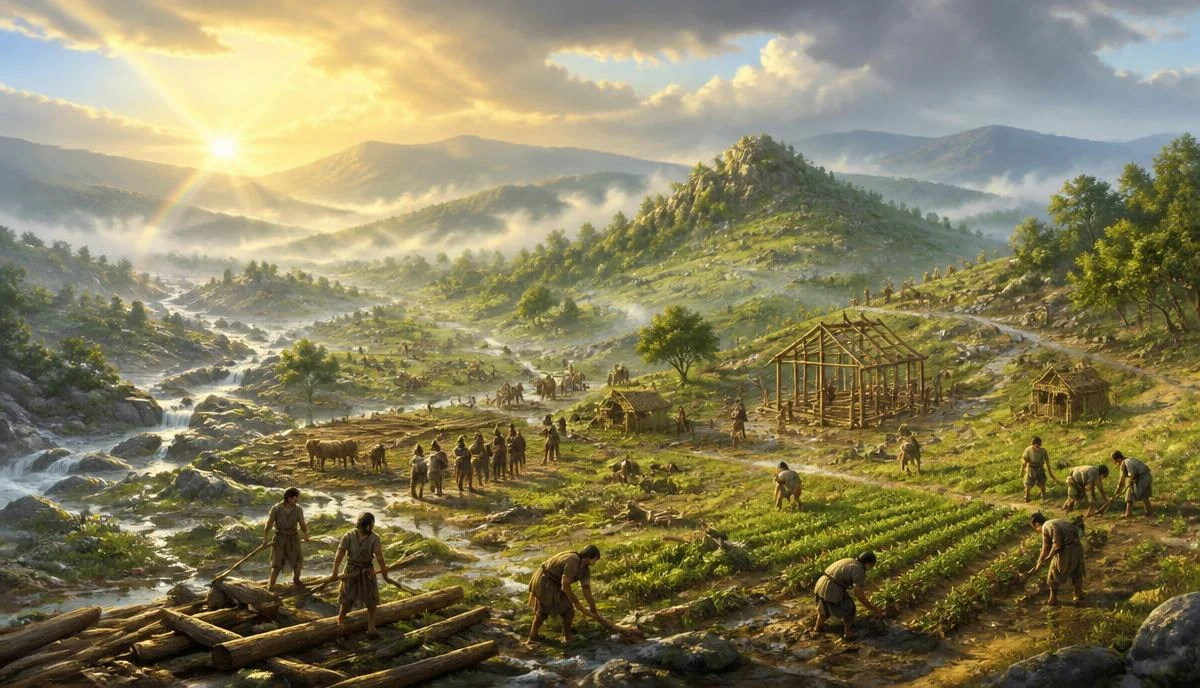
God preserved the mention of Nuh in many places in the Quran, named a surah after him, and praised him: indeed, he was a grateful servant. He made him one of the messengers of firm resolve, and left his story as a sign for people: and We left it as a sign, so is there anyone who will remember?
The story is not a tale of a distant past; it is a daily measure. Are we with the ship or with the mountain that gives no protection? Do we measure truth by the number of its supporters or by its truthfulness? And do we stay patient in doing good when the road is long?
In the hereafter Nuh keeps an honoured position: he is the first of the prophets to be asked for the general intercession on the Day of Resurrection, and he passes it on to others until it reaches the Prophet Muhammad, peace and blessings be upon him.
Questions people often ask
How long did Nuh call his people?
The Quran states he stayed among them a thousand years less fifty, that is nine hundred and fifty years of continuous calling, night and day, privately and openly.
Who were the sons of Nuh?
Those of his family who believed boarded the Ark. One son clung to a mountain, refused to board, and was among the drowned; his father was told, "He is not of your family."
Why is he called the second father of humanity?
Because those saved with him on the Ark became the origin of everyone who settled the earth after the Flood.
Lessons
- Gratitude is the defining trait of those who are saved
- The point is for the story to turn into behaviour
- The truth is not measured by the number of its followers
Interactive quiz
Answer the questions below, then check your answers. No account needed.
1. What was the first thing Nuh, peace be upon him, called his people to?
2. How long did Nuh, peace be upon him, remain calling his people, as mentioned in the Quran?
3. Where did Nuh, peace be upon him, build the ark?
4. What sign does the Quran mention for the beginning of the Flood?
5. How did the son of Nuh answer his father when he called him to embark?
6. On which mountain did the ark come to rest?
7. How did God describe Nuh, peace be upon him, in Surah Al-Isra?
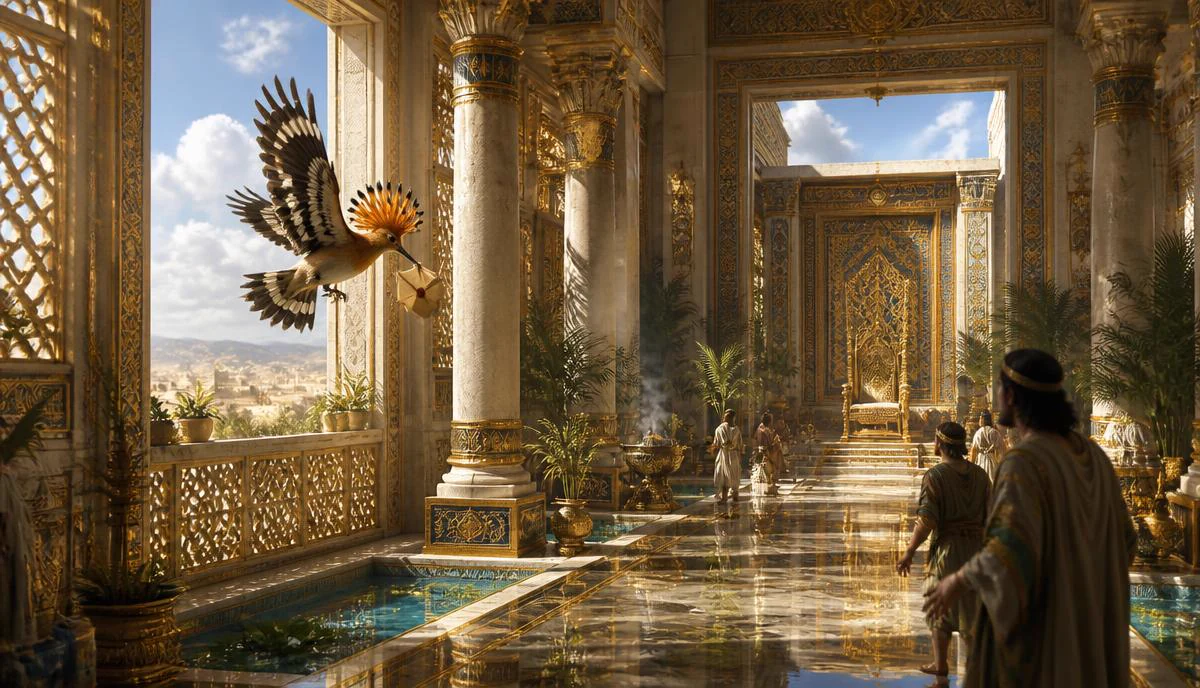
The illustrations are our own, free of copyright restrictions, and do not depict identified religious figures.
Related stories

Data sources
- The Holy Quran: Surahs Al-Araf, Hud, Al-Muminun, Ash-Shuara, Al-Ankabut, As-Saffat, Al-Qamar, Nuh
- Tafsir Ibn Kathir - Stories of the Prophets
- Tafsir At-Tabari - Jami al-Bayan