Stories
Prophet Sulayman and the Queen of Sheba
The Quranic account of Prophet Sulayman (Solomon) and the Queen of Sheba: a kingdom unlike any other, the language of birds, the valley of the ants, the hoopoe's report about a people prostrating to the sun, the letter that carried the name of God to Sheba, the gift that was refused, the throne that arrived in the blink of an eye, and the glass-floored palace where the queen said: my Lord, I have wronged myself.
Recitation audio comes from verified reciters. AI-generated voice is never used for Quran recitation.
Chapter 1
A Kingdom Unlike Any Other
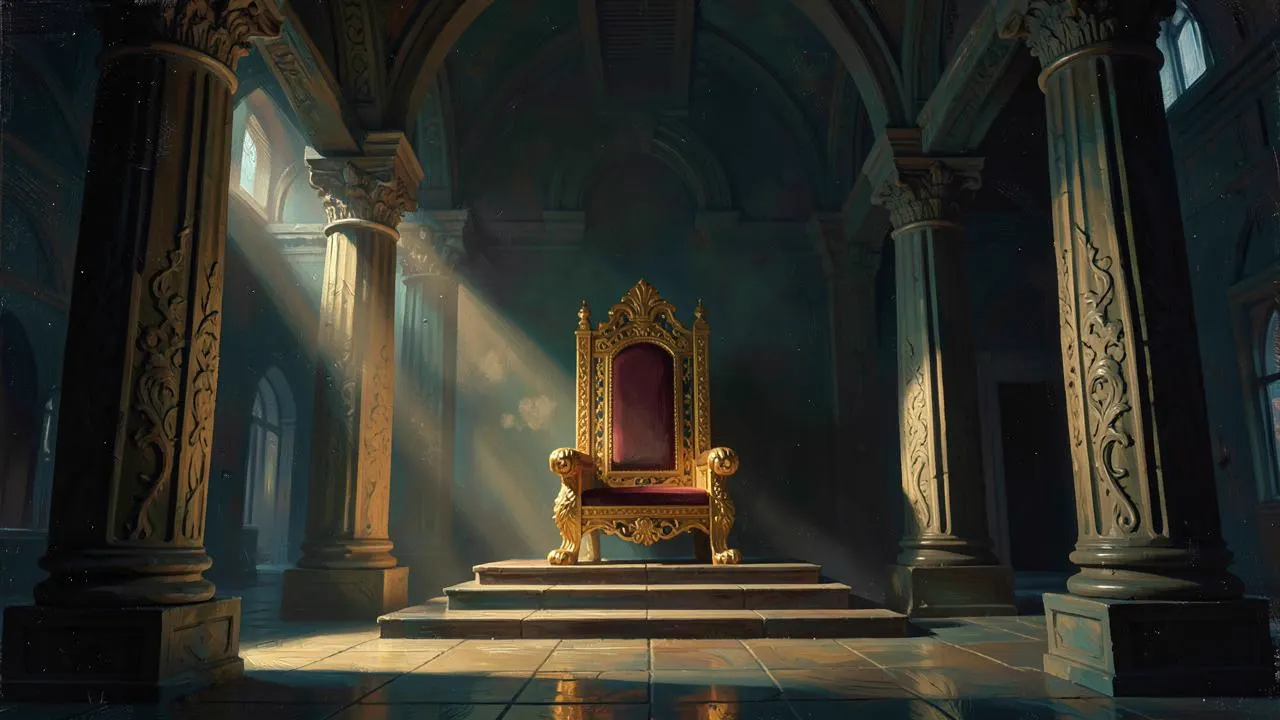
Sulayman (Solomon), peace be upon him, inherited from his father Dawud (David) both prophethood and kingship, a rare combination in the history of the prophets. Yet the first thing the Quran highlights about that inheritance is neither treasuries nor armies. It is knowledge, followed by a word of gratitude:
Open surahSurah An-Naml 27:15
Verified recitation
And We had certainly given to David and Solomon knowledge, and they said, "Praise is due to Allah, who has favored us over many of His believing servants."
And We had certainly given to David and Solomon knowledge, and they said, "Praise is due to Allah, who has favored us over many of His believing servants."
Notice the order: knowledge first, then praise, and only then the kingdom. This is why the prayer of Sulayman, asking for a kingdom that would belong to nobody after him, is the prayer of a prophet and not of a tyrant. He asked for authority through which truth could be established, not for something to boast about before people.
The wind was placed at his service, moving by the command of God rather than by his own will alone:
Open surahSurah Al-Anbya 21:81
Verified recitation
And to Solomon We subjected the wind, blowing forcefully, proceeding by his command toward the land which We had blessed. And We are ever, of all things, Knowing.
And to Solomon We subjected the wind, blowing forcefully, proceeding by his command toward the land which We had blessed. And We are ever, of all things, Knowing.
The jinn worked for him in building and diving, copper was made soft in his hands, and his soldiers from the jinn, humans and birds were gathered in ordered ranks that never broke. Yet all this vast power was never spent on expanding a kingdom for its own sake. Sulayman placed it in the service of one message: that God alone be known and everything besides Him be left behind.
Here the story of Sheba begins. A king who understands the value of his blessing cannot stay silent about a people given everything who then worshipped the sun instead of the One who created it. To see the scene in its full context, start from the source: read Surah An-Naml in full.
Lessons
- Knowledge comes before authority in the order of blessings
- Gratitude is the first response to a gift, not the last
- Power is measured by what it is spent on, not by its size
Chapter 2
The Language of Birds and the Valley of the Ants

Sulayman did not conceal what he had been given. He announced it publicly so that people would know its source:
Open surahSurah An-Naml 27:16
Verified recitation
And Solomon inherited David. He said, "O people, we have been taught the language of birds, and we have been given from all things. Indeed, this is evident bounty."
And Solomon inherited David. He said, "O people, we have been taught the language of birds, and we have been given from all things. Indeed, this is evident bounty."
He said "we have been taught" and "we have been given", the language of one who receives, not of one who achieves. That is how a prophet speaks about his own capability: every ability traced back to the One who granted it.
Then came the scene that reveals what kind of kingdom this really was. The army was marching with jinn, humans and birds when it passed a small valley that the powerful usually never notice:
Open surahSurah An-Naml 27:18
Verified recitation
Until, when they came upon the valley of the ants, an ant said, "O ants, enter your dwellings that you not be crushed by Solomon and his soldiers while they perceive not."
Until, when they came upon the valley of the ants, an ant said, "O ants, enter your dwellings that you not be crushed by Solomon and his soldiers while they perceive not."
Inside that tiny warning lies a remarkable testimony for Sulayman: the ant itself knew that if the army crushed them it would not be deliberate injustice but simple unawareness, because justice was the known character of this king, even down in the valley of the ants.
The effect on the prophet was deeper than anyone would expect. He did not take pride in understanding what nobody else could understand. He smiled, and then he prayed:
Open surahSurah An-Naml 27:19
Verified recitation
So Solomon smiled, amused at her speech, and said, "My Lord, enable me to be grateful for Your favor which You have bestowed upon me and upon my parents and to do righteousness of which You approve. And admit me by Your mercy into the ranks of Your righteous servants."
So Solomon smiled, amused at her speech, and said, "My Lord, enable me to be grateful for Your favor which You have bestowed upon me and upon my parents and to do righteousness of which You approve. And admit me by Your mercy into the ranks of Your righteous servants."
Notice the final request: to be admitted among God's righteous servants. The ruler of a vast kingdom asks to be counted with the righteous, not remembered among the great. That balance is what kept his authority from turning into tyranny.
Lessons
- A blessing is announced to be thanked, not to be flaunted
- A ruler's justice shows in mercy toward the smallest creature
- The greatest prayer of the powerful is to be counted among the righteous
Chapter 3
The Hoopoe and the Missing Report

Sulayman's army was held to a precise order, and he inspected its ranks himself. One bird was missing, and he noticed:
Open surahSurah An-Naml 27:20
Verified recitation
And he took attendance of the birds and said, "Why do I not see the hoopoe - or is he among the absent?
And he took attendance of the birds and said, "Why do I not see the hoopoe - or is he among the absent?
He then warned of a severe punishment unless the bird brought clear authorisation explaining its absence. This is the stance of a commander, not of someone taking revenge: in a system built on trust, absence without leave is a breach, yet the door of excuse stays open for whoever holds a proof.
The hoopoe did not stay away long, and it returned with news nobody had anticipated:
Open surahSurah An-Naml 27:22
Verified recitation
But the hoopoe stayed not long and said, "I have encompassed in knowledge that which you have not encompassed, and I have come to you from Sheba with certain news.
But the hoopoe stayed not long and said, "I have encompassed in knowledge that which you have not encompassed, and I have come to you from Sheba with certain news.
A small bird tells the prophet-king of his age: I know what you do not know. Sulayman was not angered by the phrase, because truth is not rejected on account of the smallness of the one who carries it. The hoopoe then gave details:
Open surahSurah An-Naml 27:23
Verified recitation
Indeed, I found there a woman ruling them, and she has been given of all things, and she has a great throne.
Indeed, I found there a woman ruling them, and she has been given of all things, and she has a great throne.
Sheba, in the south of the Arabian peninsula, was a civilisation of water, dams and caravan trade. Its rule was stable, its queen was obeyed, its throne was magnificent. Then came the point of real failure:
Open surahSurah An-Naml 27:24
Verified recitation
I found her and her people prostrating to the sun instead of Allah, and Satan has made their deeds pleasing to them and averted them from the way, so they are not guided.
I found her and her people prostrating to the sun instead of Allah, and Satan has made their deeds pleasing to them and averted them from the way, so they are not guided.
The hoopoe did not report a poor or weak nation. The problem lay neither in their construction nor in their wealth, but in the direction of their prostration. An entire civilisation can stand at the peak of material progress while sitting at the lowest point of monotheism, because Satan never presents the ugly as ugly. He dresses it as a beloved heritage nobody is allowed to question. The hoopoe closed by saying that the truth is to prostrate to God, who brings forth what is hidden and knows what people conceal and declare, the Lord of the Great Throne, setting Sheba's great throne beside the far greater throne of the Most Merciful.
Lessons
- Truthful news is accepted even from the weakest source
- Material progress does not mean sound belief
- Satan dresses falsehood as a beloved inheritance
Chapter 4
The Letter That Reached Sheba
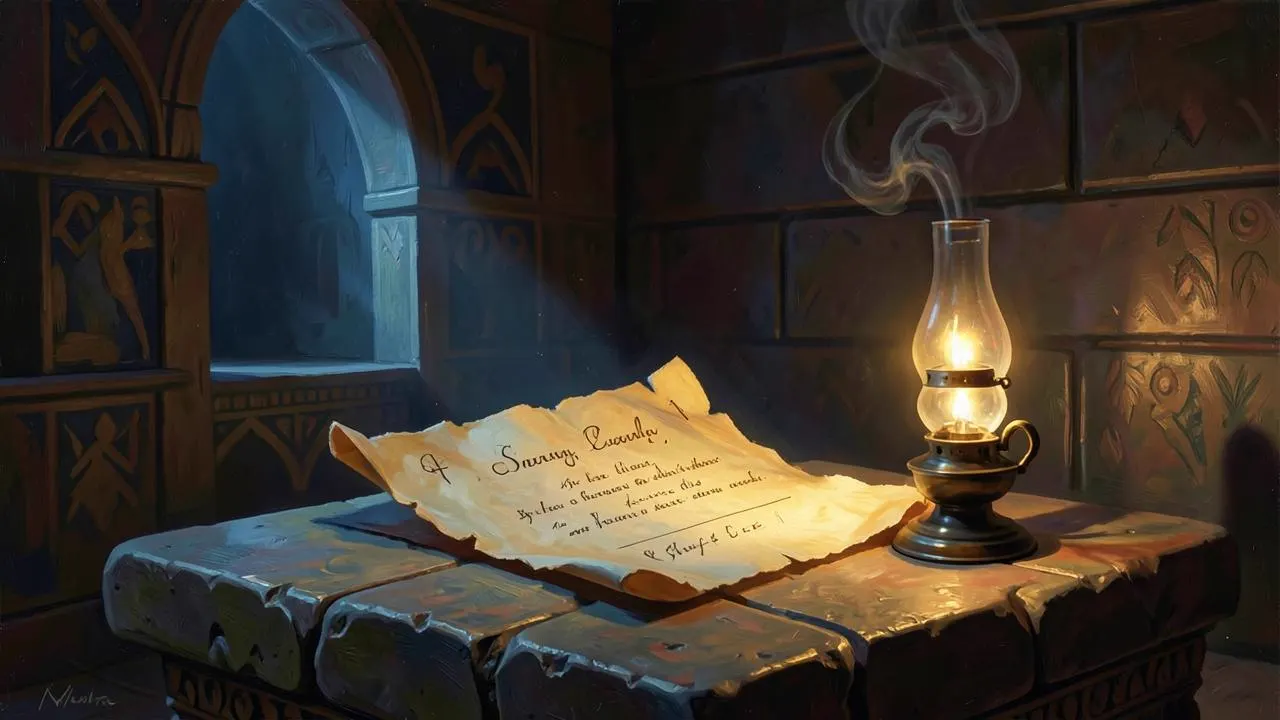
The first thing Sulayman did was to refuse to build a decision on unverified news. He said he would see whether the hoopoe had told the truth or was among the liars. Verification before judgement is a prophetic rule, especially when the judgement concerns an entire nation. Then he chose the lightest instrument available: a letter before any army:
Open surahSurah An-Naml 27:28
Verified recitation
Take this letter of mine and deliver it to them. Then leave them and see what answer they will return."
Take this letter of mine and deliver it to them. Then leave them and see what answer they will return."
The letter reached the queen's assembly, and the first word she used to describe it was noble:
Open surahSurah An-Naml 27:29
Verified recitation
She said, "O eminent ones, indeed, to me has been delivered a noble letter.
She said, "O eminent ones, indeed, to me has been delivered a noble letter.
Then she read out its source and its opening:
Open surahSurah An-Naml 27:30
Verified recitation
Indeed, it is from Solomon, and indeed, it reads: 'In the name of Allah, the Entirely Merciful, the Especially Merciful,
Indeed, it is from Solomon, and indeed, it reads: 'In the name of Allah, the Entirely Merciful, the Especially Merciful,
Open surahSurah An-Naml 27:31
Verified recitation
Be not haughty with me but come to me in submission as Muslims.'
Be not haughty with me but come to me in submission as Muslims.'
A very short letter, with no detailed threat, no economic conditions, no territorial demands. Its entire content is: abandon arrogance and come in submission to God. This reveals Sulayman's aim. He did not want Sheba annexed to his kingdom; he wanted its hearts joined to the worship of one God.
Here the queen's wisdom appeared. She neither reacted emotionally nor declared war. She gathered her council:
Open surahSurah An-Naml 27:32
Verified recitation
She said, "O eminent ones, advise me in my affair. I would not decide a matter until you witness for me."
She said, "O eminent ones, advise me in my affair. I would not decide a matter until you witness for me."
The council answered as people of arms answer:
Open surahSurah An-Naml 27:33
Verified recitation
They said, "We are men of strength and of great military might, but the command is yours, so see what you will command."
They said, "We are men of strength and of great military might, but the command is yours, so see what you will command."
They offered their strength and left the decision to her, the mark of a mature council. But the queen was thinking beyond the battlefield: she wanted to know the true nature of the man who had written to her before choosing confrontation or peace.
Lessons
- Verification comes before decision
- A calm letter is offered before any weapon
- Consultation strengthens a ruler rather than diminishing them
Chapter 5
The Gift That Was Refused
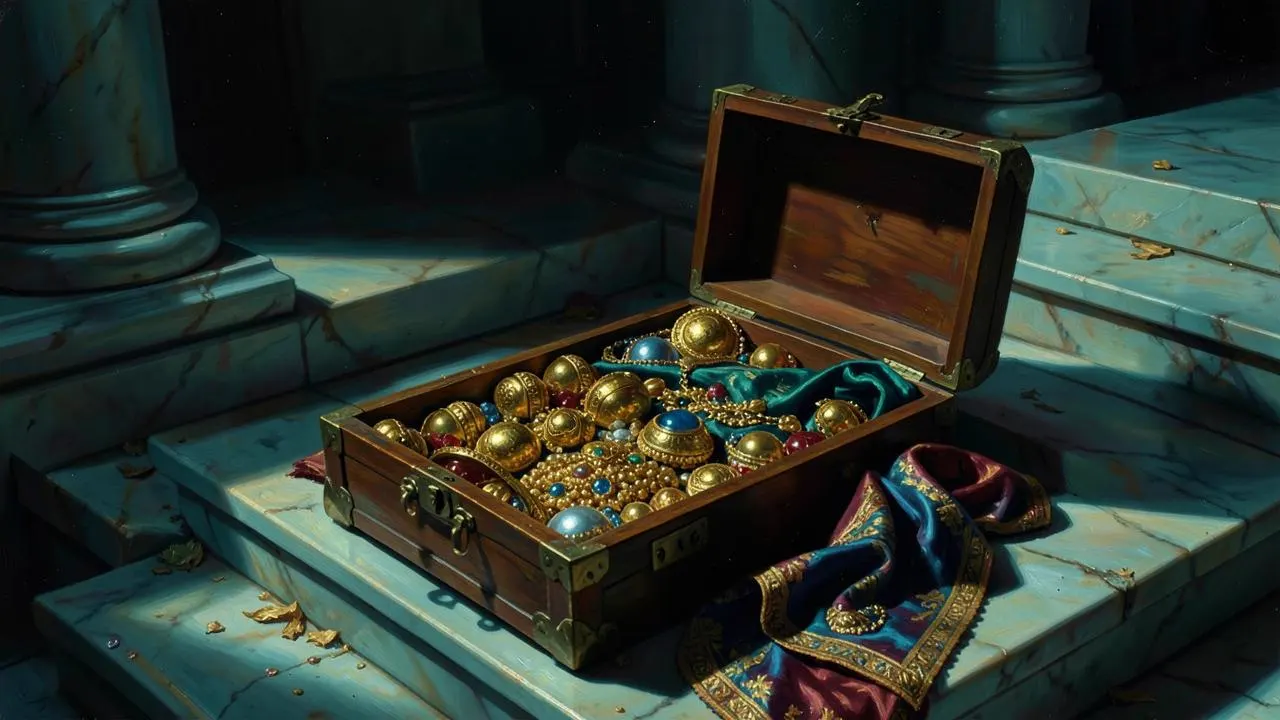
The queen had dealt with kings and knew their nature, so she spoke a sentence that could summarise an entire political history:
Open surahSurah An-Naml 27:34
Verified recitation
She said, "Indeed kings - when they enter a city, they ruin it and render the honored of its people humbled. And thus do they do.
She said, "Indeed kings - when they enter a city, they ruin it and render the honored of its people humbled. And thus do they do.
She knew that war with a great power meant the ruin of her country and the humiliation of its people, so she chose a clever test before any collision:
Open surahSurah An-Naml 27:35
Verified recitation
But indeed, I will send to them a gift and see with what reply the messengers will return."
But indeed, I will send to them a gift and see with what reply the messengers will return."
The gift was not a courtesy; it was a measuring instrument. If Sulayman accepted it and was pleased, he was a king who wanted wealth and influence, and such a man can be handled with money. If he refused it, he was a man of a message who cannot be bought.
The answer came decisively, leaving no room for interpretation:
Open surahSurah An-Naml 27:36
Verified recitation
So when they came to Solomon, he said, "Do you provide me with wealth? But what Allah has given me is better than what He has given you. Rather, it is you who rejoice in your gift.
So when they came to Solomon, he said, "Do you provide me with wealth? But what Allah has given me is better than what He has given you. Rather, it is you who rejoice in your gift.
With that sentence the whole test collapses. Wealth means nothing to a man given what Sulayman was given; rejoicing over gifts belongs to those who possess nothing else. He then sent back a clear statement with her messengers: if they insisted on arrogance, soldiers would come whom they could not withstand and they would be driven out humbled, not out of desire for their land, but because truth conveyed with wisdom and then met with pride requires strength to protect the call.
At that point the matter became clear to her: the letter she had received was not a demand for expansion but a sincere invitation. From this moment her decision shifted from considering confrontation to travelling herself, to see what no messenger could convey. To reflect further on this detachment from worldly gain, read the verses of gratitude in this story again, then search the Quran for where the name of Sulayman appears.
Lessons
- Whoever can be bought carries no message
- The wise test before risking their people
- Rejoicing over gifts belongs to those who have nothing else
Chapter 6
A Throne in the Blink of an Eye
Before the queen arrived, Sulayman wanted to establish a proof beyond argument that what he possessed was not of the same kind as what she possessed, so he asked for something that sounds impossible:
Open surahSurah An-Naml 27:38
Verified recitation
Solomon said, "O assembly of jinn, which of you will bring me her throne before they come to me in submission?"
Solomon said, "O assembly of jinn, which of you will bring me her throne before they come to me in submission?"
A powerful one among the jinn offered to bring it before Sulayman rose from his seat, a speed beyond anything humans know. But a higher offer came from a different direction:
Open surahSurah An-Naml 27:40
Verified recitation
Said one who had knowledge from the Scripture, "I will bring it to you before your glance returns to you." And when Solomon saw it placed before him, he said, "This is from the favor of my Lord to test me whether I will be grateful or ungrateful. And whoever is grateful - his gratitude is only for the benefit of himself. And whoever is ungrateful - then indeed, my Lord is Free of need and Generous."
Said one who had knowledge from the Scripture, "I will bring it to you before your glance returns to you." And when Solomon saw it placed before him, he said, "This is from the favor of my Lord to test me whether I will be grateful or ungrateful. And whoever is grateful - his gratitude is only for the benefit of himself. And whoever is ungrateful - then indeed, my Lord is Free of need and Generous."
Consider the comparison: the jinn's power came from strength, the second offer came from knowledge, and knowledge won. Then consider Sulayman's reaction when the throne stood before him. He did not say "look what we can do". He said this is from the favour of my Lord, and he understood the blessing for what it was: a test, not a free honour. Passing the test of blessing is harder than passing the test of hardship, because hardship reminds a person of God while comfort makes them forget Him.
Then came the final arrangement before her arrival:
Open surahSurah An-Naml 27:41
Verified recitation
He said, "Disguise for her her throne; we will see whether she will be guided to truth or will be of those who are not guided."
He said, "Disguise for her her throne; we will see whether she will be guided to truth or will be of those who are not guided."
The purpose was neither to embarrass nor to mock her, but to measure her mind: does she have the capacity to recognise the truth when it appears in an unexpected form? That is the real test of every intellect, to know the truth even when it arrives in a shape it is not used to.
Lessons
- Knowledge acts faster than raw force
- A blessing is a test, not an unconditional honour
- The test of ease is harder than the test of hardship
Chapter 7
The Glass Palace and the Queen's Submission

The queen arrived, the throne was presented to her after part of its appearance had been altered, and she was asked a direct question:
Open surahSurah An-Naml 27:42
Verified recitation
So when she arrived, it was said to her, "Is your throne like this?" She said, "It is as though it was it." Solomon said, "And we were given knowledge before her, and we have been Muslims in submission to Allah.
So when she arrived, it was said to her, "Is your throne like this?" She said, "It is as though it was it." Solomon said, "And we were given knowledge before her, and we have been Muslims in submission to Allah.
Her answer, "as though it was it", is the answer of a precise mind: she neither denies nor asserts what she cannot verify. She sees the resemblance and withholds certainty. What had kept her from guidance was never a deficiency of intellect but what she and her people worshipped besides God. Environment and inheritance were the veil, not intelligence.
Then came the final scene inside the palace:
Open surahSurah An-Naml 27:44
Verified recitation
She was told, "Enter the palace." But when she saw it, she thought it was a body of water and uncovered her shins to wade through. He said, "Indeed, it is a palace whose floor is made smooth with glass." She said, "My Lord, indeed I have wronged myself, and I submit with Solomon to Allah, Lord of the worlds."
She was told, "Enter the palace." But when she saw it, she thought it was a body of water and uncovered her shins to wade through. He said, "Indeed, it is a palace whose floor is made smooth with glass." She said, "My Lord, indeed I have wronged myself, and I submit with Solomon to Allah, Lord of the worlds."
A floor of clear glass over water, which she took for open water. One moment exposed an entire principle: the eye can err, the senses can report what is not real, and the only report that never errs is the report of God. If my own eyes misjudged a floor right in front of me, how can I build my creed on a sun that rises and sets?
Here she did not argue, bargain, or ask for time. She spoke one sentence containing both admission and surrender: I have wronged myself, and I submit to God, Lord of the worlds. She did not say she submitted to Sulayman; she said "with Solomon, to Allah". Submission belongs to God alone, and a prophet is a guide, never an object of worship.
So the story ends in the finest way possible: no kingdom destroyed, no army moved, no queen humiliated, and a civilisation carried from prostrating to the sun to prostrating before the One who created the sun. That is the entire purpose of the call: guidance, not victory over anyone.
To read the chapter that preserved this whole account, return to Surah An-Naml and see how kingship, knowledge, an ant, a hoopoe and a throne are gathered in a single context leading to the oneness of God.
Lessons
- The senses can err; God's revelation cannot
- Admitting the mistake is the first step of guidance
- Submission belongs to God alone; a prophet only guides
- The best victory is guidance without ruin
Interactive quiz
Answer the questions below, then check your answers. No account needed.
1. What does the Quran mention first about the inheritance of Dawud and Sulayman?
2. What did Sulayman pray for after hearing the ant?
3. What flaw did the hoopoe report about the people of Sheba?
4. What did Sulayman's letter to the Queen of Sheba demand?
5. Why did the queen send a gift to Sulayman?
6. Who brought the queen's throne fastest?
7. What did the queen say upon entering the glass palace?
Illustrations are our own, free of copyright restrictions, and are not depictions of the prophets themselves.
Data sources
- Surah An-Naml 27:15-44
- Surah Al-Anbiya 21:81-82
- Surah Saba 34:12-13
- Surah Sad 38:30-40
- Tafsir Ibn Kathir
- Tafsir al-Tabari