Stories
Ibrahim and the Cold Fire
The Quranic account of the Prophet Ibrahim (Abraham): his question to his people about their statues, the gentle call he made to his father, the day he broke the idols during their festival, his trial before the assembly, the decision to burn him, the moment God commanded the fire to be coolness and safety, and the migration and building of monotheism that followed.
The story narration voice is machine-generated. The text is human-written and reviewed, and Quran verses are recited by a verified reciter.
Chapter 1
The Question Nobody Dared to Ask
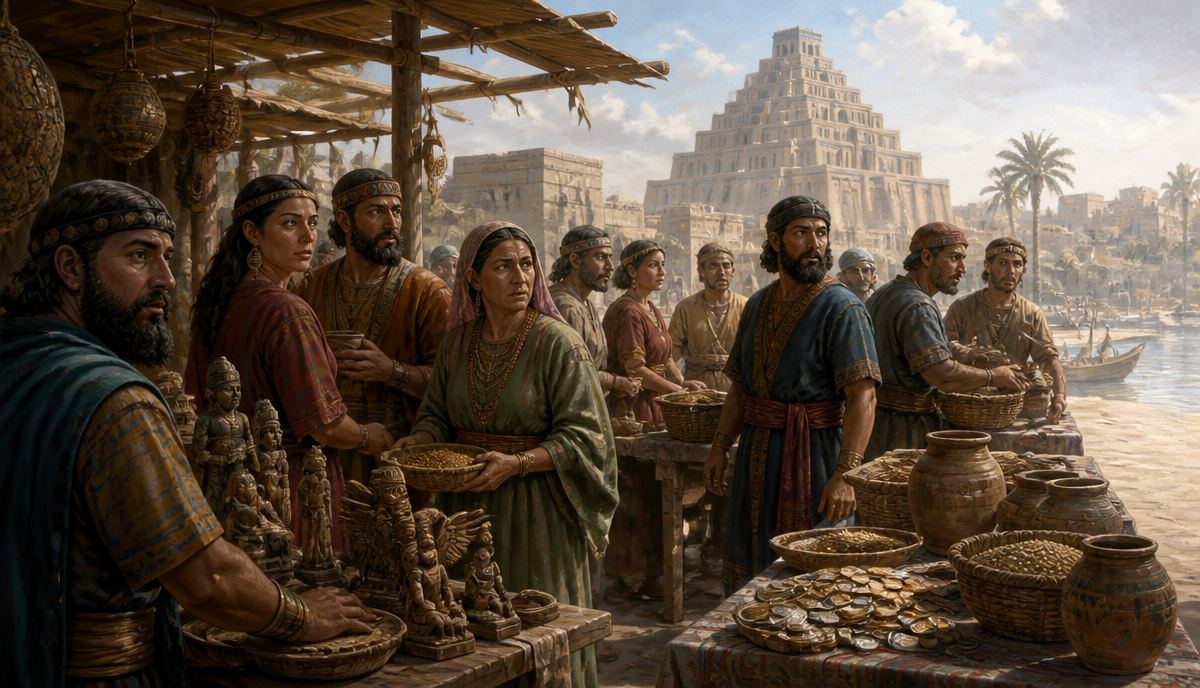
In the land of Babylon, among temples crowded with stone statues, Ibrahim (Abraham), peace be upon him, grew up within a people who had inherited the worship of what could neither benefit nor harm. The idols were woven into the whole order of life: the merchant sought blessing from them, the farmer brought them his first harvest, and the authority of priests and king rested upon them.
In such a society the beginning is not a passionate speech but a quiet question that unsettles what everyone assumes. Ibrahim asked his father and his people a question nobody before him had dared to ask:
Open surahSurah Al-Anbya 21:52
Verified recitation
إِذْ قَالَ لِأَبِيهِ وَقَوْمِهِۦ مَا هَٰذِهِ ٱلتَّمَاثِيلُ ٱلَّتِىٓ أَنتُمْ لَهَا عَٰكِفُونَ
He said to his father and his people, "What are these statues to which you are devoted?"
Their answer carried no proof and no argument, only a reference to their forefathers: we found our fathers worshipping them.
This is the first thing an inherited creed does when it is never examined: it turns the question itself into an accusation. That is why the journey of Ibrahim in the Meccan chapters is a journey of observation and reflection: a star that sets, a moon that disappears, a sun that falls in the west, and whatever disappears does not deserve to be worshipped.
An early lesson follows: monotheism is not a slogan to be raised but the result of a mind freed from the authority of habit. To see the scene fully in its context, begin from the source: read Surah Al-Anbiya in full.
Lessons
- A quiet question is stronger than a noisy argument
- Imitation without proof is no argument, however long it has lasted
- Whatever sets and disappears cannot be a god
Chapter 2
Calling His Father: Mercy Met With Threat
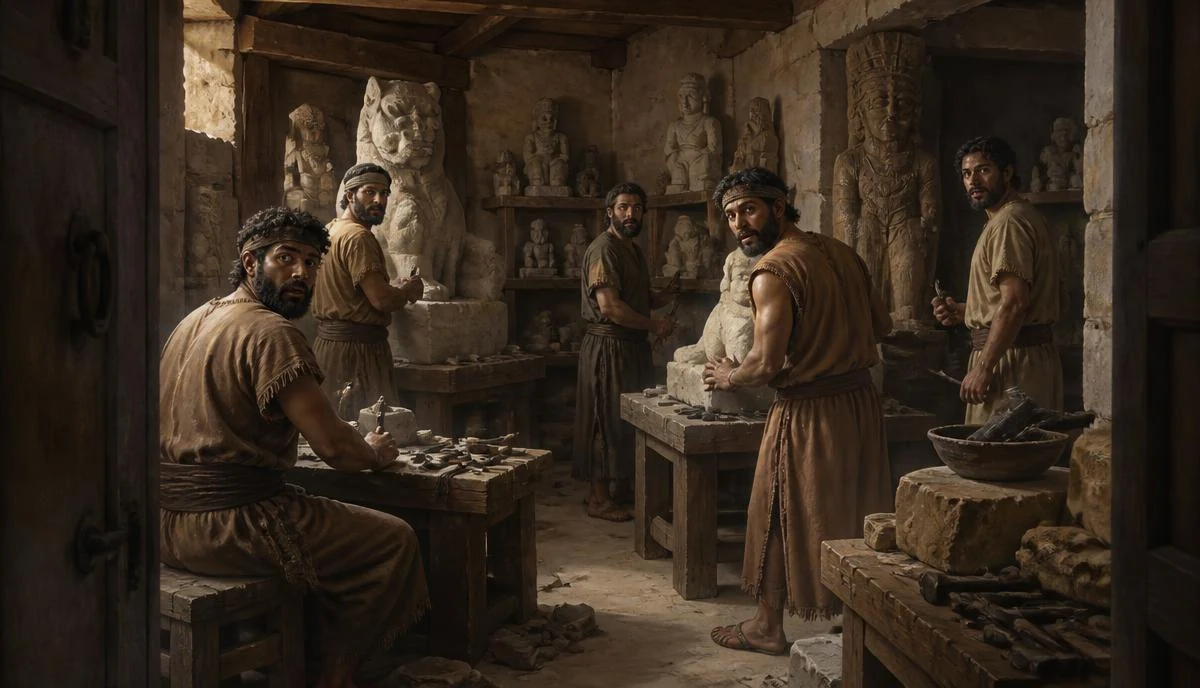
The first person Ibrahim called was the closest to him: his father, a maker of idols and their defender. The Quran preserved the full tone of that conversation: a gentle address, a question without harshness, and a sincere concern for his father's rescue.
He said to him:
Open surahSurah Maryam 19:42
Verified recitation
إِذْ قَالَ لِأَبِيهِ يَٰٓأَبَتِ لِمَ تَعْبُدُ مَا لَا يَسْمَعُ وَلَا يُبْصِرُ وَلَا يُغْنِى عَنكَ شَيْـًۭٔا
"O my father, why do you worship that which does not hear and does not see and will not benefit you at all?"
Notice the words "O my father", among the tenderest that can be said, and then the argument, among the clearest that can be said: an object of worship that neither hears your call, nor sees your condition, nor keeps harm away from you. What meaning is left in worshipping it?
The answer was as harsh as the call had been gentle:
Open surahSurah Maryam 19:46
Verified recitation
قَالَ أَرَاغِبٌ أَنتَ عَنْ ءَالِهَتِى يَٰٓإِبْرَٰهِيمُ ۖ لَئِن لَّمْ تَنتَهِ لَأَرْجُمَنَّكَ ۖ وَٱهْجُرْنِى مَلِيًّۭا
He said, "Have you come to reject my gods, O Ibrahim? If you do not desist, I will surely stone you, so avoid me for a prolonged time."
A threat of stoning and a demand for separation. Even so, the prophet did not answer a threat with a threat; he said: peace be upon you, I will ask forgiveness for you from my Lord.
One of the deepest lessons here is that gentleness in speech is not weakness in position. Ibrahim remained firm on monotheism without compromise and kind in manner without cruelty, until it became clear to him that his father was an enemy to God, and he dissociated himself only after every hope had been exhausted.
If someone you love in your own home does not share your conviction, these verses are a school in patience and good speech. You may begin with the etiquette of supplication and remembrance before you begin the conversation.
Lessons
- Begin your call with those closest to you
- Gentleness in manner is not a concession on truth
- Dissociation is the last step, never the first
Chapter 3
Festival Day: An Empty City and an Open Temple
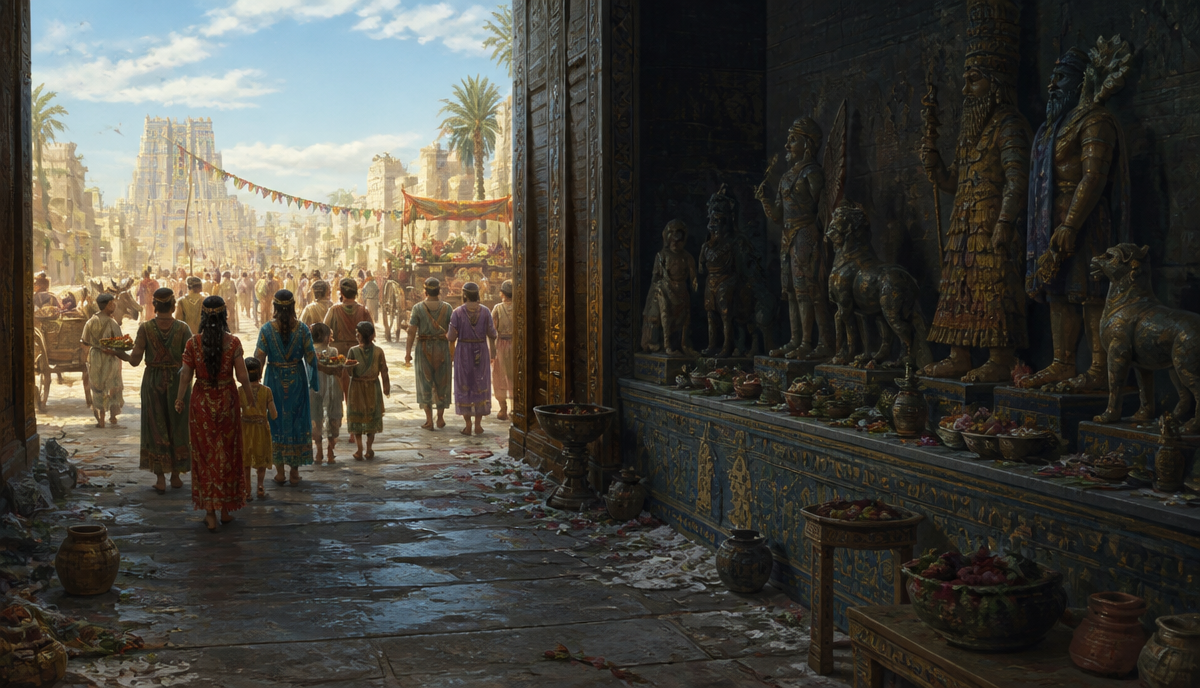
The festival of the people arrived, a day on which they all went out beyond the city, leaving the streets empty and the temple unguarded. Here Ibrahim carried out a quiet, deliberate plan: he stayed behind with an apparent excuse, so they said he was ill, and they left him.
He entered the temple alone. Statues standing in rows, food set before them as though they ate, no movement and no sound. He offered them the food and asked: will you not eat? Why do you not speak? Then he did what made the question visible to everyone:
Open surahSurah Al-Anbya 21:58
Verified recitation
فَجَعَلَهُمْ جُذَٰذًا إِلَّا كَبِيرًۭا لَّهُمْ لَعَلَّهُمْ إِلَيْهِ يَرْجِعُونَ
So he broke them into fragments, except a large one among them, that they might return to it.
This was not vengeful destruction; it was a physical argument that the eye could see. He left the largest idol intact and hung the axe upon it, so that the people themselves would reach the conclusion they had been avoiding: if the great one is able, let it defend itself and its companions, and if it is helpless, what meaning is there in venerating it?
The whole scene is a lesson in teaching people through proof rather than quarrel: a statement that goes unheard may still be understood when it becomes a state of affairs the eyes can see.
Lessons
- A quiet plan is more useful than a passing outburst
- A visible proof reaches where argument fails
- The aim was exposing helplessness, not destruction for its own sake
Chapter 4
The Trial: An Argument That Silenced the Assembly
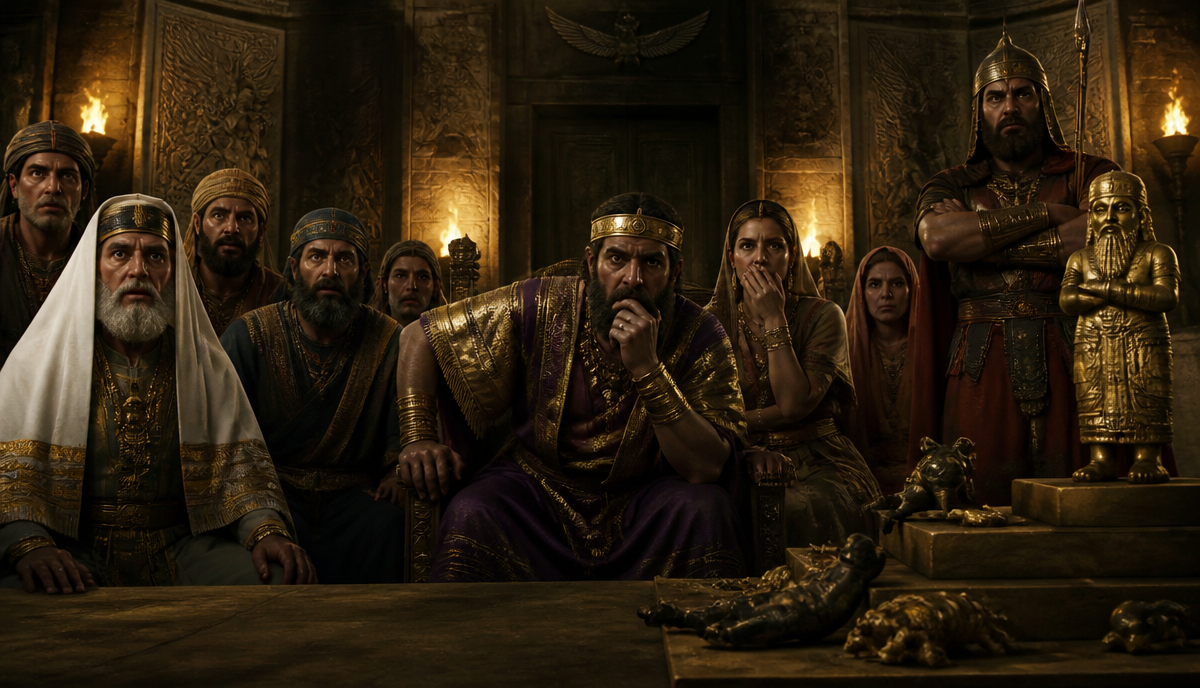
The people returned to find their gods broken stones on the ground, and the largest idol standing alone. The city was shaken and they asked: who did this to our gods? They remembered the young man who used to criticise their idols, and they brought him before a public assembly.
They asked him: did you do this? He answered in a way that opened the road to the truth rather than closing it, referring the question to the great idol: ask them, if they can speak. At that point everything was exposed. They turned inward and realised that they themselves were the wrongdoers, but instead of admitting it they said:
Open surahSurah Al-Anbya 21:65
Verified recitation
ثُمَّ نُكِسُوا۟ عَلَىٰ رُءُوسِهِمْ لَقَدْ عَلِمْتَ مَا هَٰٓؤُلَآءِ يَنطِقُونَ
Then they reversed themselves, [saying], "You have already known that these do not speak."
This is the critical moment of the story: the argument was complete, the admission was made with their own tongues, and then pride shut the door. So Ibrahim said a phrase that sums up the entire case:
Open surahSurah Al-Anbya 21:67
Verified recitation
أُفٍّۢ لَّكُمْ وَلِمَا تَعْبُدُونَ مِن دُونِ ٱللَّهِ ۖ أَفَلَا تَعْقِلُونَ
"Uff to you and to what you worship instead of God. Then will you not use reason?"
The lesson here is heavy and useful: much disagreement is not a shortage of evidence but an inability to concede. Whoever wanted the truth found it, and whoever wanted victory for himself saw the proof and did not follow it.
Lessons
- An argument may be complete while pride still refuses it
- Admission with the tongue is not enough without submission to the truth
- Calling the mind to reflect is the core of the Quranic address
Chapter 5
The Decision to Burn: When Force Defends Helplessness
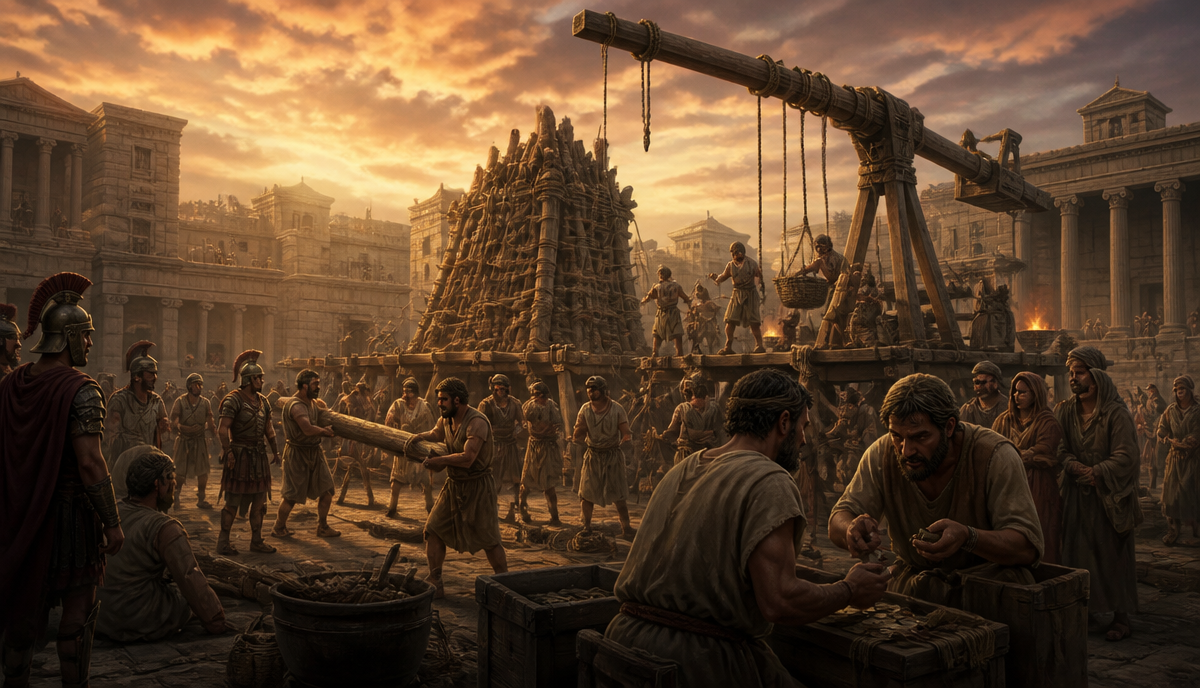
When they could not answer, they moved from the arena of argument to the arena of force, the path of those who hold no proof:
Open surahSurah Al-Anbya 21:68
Verified recitation
قَالُوا۟ حَرِّقُوهُ وَٱنصُرُوٓا۟ ءَالِهَتَكُمْ إِن كُنتُمْ فَٰعِلِينَ
They said, "Burn him and support your gods, if you are to act."
The verdict became a public burning, not because the argument had been settled in their favour, but because the standing of their objects of worship had been shaken before the people.
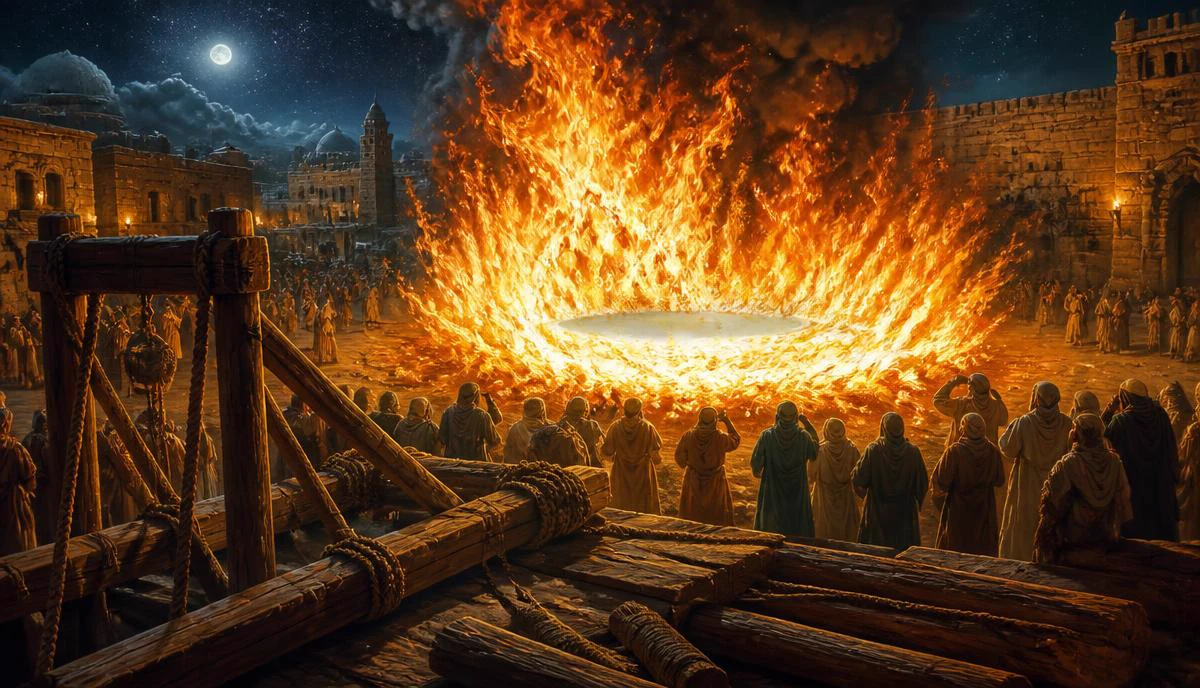
They gathered firewood for days until it became a mountain, and lit an enormous fire whose flames grew so intense that no one could approach it. So they built a device to hurl him in from a distance, and the commentators noted that this was the first structure of its kind for such a purpose. The Quranic expression is brief and awe-inspiring:
Open surahSurah As-Saffat 37:97
Verified recitation
قَالُوا۟ ٱبْنُوا۟ لَهُۥ بُنْيَٰنًۭا فَأَلْقُوهُ فِى ٱلْجَحِيمِ
They said, "Construct for him a structure and throw him into the burning fire."
Amid that whole crowd, one man stood alone before a nation, a king, and a temple. He called upon no tribe and no army, and he withdrew nothing of what he had said. It is reported from the early generations that his words at that moment were: God is sufficient for me, and He is the best disposer of affairs.
The practical lesson concerns everyone who has stood alone for what is right: pressure may reach its limit, but the real balance is not in the hand of the one who owns the fire; it is in the hand of the One who created it.
Lessons
- Whoever lacks proof reaches for force
- Steadfastness needs certainty, not numbers
- Reliance on God is the work of the heart at the hardest moment
Chapter 6
O Fire, Be Coolness and Safety
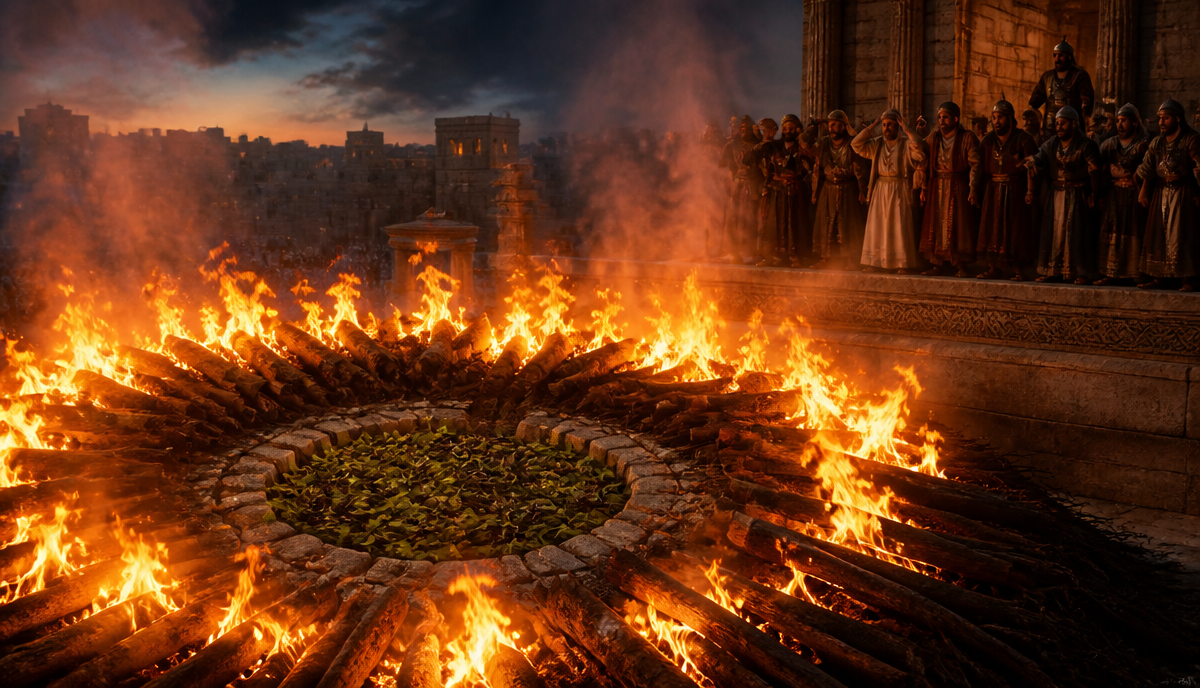
Ibrahim was thrown into the fire in full view of all the people, and everyone present was waiting for the familiar ending: flames consuming whatever is cast into them. Then came the command that changed the nature of the event in a single moment:
Open surahSurah Al-Anbya 21:69
Verified recitation
قُلْنَا يَٰنَارُ كُونِى بَرْدًۭا وَسَلَٰمًا عَلَىٰٓ إِبْرَٰهِيمَ
We said, "O fire, be coolness and safety for Ibrahim."
The fire was not extinguished and it was not removed; it kept burning within everyone's sight, and its property was withdrawn in one place only. Fire remained fire, heat remained heat, and the burning did not happen. That is why the second word in the verse is precise: "and safety", because extreme cold harms just as fire harms, so the command was for a coolness that carried no harm with it.
Here appears the meaning of the monotheism he had called to all his life: causes do not act by themselves, they act by the permission of the One who created them. He who placed the property of burning in fire is able to withhold it in a single moment without putting the fire out.
God closed the scene with the general outcome:
Open surahSurah Al-Anbya 21:70
Verified recitation
وَأَرَادُوا۟ بِهِۦ كَيْدًۭا فَجَعَلْنَٰهُمُ ٱلْأَخْسَرِينَ
And they intended for him harm, but We made them the greatest losers.
The plot built to kill one man became the greatest proof of his truthfulness, and the event they meant as an ending was the beginning of a call the world came to know afterwards.
This is the most famous moment of the story, and from it comes its title: a fire made cold by God's command. Whoever wishes to reflect on the scene within its full chapter may read Surah As-Saffat.
Lessons
- Causes act only by God's permission
- Rescue can come inside the trial, not away from it
- What was meant to destroy him became a proof of the truth
Chapter 7
After the Fire: Migration and the Building of Monotheism
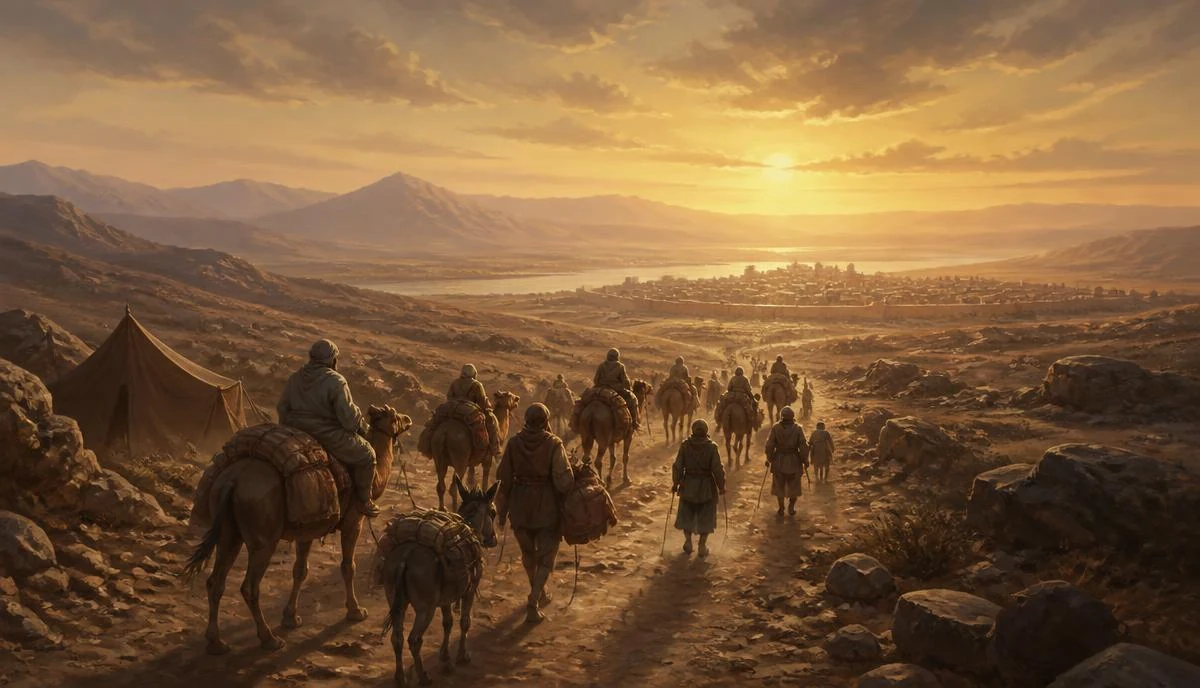
The story did not end with his coming out unharmed; that is where it began. After the people had seen the proof with their own eyes and did not change, Ibrahim announced his decision to move to a land that could carry the call:
Open surahSurah Al-'Ankabut 29:26
Verified recitation
۞ فَـَٔامَنَ لَهُۥ لُوطٌۭ ۘ وَقَالَ إِنِّى مُهَاجِرٌ إِلَىٰ رَبِّىٓ ۖ إِنَّهُۥ هُوَ ٱلْعَزِيزُ ٱلْحَكِيمُ
And he said, "Indeed, I will emigrate to my Lord. Indeed, He is the Exalted in Might, the Wise."
He left with those who believed with him and travelled a long road that ended with the building of the first house of monotheism in Mecca alongside his son Ismail, and a supplication whose trace remains to this day: our Lord, accept from us. From that lineage came the final prophet, and from that land began the rites people still live through every year in Hajj and Umrah.
God made Ibrahim an example in conviction and loyalty, saying:
Open surahSurah Al-Mumtahanah 60:4
Verified recitation
قَدْ كَانَتْ لَكُمْ أُسْوَةٌ حَسَنَةٌۭ فِىٓ إِبْرَٰهِيمَ وَٱلَّذِينَ مَعَهُۥٓ إِذْ قَالُوا۟ لِقَوْمِهِمْ إِنَّا بُرَءَٰٓؤُا۟ مِنكُمْ وَمِمَّا تَعْبُدُونَ مِن دُونِ ٱللَّهِ كَفَرْنَا بِكُمْ وَبَدَا بَيْنَنَا وَبَيْنَكُمُ ٱلْعَدَٰوَةُ وَٱلْبَغْضَآءُ أَبَدًا حَتَّىٰ تُؤْمِنُوا۟ بِٱللَّهِ وَحْدَهُۥٓ إِلَّا قَوْلَ إِبْرَٰهِيمَ لِأَبِيهِ لَأَسْتَغْفِرَنَّ لَكَ وَمَآ أَمْلِكُ لَكَ مِنَ ٱللَّهِ مِن شَىْءٍۢ ۖ رَّبَّنَا عَلَيْكَ تَوَكَّلْنَا وَإِلَيْكَ أَنَبْنَا وَإِلَيْكَ ٱلْمَصِيرُ
There has already been for you an excellent pattern in Ibrahim and those with him.
An example in clarity of stance, in gentleness towards people, and in steadfastness when the field empties of allies.
The conclusion drawn from the whole story is this: monotheism is not only an inner feeling, it is a stance whose price is sometimes paid. Whoever stands firm at the critical moment is granted by God a legacy that remains after every fire has gone out.
Questions people often ask
Why is Ibrahim called the father of the prophets?
Because prophethood continued through his descendants: Ismail, Ishaq, Yaqub, Yusuf, Musa, Isa and Muhammad, peace be upon them all.
What does "al-Khalil" mean?
The intimate friend. The Quran states it directly: "And God took Ibrahim as an intimate friend."
Why did he break the idols?
To make the argument visible rather than verbal. He left the largest one standing and invited his people to question it, exposing that what cannot protect itself deserves no worship.
Lessons
- Migration is the search for a land that can carry the call
- The effect of steadfastness outlives the event itself
- Ibrahim is an example in both conviction and gentleness
Interactive quiz
Answer the questions below, then check your answers. No account needed.
1. What did Ibrahim's people offer as justification for worshipping the statues?
2. How did Ibrahim address his father?
3. Why did Ibrahim leave the largest idol intact?
4. What did the people admit at the trial before rejecting its conclusion?
5. According to Surah As-Saffat, how was Ibrahim thrown into the fire?
6. What happened to the fire by God's command?
7. How did Ibrahim's stance towards his people end after the fire?
The illustrations are our own, free of copyright restrictions, and do not depict identified religious figures.
Related stories

Data sources
- Surah Al-Anbiya 21:51-71
- Surah As-Saffat 37:83-99
- Surah Ash-Shuara 26:69-82
- Surah Al-Anam 6:74-79
- Surah Maryam 19:41-48
- Surah Al-Ankabut 29:24-26
- Surah Al-Mumtahanah 60:4
- Tafsir Ibn Kathir
- Tafsir al-Tabari