Stories
The Islam of Umar ibn al-Khattab
How did one of the harshest men of Quraysh become one of Islam's strongest defenders? The story of the Islam of Umar ibn al-Khattab, from the Prophet's supplication to the page of Surah Ta-Ha in his sister's house and then his open declaration at the house of al-Arqam. Six chapters with verses, lessons and an interactive quiz.
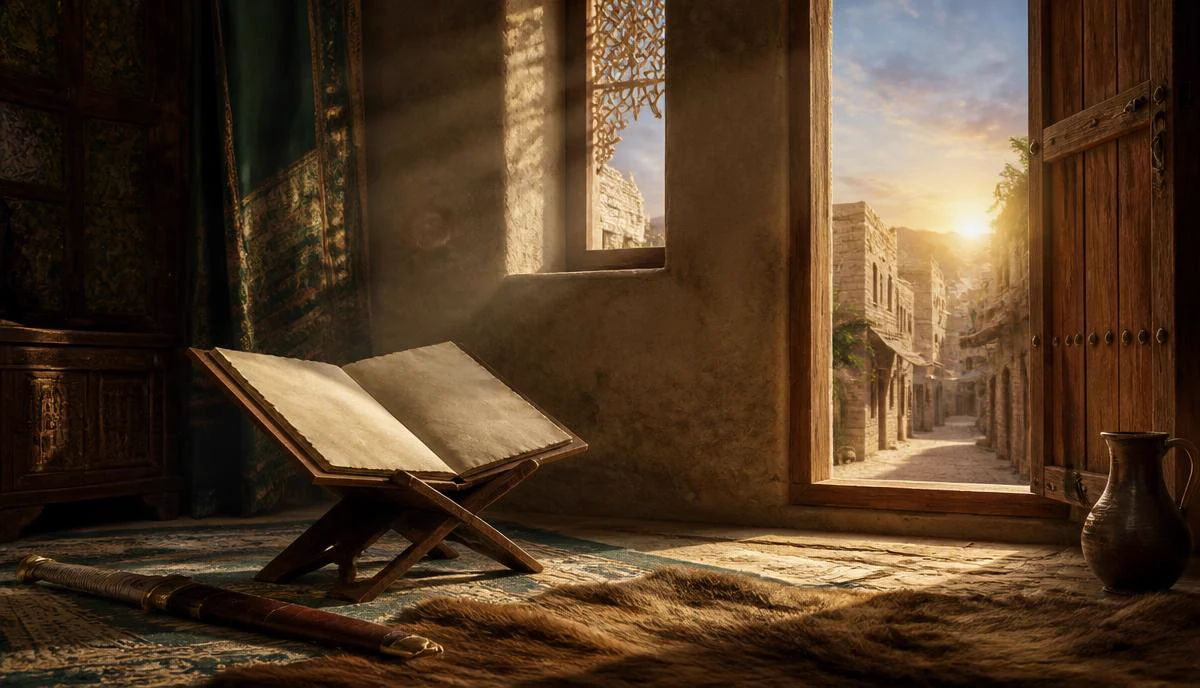
The story narration voice is machine-generated. The text is human-written and reviewed, and Quran verses are recited by a verified reciter.
Chapter 1
Makkah in the Sixth Year: A Man the Believers Feared
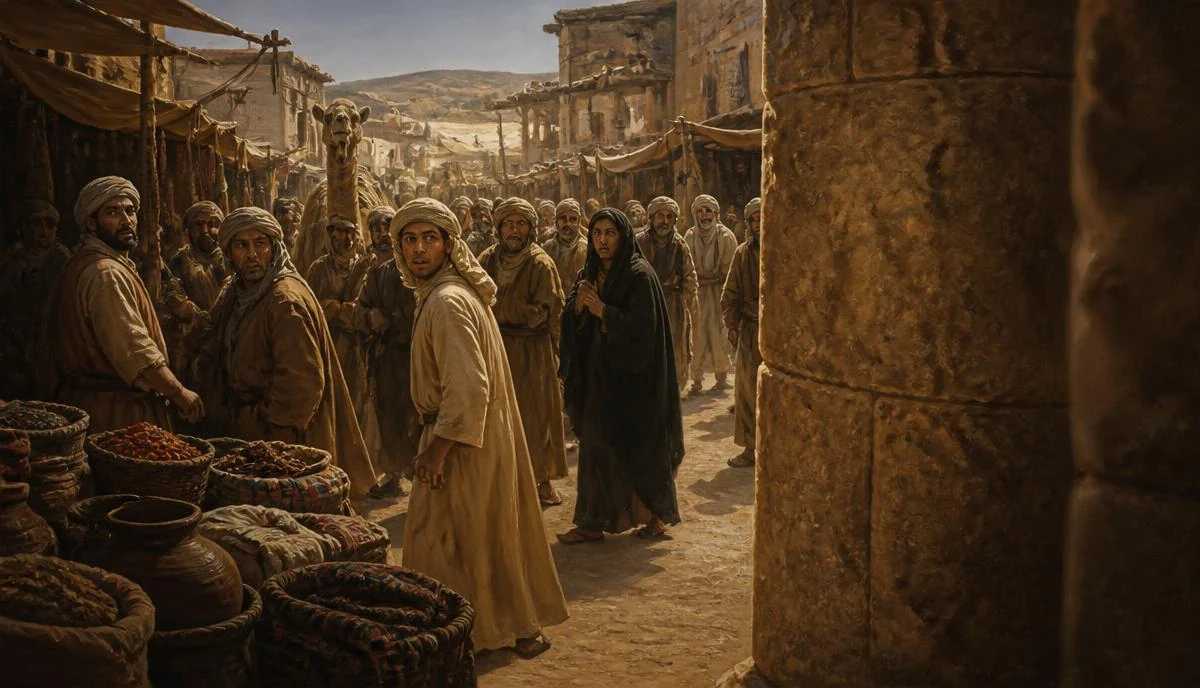
In the sixth year of the Prophet's mission, the call to Islam in Makkah was still a secret carried by a few. The Muslims prayed in the mountain paths, some were tortured in the sun, and others had migrated to Abyssinia to escape the violence.
In that period Umar ibn al-Khattab was among the harshest men of Quraysh toward the Muslims. He was not merely an opponent in speech but a man of presence, authority, physical strength and standing among his people, and he saw the new call as a threat to the entire structure of Quraysh: its religion, its trade and its inherited glory.
For that reason his name was rarely mentioned in the gatherings of the Muslims except alongside fear. Whoever reads his life before Islam understands why his conversion became an event that divides the history of the call into a before and an after.
Yet a principle lies underneath the story: harshness of temperament is not harshness of heart. The one most violent against the truth may become the most protective of it once he recognises it, because all that force was energy waiting for a right direction.
This is not the story of a victory over a man. It is the story of how the same man turned from an argument against the truth into an argument for it.
Lessons
- A harsh temperament is not the same as a harsh heart
- Strength is energy awaiting a right direction, not a defect in its owner
- Do not judge a person by his present state; the door of guidance never closes
Chapter 2
O God, Strengthen Islam With One of the Two Umars
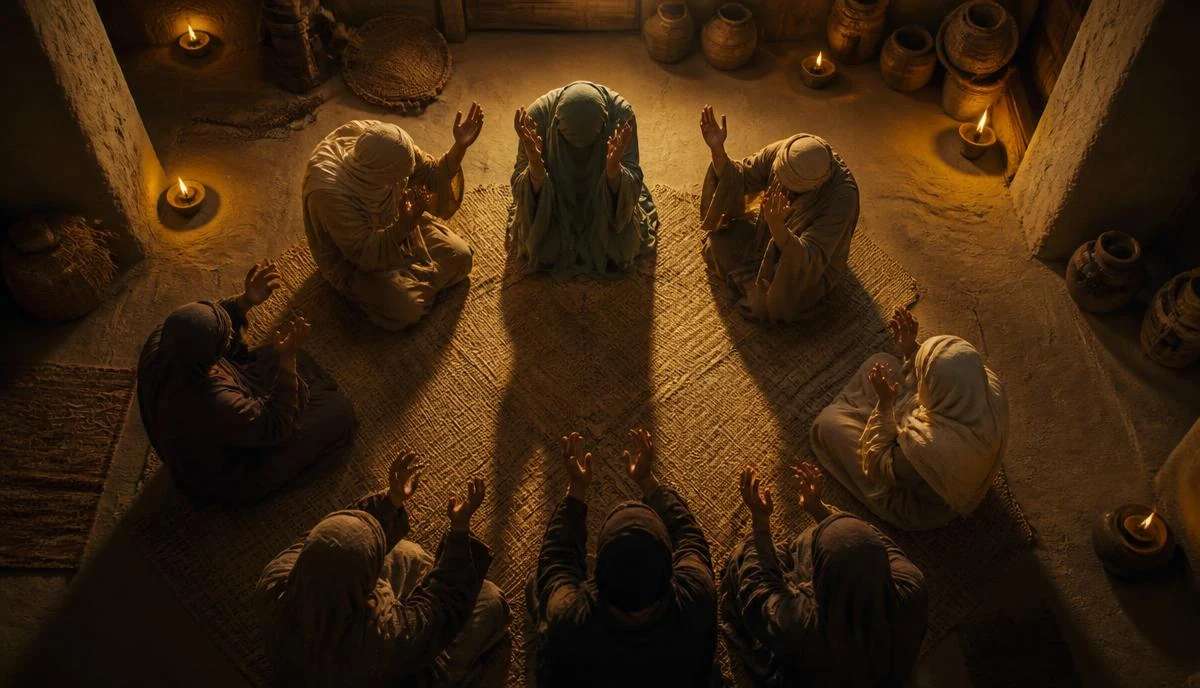
Al-Tirmidhi narrated that the Prophet, peace be upon him, said: "O God, strengthen Islam with the dearer of these two men to You: Abu Jahl or Umar ibn al-Khattab." The narration adds that the dearer of the two to God turned out to be Umar.
This supplication carries a great lesson. The Prophet did not only pray against those who harmed him; he prayed that one of his strongest opponents be guided so that he might become a strength for Islam. The call to God does not seek the destruction of the opponent but his guidance.
Notice the choice of the two men: both were severe against the Muslims. The supplication was asking for the most tightly shut of doors. This teaches that prayer is not measured by calculations of probability, for the One who holds hearts is not defeated by a heart.
The supplication was answered through Umar, while Abu Jahl remained in his disbelief. God guides the one in whom He knows there is sincerity and a genuine search for truth, even when his outward state suggests the opposite.
Umar, may God be pleased with him, was a man who loved the truth even while mistaken: he grew angry for the religion he believed to be correct, flattered no one, and hid nothing of his convictions. Directed toward reality, such traits produce a man like Umar.
If you wish to pray with that kind of certainty, make the azkar and supplications a daily habit, for supplication is the first instrument of change.
Lessons
- The call to God seeks the guidance of the opponent, not his destruction
- Supplication is not measured by calculations of probability
- Whoever loves the truth, even while mistaken, stands closest to finding it
Chapter 3
The Night of Surah Al-Haqqah: The First Crack
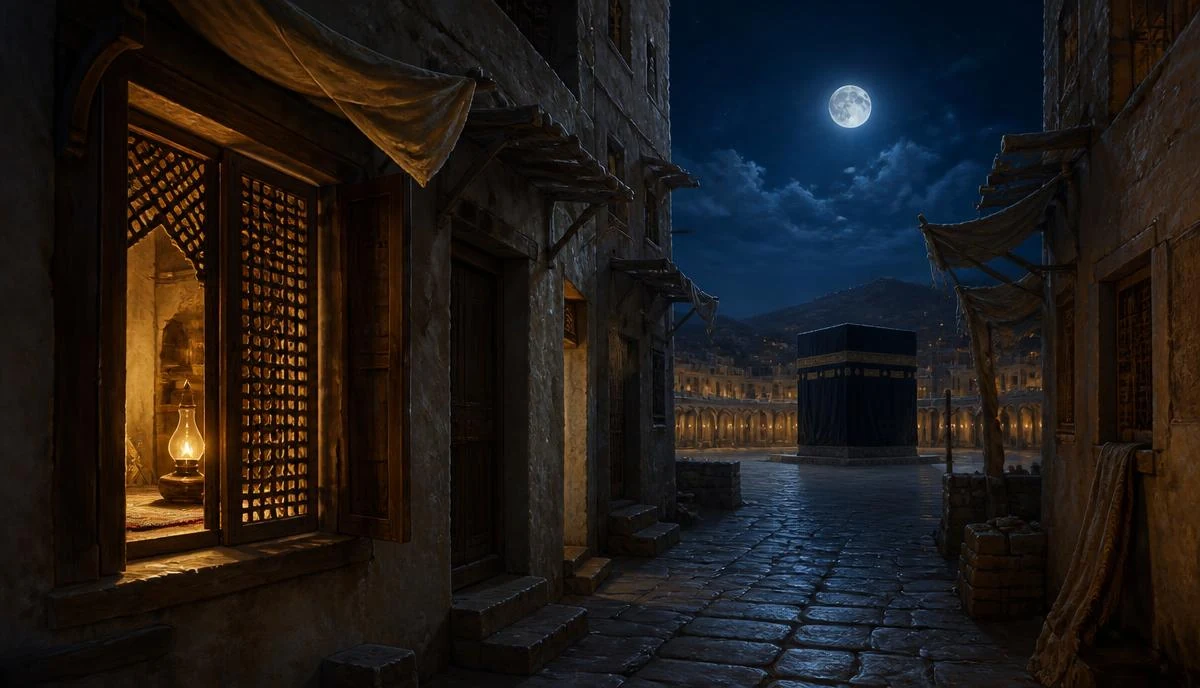
Ibn Sad and others narrate from Umar that he went out one night intending to circumambulate the Kaaba, and found the Prophet, peace be upon him, standing in prayer reciting Surah Al-Haqqah. He said: I came closer to listen, and the composition of the Quran amazed me, so I said to myself: this is a poet, as Quraysh claims. Then he recited:
Open surahSurah Al-Haqqah 69:41
Verified recitation
وَمَا هُوَ بِقَوْلِ شَاعِرٍۢ ۚ قَلِيلًۭا مَّا تُؤْمِنُونَ
And it is not the word of a poet; little do you believe.
So I said: a soothsayer. Then he recited:
Open surahSurah Al-Haqqah 69:42-43
Verified recitation
وَلَا بِقَوْلِ كَاهِنٍۢ ۚ قَلِيلًۭا مَّا تَذَكَّرُونَ تَنزِيلٌۭ مِّن رَّبِّ ٱلْعَٰلَمِينَ
Nor the word of a soothsayer; little do you remember. It is a revelation from the Lord of the worlds.
Umar said: and Islam settled into my heart completely.
This scene deserves reflection. The Quran did not confront him with a physical miracle; it anticipated his objection before he could voice it. Every accusation Quraysh attached to the Prophet was answered by the text in the very same moment.
Even so, Umar did not announce his Islam that night. Truth may reach the heart long before the tongue, the habit and the tribal loyalty submit to it. Between the moment of conviction and the moment of declaration lies a person's battle with himself.
You can read Surah Al-Haqqah in full to see the verses Umar heard that night, and listen to recitations by renowned reciters.
Lessons
- The Quran anticipates the heart's objection before the tongue voices it
- Truth may reach the heart before habit submits to it
- Listening attentively to the Quran is a great door of guidance
Chapter 4
His Sister's House and the Page of Surah Ta-Ha
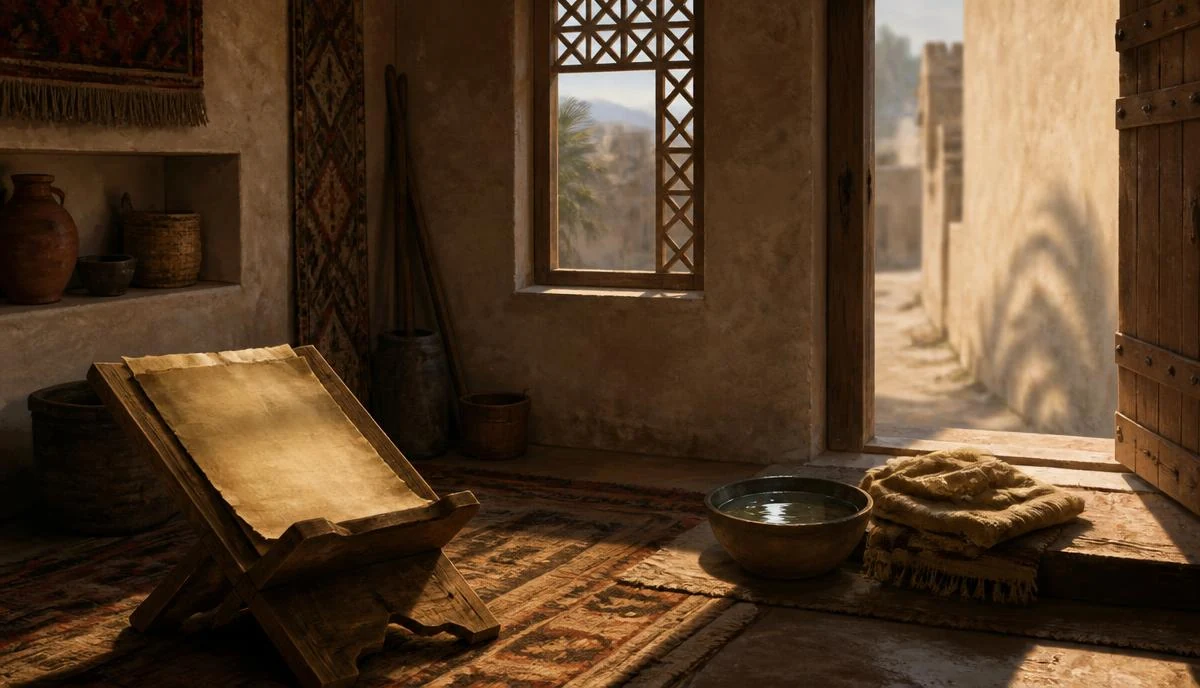
Ibn Hisham reports in the Sira that Umar went out one day with his sword girded, intending harm to the Prophet, peace be upon him. A man met him and told him that his sister Fatimah bint al-Khattab and her husband Said ibn Zayd had accepted Islam. He turned back to her house in anger, where Khabbab ibn al-Arat was reciting to them a page containing Surah Ta-Ha.
He heard murmuring, entered, and struck them. His sister then said a decisive sentence: "We have accepted Islam and believed in God and His Messenger, so do what you will." When he saw the blood on her face he regretted it, his anger settled, and he said: give me this document to look at. She replied: you are impure, and only the pure may touch it. So he rose, washed himself, took the page and read:
Open surahSurah Taha 20:1-3
Verified recitation
طه مَآ أَنزَلْنَا عَلَيْكَ ٱلْقُرْءَانَ لِتَشْقَىٰٓ إِلَّا تَذْكِرَةًۭ لِّمَن يَخْشَىٰ
Ta-Ha. We have not sent down the Quran to you to make you miserable, but as a reminder for whoever fears.
He said: how excellent and how noble these words are. Guide me to Muhammad.
Three things stand out in this chapter: the steadfastness of an unarmed believing woman before a man carrying a sword; a reverence the Quran received before it was even read; and a text that came to lighten rather than to burden. The first thing Umar read was that the Quran was not sent down to make a human being miserable.
You can read Surah Ta-Ha in full from its opening as Umar read it, and browse the whole Quran in a continuous Mushaf.
Lessons
- We did not send the Quran to make you miserable: religion came to lighten, not to burden
- The steadfastness of an unarmed believer outweighs a sword
- Reverence for the Quran preceded its reading and became the key to understanding it
Chapter 5
The House of al-Arqam: A Knock at the Door
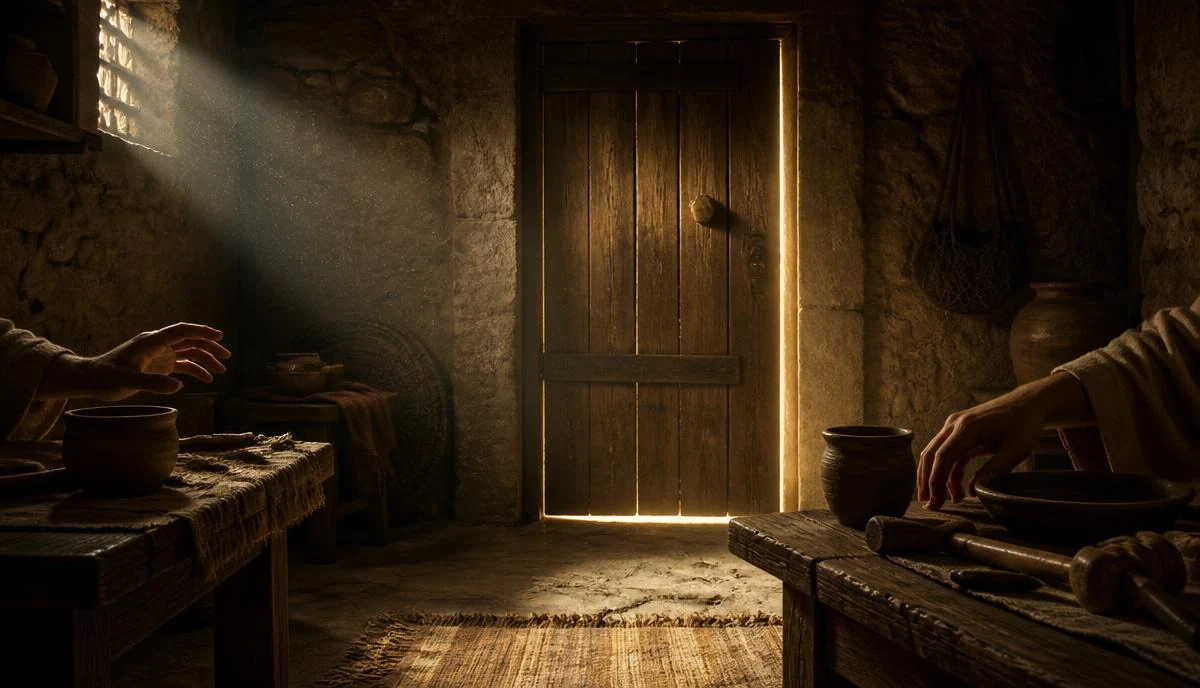
The Muslims used to gather at the house of al-Arqam ibn Abi al-Arqam near al-Safa, a small house that served as the centre of the secret call. Umar came to it with his sword girded; one of them looked through a gap in the door and told the others, and the group was alarmed.
Hamzah ibn Abd al-Muttalib, may God be pleased with him, said: let him in. If he has come with good we accept it, and if he has come with evil we will deal with him. The Prophet, peace be upon him, admitted him, took hold of his garment and said: "What has brought you, son of al-Khattab?" Umar said: Messenger of God, I have come to believe in God and His Messenger and in what has come from God. The Prophet pronounced a takbir so loud that the people of the house knew Umar had accepted Islam.
The first thing Umar then asked for was that they leave secrecy for the open. He said: Messenger of God, are we not upon the truth? He replied: yes. Umar said: then why the hiding?
That day the Muslims went out to the sanctuary in two rows, one with Hamzah and one with Umar, and circumambulated the House. Ibn Masud, may God be pleased with him, said: "We were unable to pray at the Kaaba until Umar accepted Islam."
From that hour no door in Makkah remained closed to the call, not because the harm had ended, but because the fear had been broken.
Lessons
- The truth need not apologise for itself: are we not upon the truth, so why the hiding
- A community is broken by fear before it is broken by numbers
- Whoever enters the truth sincerely takes his first bold step within it
Chapter 6
After the Declaration: How a Nation Is Built Through One Man
The Islam of Umar, may God be pleased with him, was not the addition of a number but a change in the position of the entire call. The Muslims now had open prayer at the Kaaba, Umar was titled al-Faruq because his declaration separated truth from falsehood, and he became among the closest of people to the Prophet.
The first lesson: strength is not a flaw but a trust. The temperament that once frightened the Muslims became the temperament that protected them. God does not ask a person to erase his character when he is guided, only to place it where it belongs.
The second lesson: change begins with a text read fairly. Everything that happened began with verses Umar heard at the Kaaba and a page he read in his sister's house. Whoever wishes to change should draw near to the Quran by reading, listening and reflecting, not only by arguing.
The third lesson: never despair of anyone. The person most severe against the truth today may be its widest gateway tomorrow, and praying for guidance is more useful than praying for destruction.
The fourth lesson: faith shows its effect in justice, not in slogans. Whoever reads Umar's life during his caliphate finds a man who held himself accountable for his people before holding anyone else to account.
The platform offers what supports this path: reading Surah Ta-Ha and Surah Al-Haqqah, listening to recitations by renowned reciters, the azkar and supplications to steady the heart, prayer times for whoever wants to begin his change with prayer, and other stories of divine patterns such as The People of the Ditch, Talut and Jalut and The People of the Elephant.
Questions people often ask
What led Umar to Islam?
He set out toward the Prophet, learned that his sister had accepted Islam, turned to her house, and heard a page bearing the opening of Surah Ta-Ha. The words settled in his heart and he went on to declare his faith.
In which year did he accept Islam?
Most reports place it in the sixth year of the prophetic mission, after around forty men and a number of women had already believed.
Why was he called al-Faruq?
Because his Islam separated truth from falsehood: prayer at the Kaaba became open after having been hidden. Ibn Masud said, "We have been strong ever since Umar accepted Islam."
Lessons
- Strength is a trust, not a flaw; guidance directs it rather than erasing it
- Change begins with a text read fairly
- Never despair of anyone; praying for guidance is better than praying for ruin
- Faith shows its effect in justice, not in slogans
Interactive quiz
Answer the questions below, then check your answers. No account needed.
1. With whom did the Prophet pray that God strengthen Islam?
2. Which surah did Umar hear the Prophet reciting at the Kaaba?
3. Which surah was on the page Umar read in his sister's house?
4. What did Umar do before touching the page?
5. In which house were the Muslims gathering secretly when Umar came declaring his Islam?
6. What did Umar ask for first after accepting Islam?
The illustrations are our own, free of copyright restrictions, and do not depict identified religious figures.
Related stories

Data sources
- The Quran: Surah Ta-Ha 1-14
- The Quran: Surah Al-Haqqah 38-43
- Sirat Ibn Hisham, the account of Umar ibn al-Khattab's Islam
- Ibn Sad, al-Tabaqat al-Kubra, the biography of Umar ibn al-Khattab
- Sahih al-Bukhari, Book of the Merits of the Companions
- Sunan al-Tirmidhi, the Prophet's supplication: O God, strengthen Islam with one of the two Umars
- Ibn Kathir, al-Bidaya wa al-Nihaya, events of the sixth year of the mission