Stories
The People of the Sabbath
The story of a coastal village of the Children of Israel that God tested by forbidding fishing on the Sabbath. Some of them devised tricks around the command, and the people split into three groups: transgressors, those who forbade the wrong, and those who stayed silent. Six chapters with Quranic references, lessons, and an interactive quiz.
The story narration voice is machine-generated. The text is human-written and reviewed, and Quran verses are recited by a verified reciter.
Chapter 1
The Town by the Sea
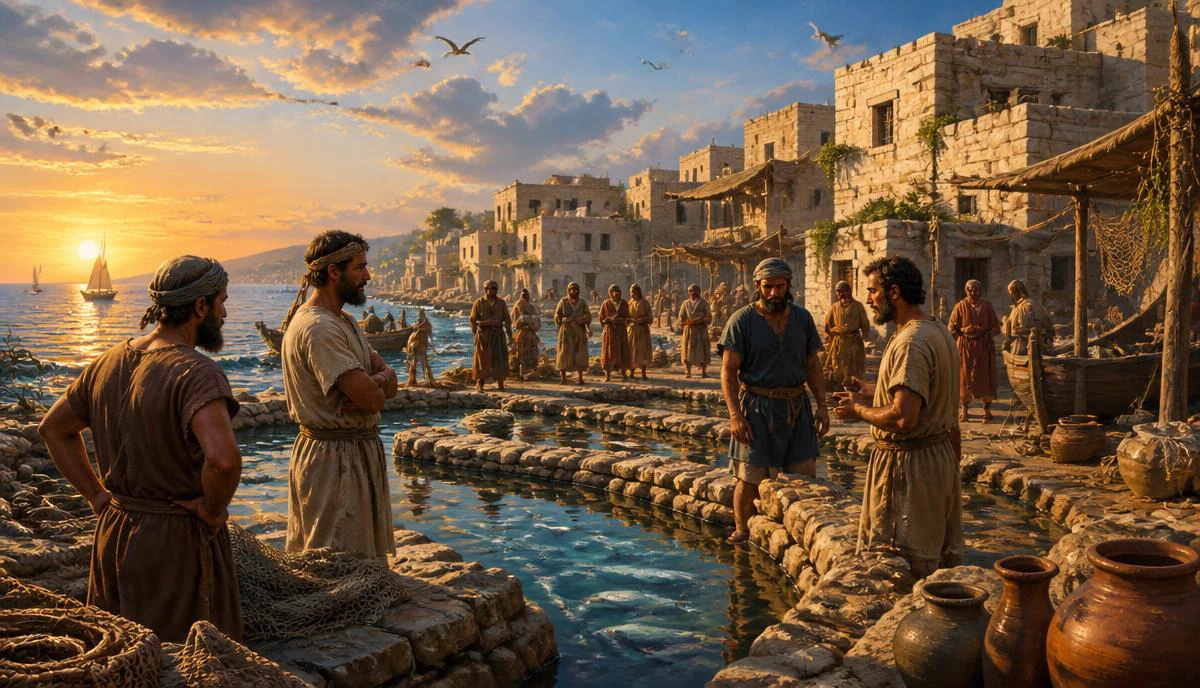
God commands His Prophet, peace be upon him, to ask the Children of Israel about a town that was by the sea, standing on its shore. Many commentators identified it as Aylah on the coast of the Red Sea. Its people were a community of the Children of Israel who lived from fishing, their whole livelihood tied to the sea and its seasons.
God had obliged the Children of Israel to honour the Sabbath, making it a day set aside for worship, and He forbade them work and fishing on it. The obligation was not heavy: one day a week in which earning was left aside, and six open days for provision.
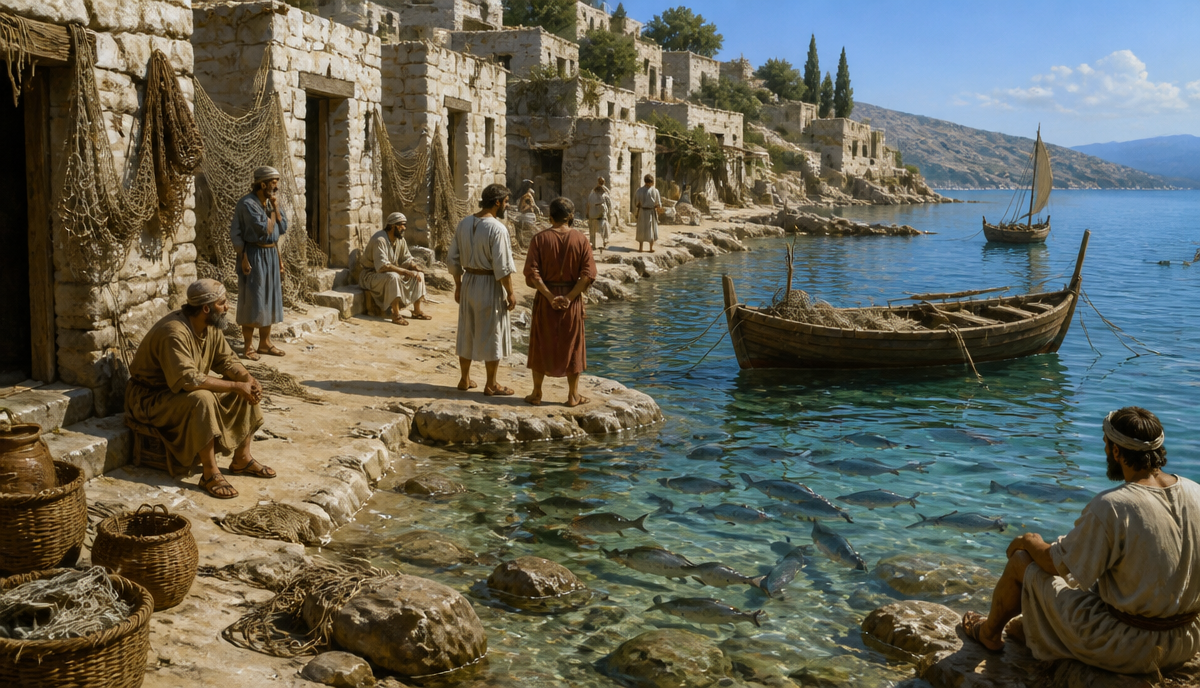
But the test came in a precise form. On the Sabbath the fish came to them visible on the surface of the water, close and easy to take, and on other days they did not come. So provision was placed right before their eyes on the very day it was forbidden to them, to make clear who would put God's command above his own desire.
Lessons
- Trials usually come through what we love, not through what we dislike
- What is lawful is wide and sufficient, while what is forbidden is little and limited
- The wisdom of a command is to reveal a servant's sincerity, not to burden him
Chapter 2
Devising a Trick Around God's Command
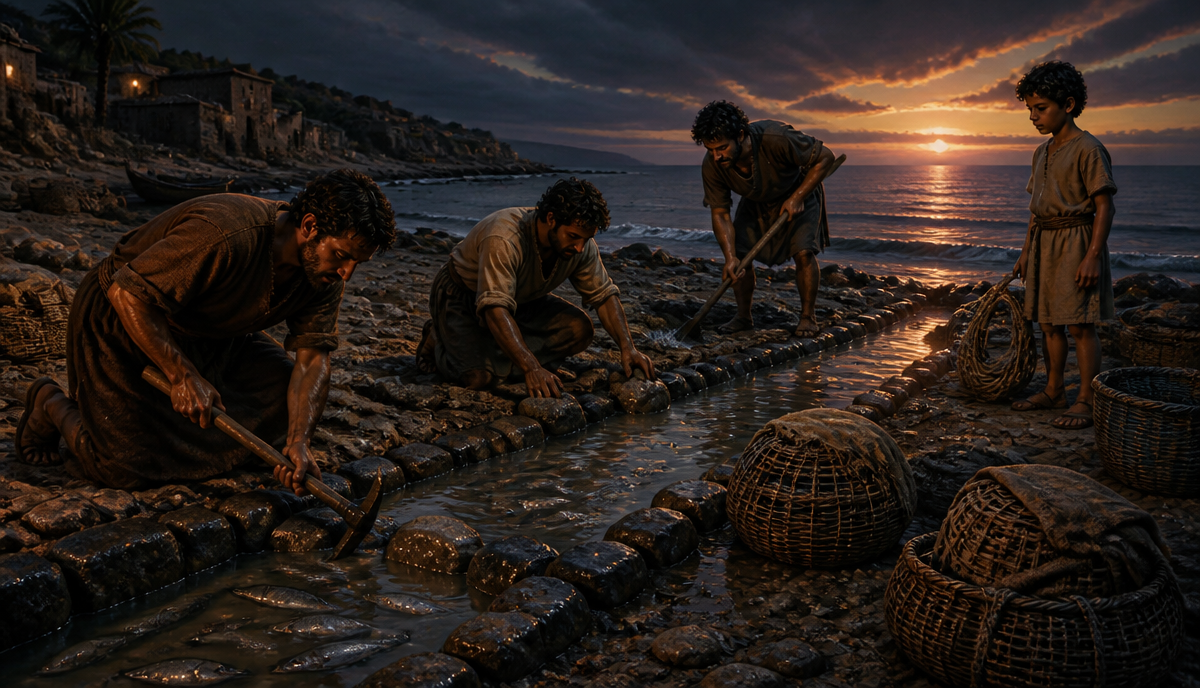
At first the people did not dare to fish openly on the Sabbath, for the prohibition was clear and admitted no interpretation. So they searched for a path to what was forbidden without appearing to have broken the command.
They devised a trick: they set out nets, pits and pools on Friday, so the fish would enter them on the Sabbath and be unable to leave, and then they would collect them on Sunday. They said: we did not fish on the Sabbath. With those words they quieted their consciences, while the act itself remained a plain violation.
This is the essence of legal trickery: the outward wording stays intact while the purpose is violated. Scholars therefore counted it among the most dangerous forms of deviation, because it is disobedience practised in the clothing of obedience, and the one who does it feels no need to repent.
Lessons
- A trick to reach the forbidden is itself forbidden; what counts is intent, not wording
- Quieting the conscience with a corrupt interpretation is more dangerous than open disobedience
- Whoever opens a small door to evasion ends up treating the command lightly altogether
Chapter 3
Three Groups in One Town
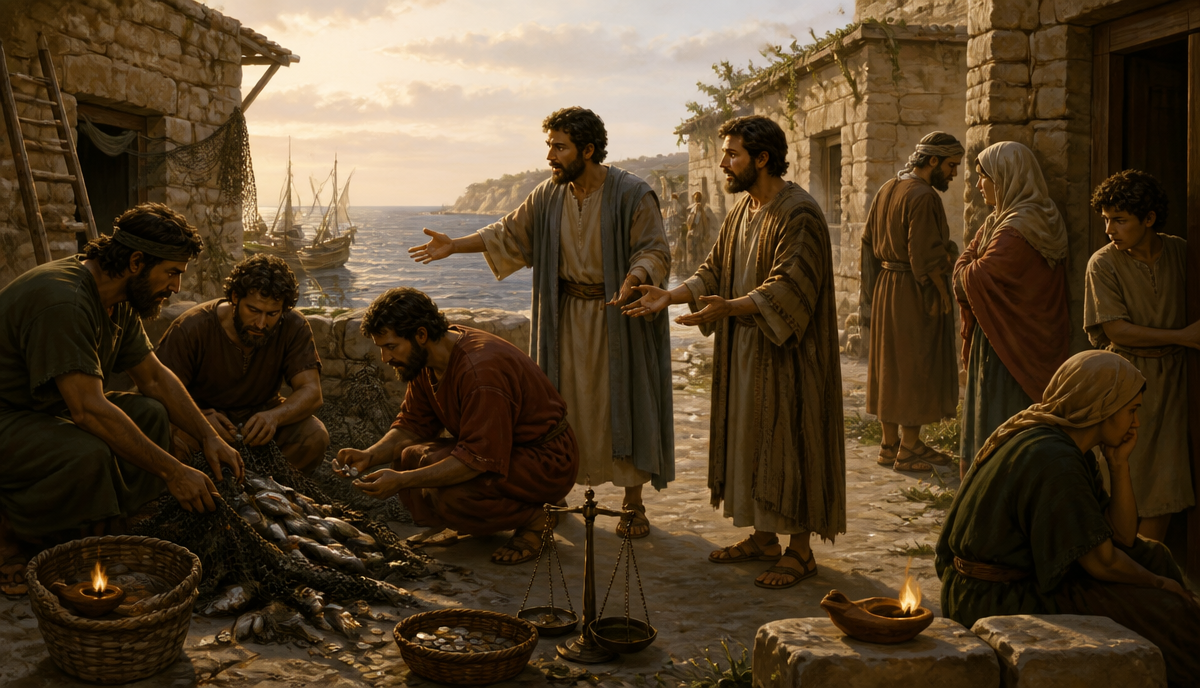
Faced with this evasion, the people of the town split into three groups, as the flow of the verses indicates. One group transgressed and fished by the trick. A second group objected and forbade them. A third group stayed silent: they did not take part in the fishing, but they did not object either, and instead reproached those who were warning, saying: why do you admonish a people whom God is going to destroy or punish with a severe punishment?
The logic of the silent group looked realistic: there is no use in speaking, these people will not respond, so why exhaust ourselves and lose our standing with them?
The answer of those who forbade the wrong came in two decisive points: as an excuse before your Lord, and so that perhaps they may become mindful of Him. In other words, we are fulfilling our duty before God first, while guidance itself is in God's hand, and one of them may yet respond one day. That answer is the true measure of righteous work: a sincere intention and a duty carried out, not guaranteed results.
Lessons
- Silence before wrongdoing is a position, not neutrality
- Action is measured by fulfilling the duty, not by guaranteeing the outcome
- Enjoining good is both an excuse before God and a hope for people's guidance
Chapter 4
When They Forgot What They Had Been Reminded Of
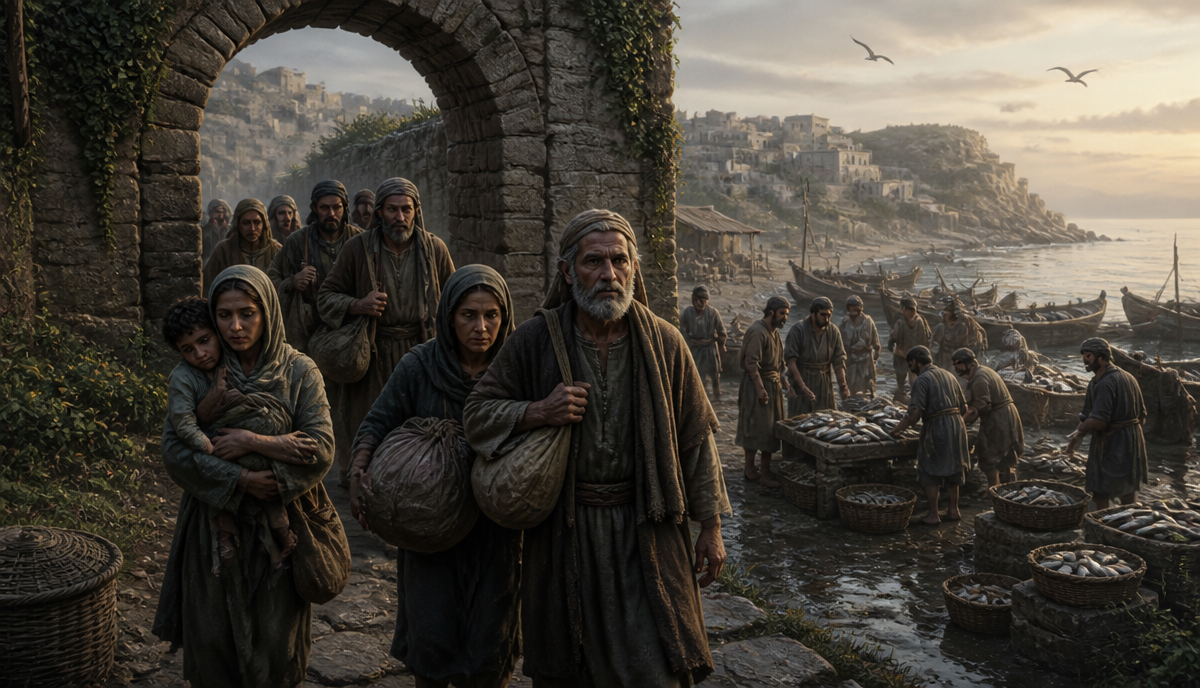
The situation continued for a time: repeated reminders and repeated rejection. Then came the decisive moment, expressed by the verse: and when they forgot what they had been reminded of. Forgetting here does not mean loss of memory; it means turning away from knowledge after it was clear, which is the most dangerous kind of forgetting.
At that point the separation came: God saved those who forbade evil, and seized those who wronged with a wretched punishment because of the defiance they persisted in. Note the precision of the Quranic wording: salvation is stated for those who forbade the wrong, punishment is stated for the wrongdoers, and the text is silent about those who stayed silent. Commentators differed about them in two well known opinions, and that silence is itself a warning.
The lesson is that safety from punishment is not bought merely by staying away from the act, but by taking a clear stand for the truth.
Lessons
- Forgetting a reminder is turning away, not inability
- Salvation went to those who fulfilled the duty, not to those content with keeping out of it
- A delayed punishment is a reprieve, not neglect
Chapter 5
Be Apes, Despised

The punishment came in a form matching the crime: when they persisted in defiance of what they had been forbidden, God said to them: be apes, despised. A people who used their minds to evade God's command were stripped of the human form and its dignity, and left with a form resembling their own behaviour.
The Quran mentions this punishment in another place in explicit words: and you had already known about those among you who transgressed on the Sabbath, and We said to them, be apes, despised. It states that God made it a deterrent for those present at the time and those who came after, and a lesson for the God-conscious.
So the punishment was not mere retribution; it was an announced message to the generations: treating God's limits lightly has a price, and a mind used to evade the law drags its owner below his own rank.
Lessons
- The recompense matches the deed
- Intelligence without God-consciousness destroys rather than builds
- God's limits are not formalities; they are the balances by which nations are preserved
Chapter 6
A Lesson for the God-Conscious

God closes the story with a sentence that defines its purpose: so We made it a deterrent for those present and those who came after, and a lesson for the God-conscious. The story is not a report about a people who passed away; it is a mirror placed before every generation.
The story repeats itself in new forms whenever tricks are used to bypass a ruling while preserving its outward appearance: in financial dealings, in contracts, and in the small daily situations in which a person tells himself that it is only a matter of form.
The greatest lesson remains in the group that was saved: people who held no power and no numbers, but who spoke the word of truth and fulfilled their duty, and so were delivered. The rest fell, between open transgression and cheap silence.
Questions people often ask
Who were the People of the Sabbath?
A community of the Children of Israel in a coastal town. God forbade them to fish on the Sabbath as a test, and some of them found a way around the prohibition while keeping its outward form.
What was their trick?
They set nets and traps on the Sabbath without taking the catch, then collected it on Sunday, claiming they had not fished on the forbidden day.
What does "Be apes, despised" mean?
It is a judgement of transformation and humiliation for mocking a divine command, recorded in Surah Al-Baqarah and Surah Al-Araf as a warning against evading rulings through wordplay.
Lessons
- The stories of the Quran are living lessons, not reports of the past
- A small sincere group can be the reason for deliverance
- Guarding God's limits starts with the small matters
Interactive quiz
Answer the questions below, then check your answers. No account needed.
1. Where was the town of the People of the Sabbath?
2. What made the trial severe for the people of the town?
3. How did the transgressors evade the prohibition?
4. Into how many groups did the townspeople split?
5. How did those forbidding the wrong answer when asked why they admonished the people?
6. Whose salvation does the Quran explicitly state?
7. What punishment does the Quran mention for the transgressors?
8. What purpose does the Quran give for this punishment?
The illustrations are our own, free of copyright restrictions, and do not depict identified religious figures.
Related stories

Data sources
- The Holy Quran: Al-Araf 163-166, Al-Baqarah 65-66, An-Nisa 47 and 154, Al-Maidah 60
- Tafsir Ibn Kathir
- Tafsir At-Tabari - Jami al-Bayan
- Tafsir As-Sadi