Stories
Harut and Marut
The story of the two angels Harut and Marut in Babylon as told in a single verse of Surah Al-Baqarah: a trial announced before it was taught, magic that harms only by the permission of God, and a bargain in which the buyers lost themselves. Six chapters with verses, lessons and an interactive quiz.
The story narration voice is machine-generated. The text is human-written and reviewed, and Quran verses are recited by a verified reciter.
Chapter 1
An Old Accusation Against a Noble Prophet
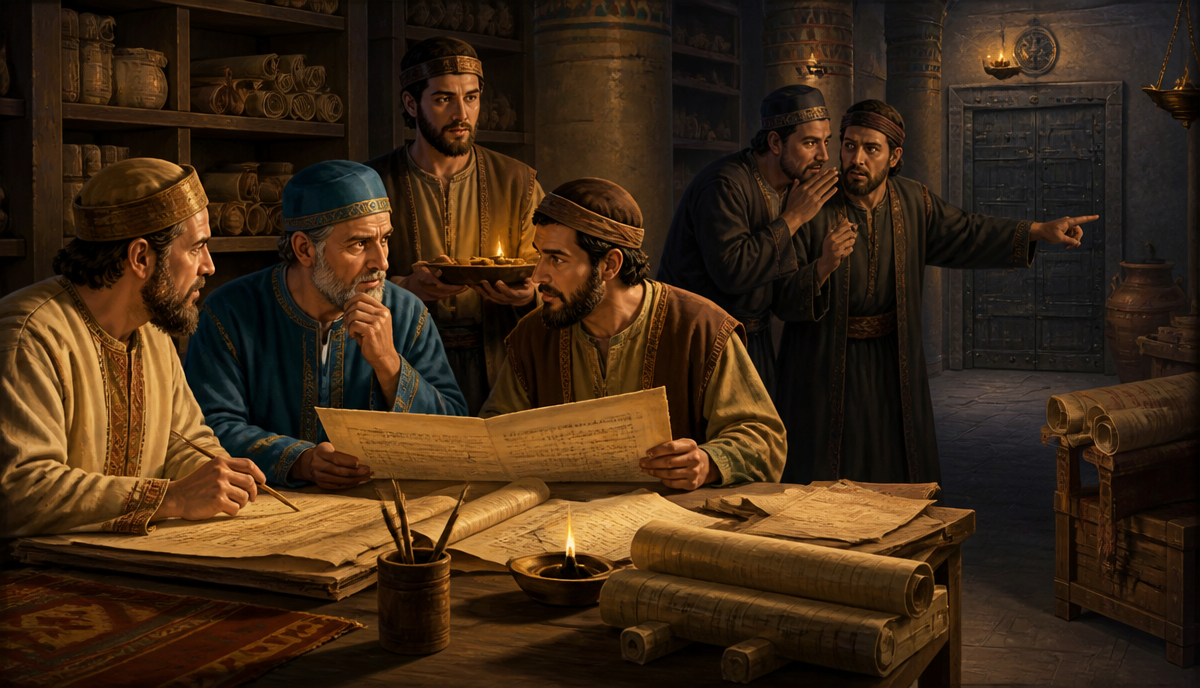
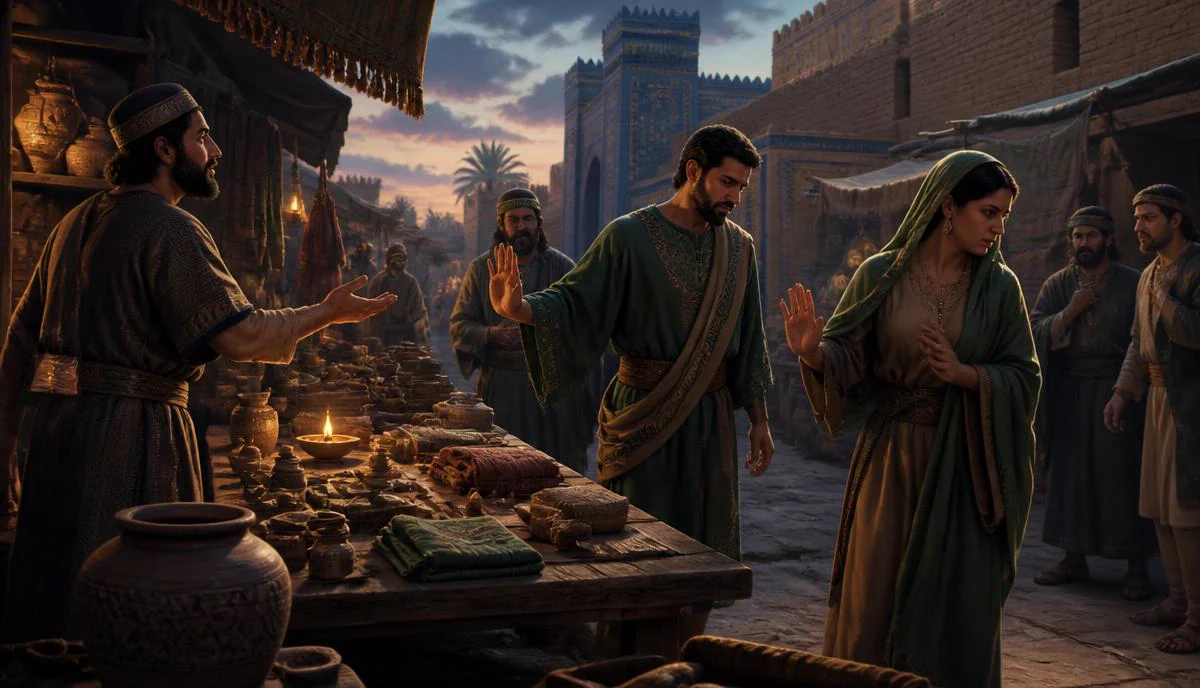
The story begins not in Babylon but with an accusation. Some people attributed the kingdom of Sulayman, peace be upon him, to magic, claiming that his command of the wind, the jinn and the speech of birds came from sorcery he had learned. The devils spread this claim and dressed it up until it became common talk.
The verse rejects the accusation outright:
Open surahSurah Al-Baqarah 2:102
Verified recitation
وَٱتَّبَعُوا۟ مَا تَتْلُوا۟ ٱلشَّيَٰطِينُ عَلَىٰ مُلْكِ سُلَيْمَٰنَ ۖ وَمَا كَفَرَ سُلَيْمَٰنُ وَلَٰكِنَّ ٱلشَّيَٰطِينَ كَفَرُوا۟ يُعَلِّمُونَ ٱلنَّاسَ ٱلسِّحْرَ وَمَآ أُنزِلَ عَلَى ٱلْمَلَكَيْنِ بِبَابِلَ هَٰرُوتَ وَمَٰرُوتَ ۚ وَمَا يُعَلِّمَانِ مِنْ أَحَدٍ حَتَّىٰ يَقُولَآ إِنَّمَا نَحْنُ فِتْنَةٌۭ فَلَا تَكْفُرْ ۖ فَيَتَعَلَّمُونَ مِنْهُمَا مَا يُفَرِّقُونَ بِهِۦ بَيْنَ ٱلْمَرْءِ وَزَوْجِهِۦ ۚ وَمَا هُم بِضَآرِّينَ بِهِۦ مِنْ أَحَدٍ إِلَّا بِإِذْنِ ٱللَّهِ ۚ وَيَتَعَلَّمُونَ مَا يَضُرُّهُمْ وَلَا يَنفَعُهُمْ ۚ وَلَقَدْ عَلِمُوا۟ لَمَنِ ٱشْتَرَىٰهُ مَا لَهُۥ فِى ٱلْـَٔاخِرَةِ مِنْ خَلَٰقٍۢ ۚ وَلَبِئْسَ مَا شَرَوْا۟ بِهِۦٓ أَنفُسَهُمْ ۚ لَوْ كَانُوا۟ يَعْلَمُونَ
Sulayman did not disbelieve, but the devils disbelieved, teaching people magic.
The prophet is innocent; those who disbelieved were the devils who spread magic among people and then hung the accusation on a prophet so that their own act would look acceptable.
This is the first lesson of the story: falsehood always needs a covering of truth. When those who spread magic wanted it accepted, they attributed it to a prophet, because people do not accept an evil act unless it is dressed in a noble garment.
Lessons
- Prophets are innocent of every falsehood attributed to them
- Falsehood hides behind a respected name to gain acceptance
- A widespread accusation does not become true by repetition
Chapter 2
Babylon: The City of the Trial
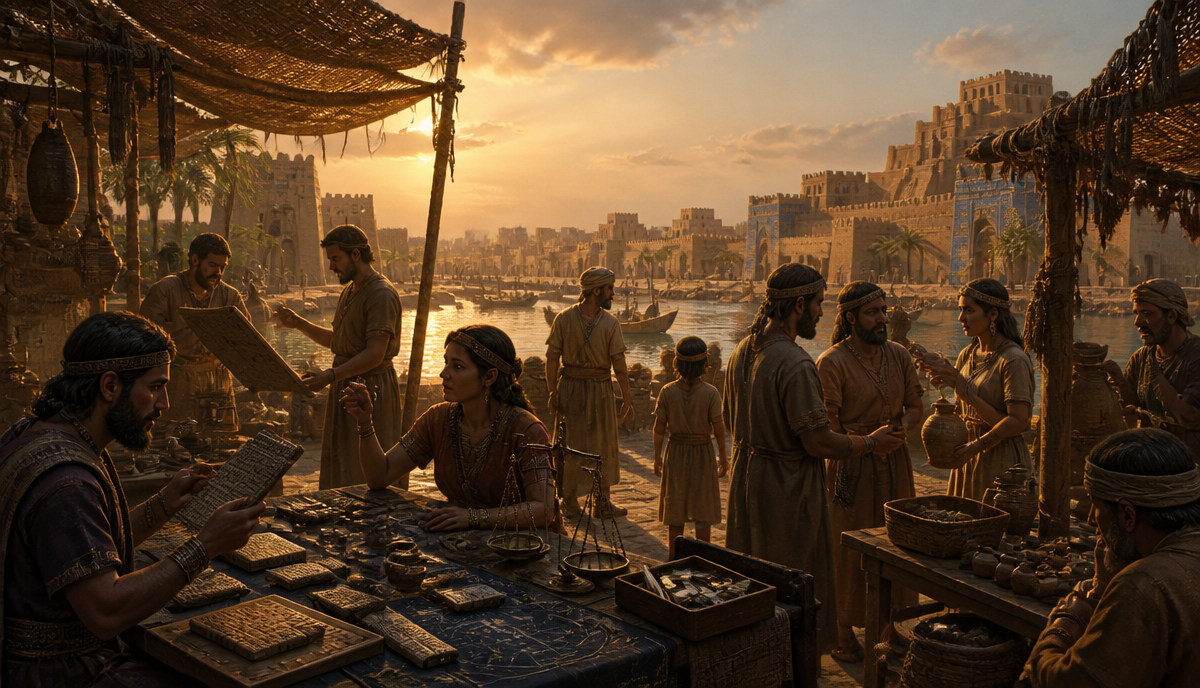
The verse then names a specific place, mentioning what was sent down to the two angels at Babylon, Harut and Marut. Babylon lay in the land of Iraq and was in its time one of the great cities of the world in learning and building, and also famous for divination, astrology and the trade of sorcerers.
In that very place, where magic was a thriving business bought and sold, the trial occurred. It was not an obscure trial: two angels taught what they taught, and let no one come near without an explicit warning first.
Many people stop at the name of the two and ask whether they were angels or two righteous men. Commentators differed, and the apparent sense of the verse is that they were angels. As for the long popular tale of their descent, their sins and the story of the planet Zuhra, a body of careful scholars has stated that it comes from Israelite reports that are not sound, and that angels are protected from sin. The Quranic account is complete without those additions, and that is enough.
Lessons
- Suffice with what is authentic and leave unsupported Israelite tales
- A city rich in learning can still be full of superstition
- The Quran mentions the detail that benefits and stays silent on the rest
Chapter 3
We Are Only a Trial, So Do Not Disbelieve
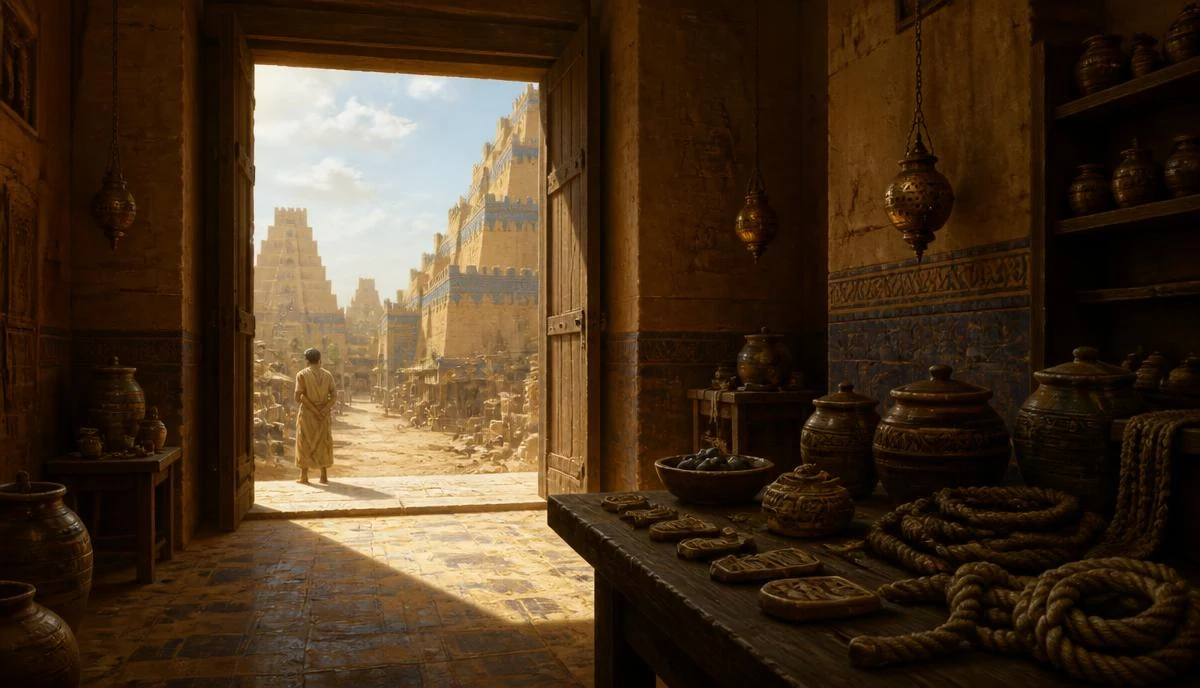
The most remarkable part of the story is the condition the verse sets out: they taught no one anything until they had stated plainly that they were a trial and a test, that what was being asked for was disbelief, and that the seeker should beware.
Consider the contrast with everything sold in the markets of deceit today. The sorcerer claims to be healing, the charlatan calls his work spirituality, the fortune teller presents himself as a consultant. Harut and Marut told the whole truth before the first word: this is disbelief, and we will not wrap it in a pleasant term.
And still, those who learned, learned. That is what a trial truly means: the road is lit by a warning, and a person walks it by his own choice. No excuse remains on the Day of Judgement, because the explanation came before the act.
Being tested with good and with hardship is a constant divine practice. God may test His servants with what they dislike and with what they desire, and safety lies in submission rather than curiosity.
Lessons
- A clear warning before a trial is a mercy that removes every excuse
- Curiosity is a door through which much ruin enters
- One who warns you honestly is better than one who beautifies falsehood
Chapter 4
What Separates a Man From His Wife
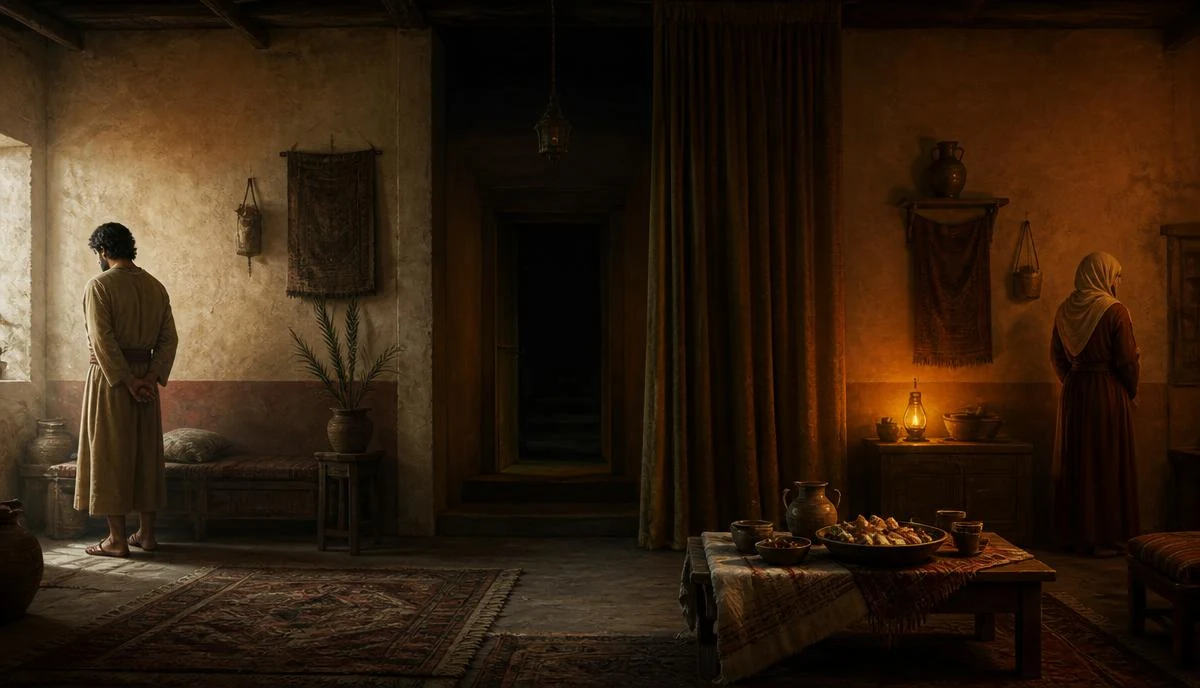
The verse then names the effect of what was learned: the separation of a man from his wife. Notice that the Quran did not choose an example about destroying a city or toppling a king, but about destroying a home.
The family is the first target of this door, because it is the place of tranquillity, affection and mercy, and destroying it destroys an entire society at its root. When the bond between two spouses is corrupted, the damage spreads to children, relatives and neighbours.
Then comes the doctrinal safeguard that frees the heart from fear: they can harm no one except by the permission of God. Neither the sorcerer nor his magic holds any harm independent of God's will. Everything is in God's hand, and causes act only by His permission.
For this reason it is a serious error for a Muslim to live in terror, reading every setback in life as magic or envy. The Quran states another truth elsewhere:
Open surahSurah Taha 20:69
Verified recitation
وَأَلْقِ مَا فِى يَمِينِكَ تَلْقَفْ مَا صَنَعُوٓا۟ ۖ إِنَّمَا صَنَعُوا۟ كَيْدُ سَٰحِرٍۢ ۖ وَلَا يُفْلِحُ ٱلسَّاحِرُ حَيْثُ أَتَىٰ
and the magician will not succeed wherever he goes.
Lessons
- Protecting the home is among the highest aims of the Sharia
- No harm and no benefit occur except by God's permission
- Constant fear of magic is a weakness in belief, not a sign of caution
Chapter 5
How Wretched Was the Price They Sold Themselves For
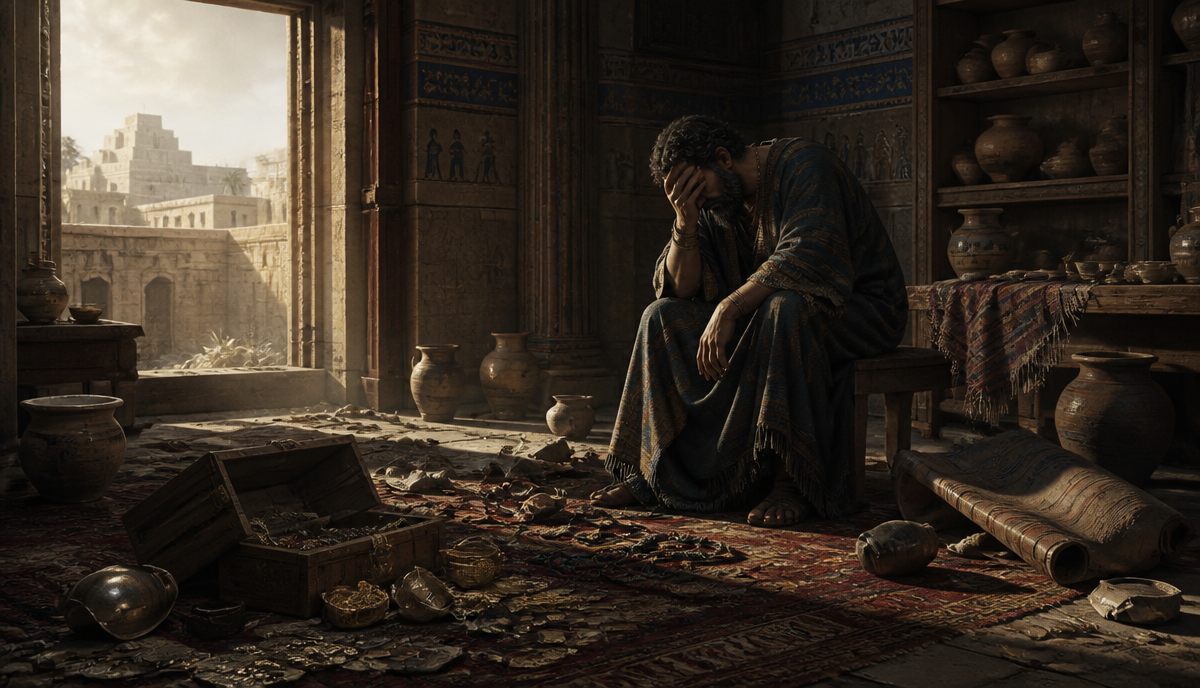
The verse ends by reckoning the bargain: they learned what harmed them and did not benefit them, they knew that whoever buys into this door has no share in the Hereafter, and wretched was the price for which they sold themselves.
Four judgements follow one another in a single line: what they learned is harmful and useless, they knew this and were not ignorant of it, they have no share in the Hereafter, and the price of the bargain was their own selves, not their wealth.
This is the scale the verse sets: the one who looks like a winner in worldly terms is the real loser, because he paid the most precious thing he owns for what does not benefit him. Its closing words are striking, since they hang the matter on knowledge right after affirming that they knew: they had knowledge as information, not knowledge acted upon, so their knowledge became evidence against them rather than for them.
That is exactly where the danger lies today. Many who visit charlatans know it is forbidden, yet it is knowledge they do not act on, and knowledge that does not change behaviour is no protection.
Lessons
- The most precious thing a person can sell is himself, so look at the price
- Knowledge not acted upon becomes evidence against its owner
- Gaining the world while losing the Hereafter is the greatest loss
Chapter 6
The Fortress: How a Muslim Protects Himself
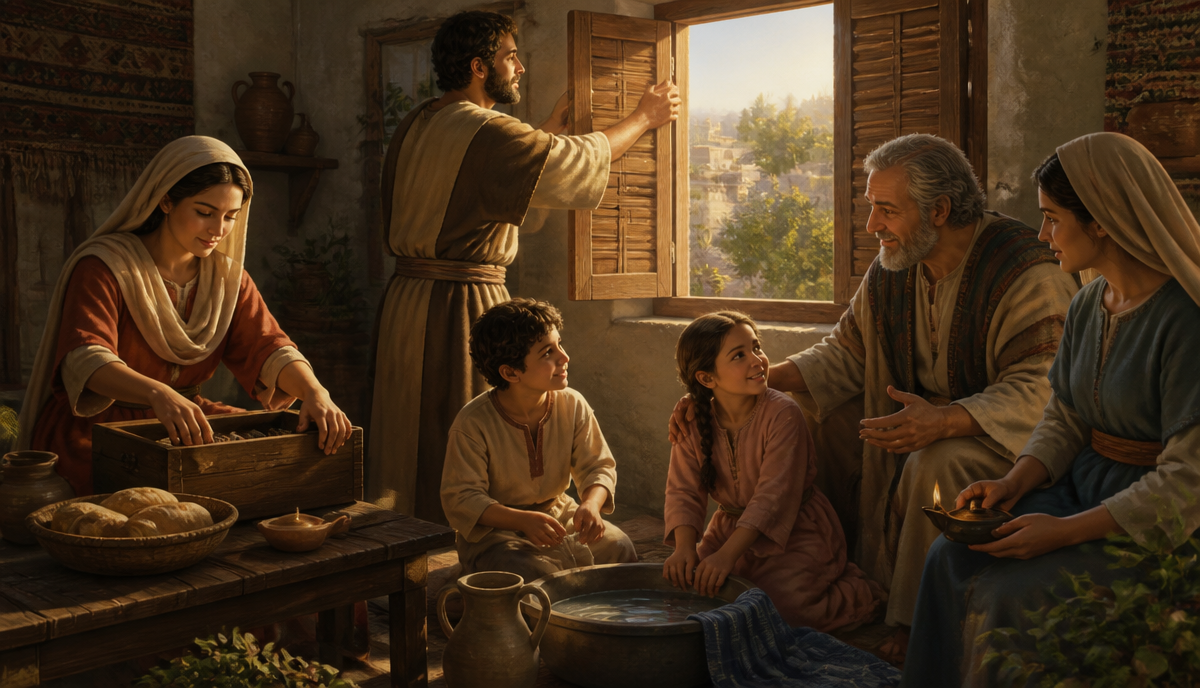
After the verse exposes the danger of this door, the practical question remains: how does a Muslim protect himself? The answer in the Sharia is clear and easy, with nothing obscure about it and nothing to pay for.
First is sound belief and genuine reliance on God, for a heart attached to God has no room for terror of secondary causes. Then keeping the morning and evening remembrances, reciting Ayat al-Kursi before sleeping, reciting the two refuge chapters and Surah Al-Ikhlas three times morning and evening, and reciting Surah Al-Baqarah at home, for the devil flees from a house in which it is recited.
Prevention also means avoiding every door of deceit: fortune tellers, astrologers, palm and luck readers, and anyone who asks for a mother's name or a piece of clothing. The Prophet, peace be upon him, listed magic among the seven destructive sins and warned against visiting soothsayers or believing them.
If harm does occur, the treatment is both religious and medical: ruqyah with the Book of God, supplication and seeking forgiveness, along with seeing a doctor for what is an illness, rather than blaming everything on magic. Magic may never be treated with magic.
The platform gives you what helps here: the protective azkar with their texts and counts, the full Surah Al-Baqarah, and recitations to play at home.
Questions people often ask
Who were Harut and Marut?
Two angels mentioned in Surah Al-Baqarah as being at Babylon. What passed through them was a trial for people, and they warned whoever came to them before teaching anything.
What does the verse mean?
That what happened was not an encouragement to magic but a test paired with an explicit warning: "We are only a trial, so do not disbelieve."
What is the ruling on magic?
It is forbidden. The verse makes clear that learning or teaching it in order to practise it leads to disbelief, and that a magician harms no one except by God's permission.
Lessons
- Sound belief is the strongest fortress and daily remembrance is its fence
- Avoiding soothsayers is prevention before cure
- Treat with lawful ruqyah and medicine together, never with more magic
Interactive quiz
Answer the questions below, then check your answers. No account needed.
1. What did the verse deny about Sulayman, peace be upon him?
2. Where did the trial of Harut and Marut take place?
3. What did the two say before teaching anyone?
4. What limit does the verse set on the harm of magic?
5. According to the verse, what price did those who learned magic pay?
6. What is the strongest protection for a Muslim here?
The illustrations are our own, free of copyright restrictions, and do not depict identified religious figures.
Related stories

Data sources
- The Quran: Surah Al-Baqarah 102, Surah Taha 69, Surah Al-Falaq and An-Nas
- Tafsir al-Tabari, Jami al-Bayan
- Tafsir Ibn Kathir
- Tafsir al-Sadi, Taysir al-Karim al-Rahman
- Sahih al-Bukhari and Sahih Muslim: the chapters on magic and the hadith of the seven destructive sins