Stories
The People of the Ditch
The story of a faith that fire cannot burn, indicated in Surah Al-Buruj and detailed in the hadith of the boy, the sorcerer and the king: a tyrant who dug trenches and lit fires, a young boy who stood firm, and a people who chose the truth over life. Six chapters with verses, lessons and an interactive quiz.
The story narration voice is machine-generated. The text is human-written and reviewed, and Quran verses are recited by a verified reciter.
Chapter 1
By the Sky Containing Great Stars: The Opening
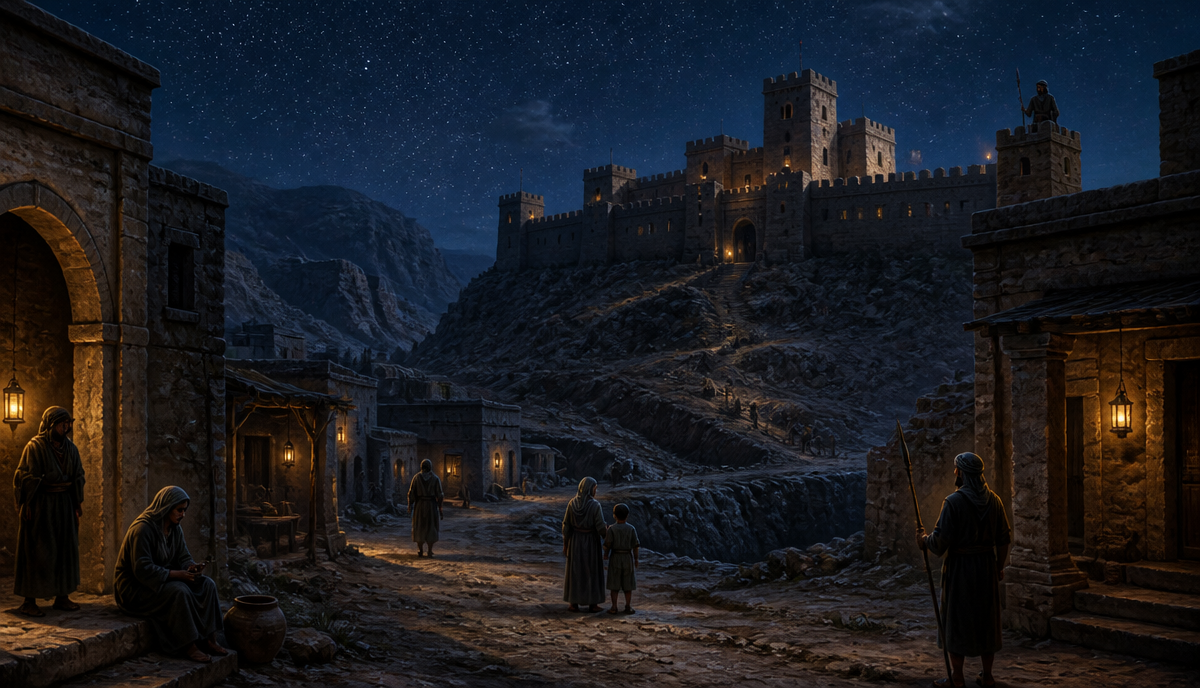
Surah Al-Buruj opens with an oath that lifts the gaze to the sky:
Open surahSurah Al-Buruj 85:1-3
Verified recitation
وَٱلسَّمَآءِ ذَاتِ ٱلْبُرُوجِ وَٱلْيَوْمِ ٱلْمَوْعُودِ وَشَاهِدٍۢ وَمَشْهُودٍۢ
By the sky containing great stars. And by the promised Day. And by the witness and what is witnessed.
The oath by the vast heaven and by the promised Day is a deliberate introduction, because the story that follows is a story of injustice in which the wronged were not vindicated in this world. Whoever reads about a fire in which believers were burned needs first to know that there is a promised Day from which no oppressor escapes.
Then the verdict comes before the details:
Open surahSurah Al-Buruj 85:4-5
Verified recitation
قُتِلَ أَصْحَٰبُ ٱلْأُخْدُودِ ٱلنَّارِ ذَاتِ ٱلْوَقُودِ
Cursed were the people of the ditch. The fire full of fuel.
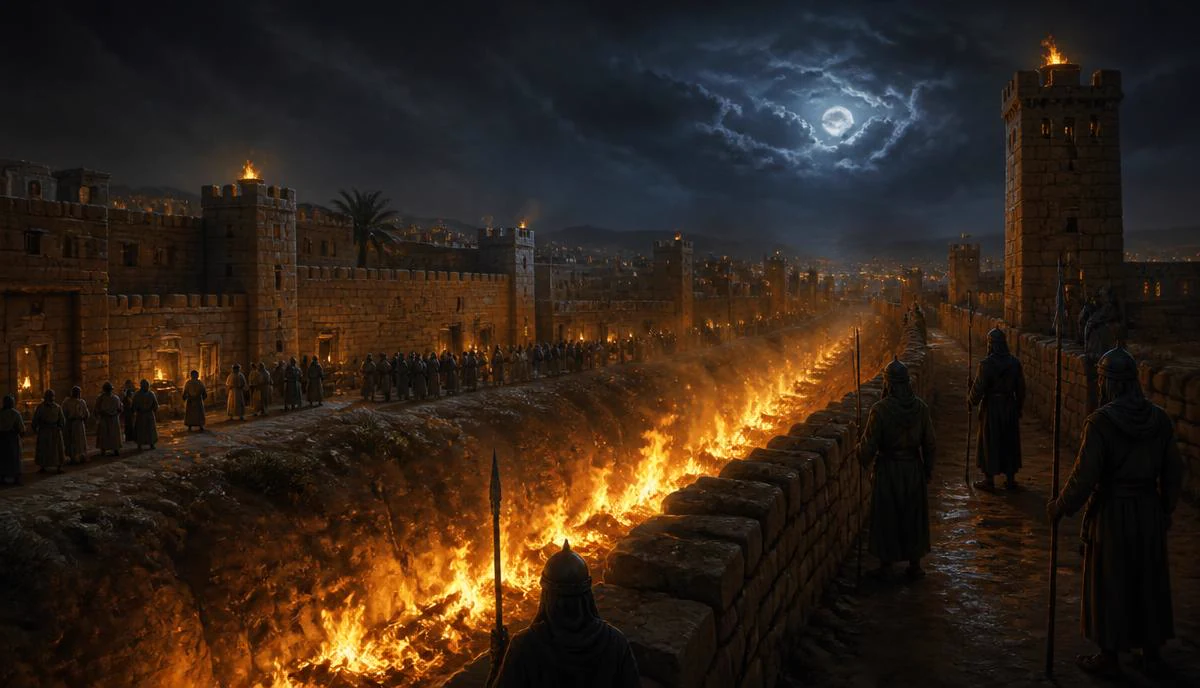
The ukhdud is a long trench dug into the ground, and its people are those who dug it, kindled the fire in it, and threw into it whoever believed in God.
The Quran does not name them, nor their era, nor their land, and this is intentional. The story is not a historical record to be memorised but a recurring pattern: wherever sincere faith appears, someone tries to extinguish it by force. The Quran displays the scene so every believer knows that what he faces is nothing new.
You can read Surah Al-Buruj in full to grasp the context before the details; it is a short surah read in minutes.
Lessons
- The oath by the sky and the promised Day prepares the heart for injustice unavenged in this life
- Withholding names and dates turns the story into a recurring pattern rather than a passing report
- There is nothing new in trying to extinguish faith by force
Chapter 2
A King and a Sorcerer: The Making of a Tyrant
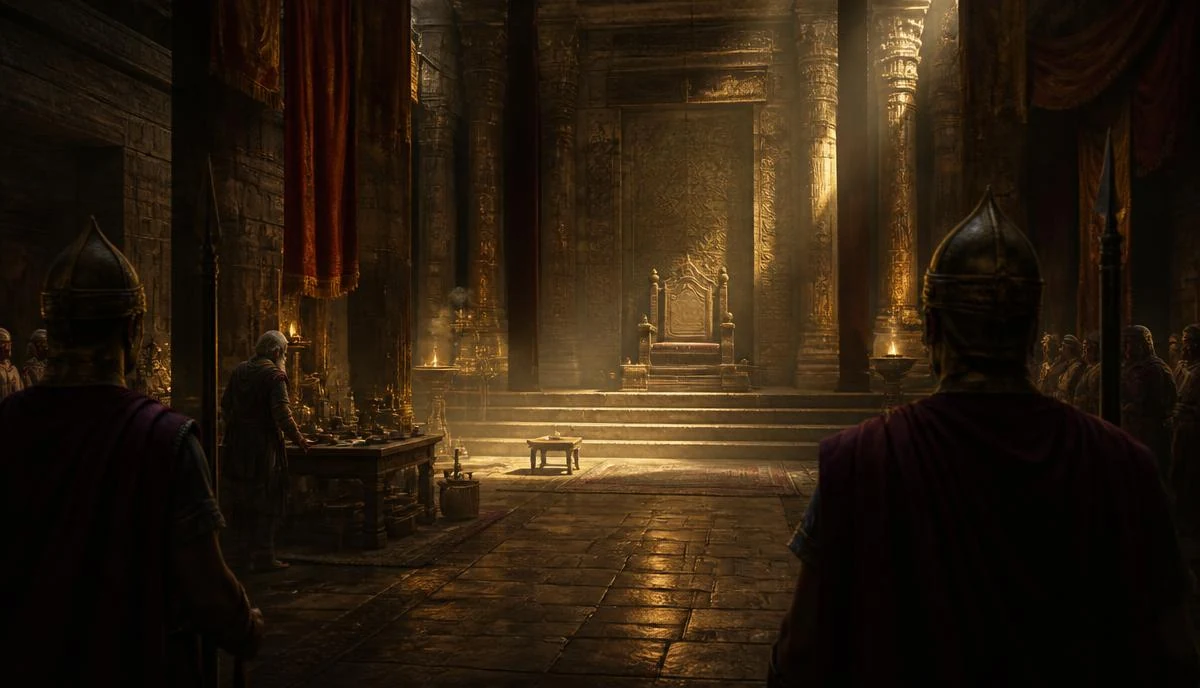
The Prophet, peace be upon him, detailed the story in a long hadith narrated by Muslim: "There was a king among those before you, and he had a sorcerer. When the sorcerer grew old he said to the king: I have grown old, so send me a boy to teach sorcery."
The first scene is not a fire or a trench but an institution. A king who wants to occupy the place of a god in people's eyes, and a sorcerer who supplies the cover with which the public is deceived. Tyranny does not stand on power alone; it needs someone to adorn it and to convince people that the king's strength comes from himself.
That is why the first threat to this structure was not an army but a boy who knew the truth, for a tyrant fears a question more than he fears a sword.
Notice the precision of the hadith: the sorcerer asked for a boy, a child at the age of learning. The people of falsehood understand the value of shaping the young, and they begin where convictions are built rather than where they are debated.
This introduction explains what follows: why the king raged so violently at a child, and why the matter ended in a trench and a fire. For him it was never a religion being contradicted but an authority being dismantled.
Lessons
- Tyranny needs a cover that adorns it, not only power
- The people of falsehood begin by shaping the young
- A tyrant fears a question more than a sword
Chapter 3
The Boy and the Monk: A Light Slips Through
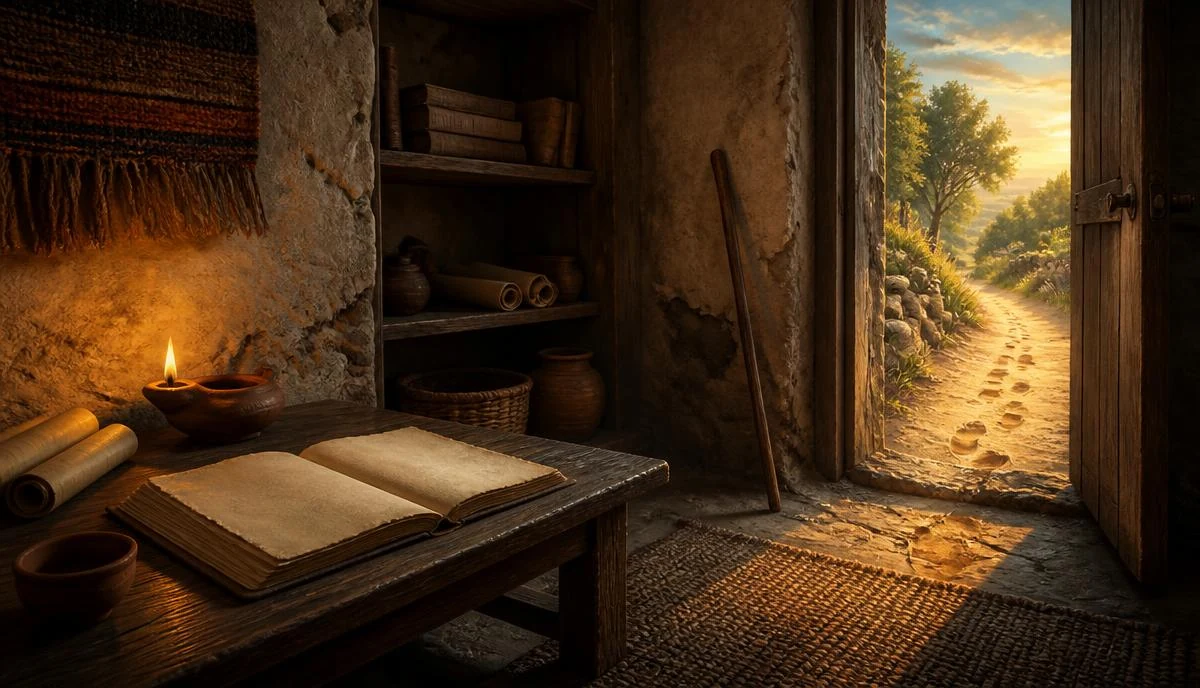
On his way to the sorcerer the boy would pass a monk, so he sat with him, heard his words and was impressed, and he began sitting with him every day. The hadith says: "Whenever he went to the sorcerer he would pass by the monk, sit with him and hear his words, and he liked them."
There was no public call and no pulpit, only a righteous man steady in his place and a boy who asked. This is how guidance travels in the narrowest of circumstances: through a small gathering at the side of a road.
Then God taught him, through the monk, His name and a supplication, and he began to heal the blind and the leper and to cure people by God's permission. A blind man asked him: will you heal me? He replied with the sentence that is the axis of the whole story: "I do not heal anyone. It is God who heals."
That sentence is the difference between the boy and the sorcerer. The sorcerer attributes the effect to himself so that he grows large; the boy returns the effect to God, so he becomes small and the truth becomes great with him. Here the real danger to the king began, because people saw a power that did not pass through the palace gate.
The fruit of that gathering was that blindness left one man, and blindness of the heart left a community with him. Whoever wants a lasting effect should know that one sincere sitting can open a door that never closes. You can settle this meaning by keeping to the azkar, which return the heart to pure monotheism each day.
Lessons
- Guidance travels through small sincere gatherings
- I do not heal anyone, it is God who heals: the story's creed in one line
- Ascribing merit to God magnifies the truth and shrinks the self
Chapter 4
The Mountain and the Sea: Attempts That Fail
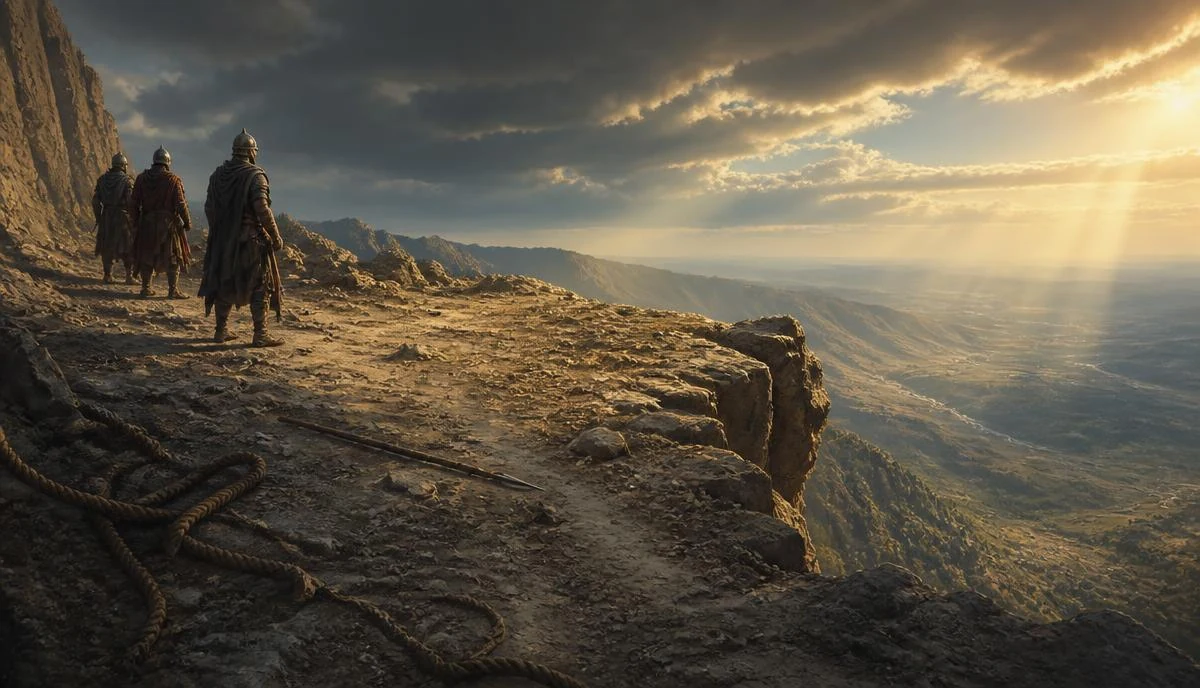
The king learned of the matter. He began with the monk and killed him, then with the king's companion who had regained his sight and killed him, then he took the boy. He ordered a group to take him up a mountain and throw him from its summit if he would not abandon his religion.
When they reached the peak the boy said: "O God, suffice me against them however You will." The mountain shook beneath them, they fell, and the boy walked back to the king.
So he ordered others to carry him out in a ship and drown him in the deep. He said the same supplication, the ship capsized beneath them, they drowned, and the boy returned once more.
This scene does not teach us that a believer is always saved in this world, for the monk was killed and the boy himself would be killed shortly after. It teaches us that the whole matter is in God's hand: nothing occurs except at the time He has written, and a tyrant holds no part of it except by permission.
There is great etiquette in the boy's supplication: he did not say kill them, nor grant me victory in a particular way, but "suffice me against them however You will." He surrendered the arrangement to God and asked only for sufficiency. This is the highest station of trust: to ask for the outcome and leave the path to God.
For anyone who wishes to learn this supplication and others like it, the azkar section on the platform gathers prayers of sufficiency and protection.
Lessons
- Nothing happens except at the time God has written
- Suffice me however You will: surrendering the method while asking for the outcome
- Rescue in this world is not a promise given to every believer
Chapter 5
The Ditch: The Fire and the Choice
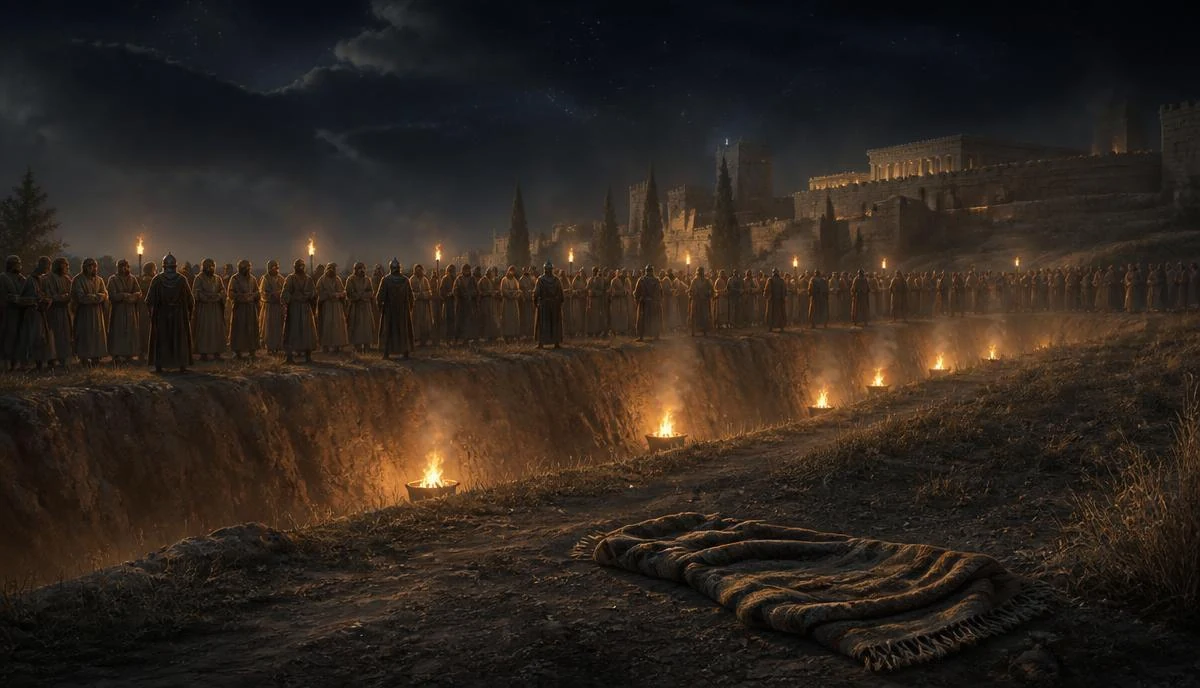
The boy returned to the king and said a sentence that showed his awareness outran his years: "You will not be able to kill me until you do what I command you." Then he showed him the way: gather the people on one plain, crucify him on a trunk, take an arrow from his quiver and say, "In the name of God, the Lord of the boy," then shoot.
The king did so. The arrow struck the boy's temple and he died. The people all said: "We believe in the Lord of the boy." This is what the boy had chosen: that his life be spent as the price of a nation's faith.
Shaken by what he saw, the king said: "Do you see what you used to fear? By God, the very thing I feared has befallen me." So he ordered trenches dug at the mouths of the roads, fires were kindled in them, and he said: whoever does not abandon his religion, cast him in.
The people came forward and fell in. The hadith records an unforgettable scene: a woman with an infant hesitated to step in, and the child said to her, "Mother, be patient, for you are upon the truth." So she stepped in.
Here the image in the surah becomes clear:
Open surahSurah Al-Buruj 85:8
Verified recitation
وَمَا نَقَمُوا۟ مِنْهُمْ إِلَّآ أَن يُؤْمِنُوا۟ بِٱللَّهِ ٱلْعَزِيزِ ٱلْحَمِيدِ
And they resented them for nothing except that they believed in God, the Almighty, the Praiseworthy.
They had committed no crime except faith. The scene shows that coercion cannot manufacture a heart, and that the harshest force breaks before a heart at rest.
Lessons
- They resented them only for believing in God: faith alone was their crime
- Coercion cannot manufacture a believing heart
- One life may be spent as the price of a nation's guidance
Chapter 6
The Fire That Did Not Win: The Close and Its Lessons
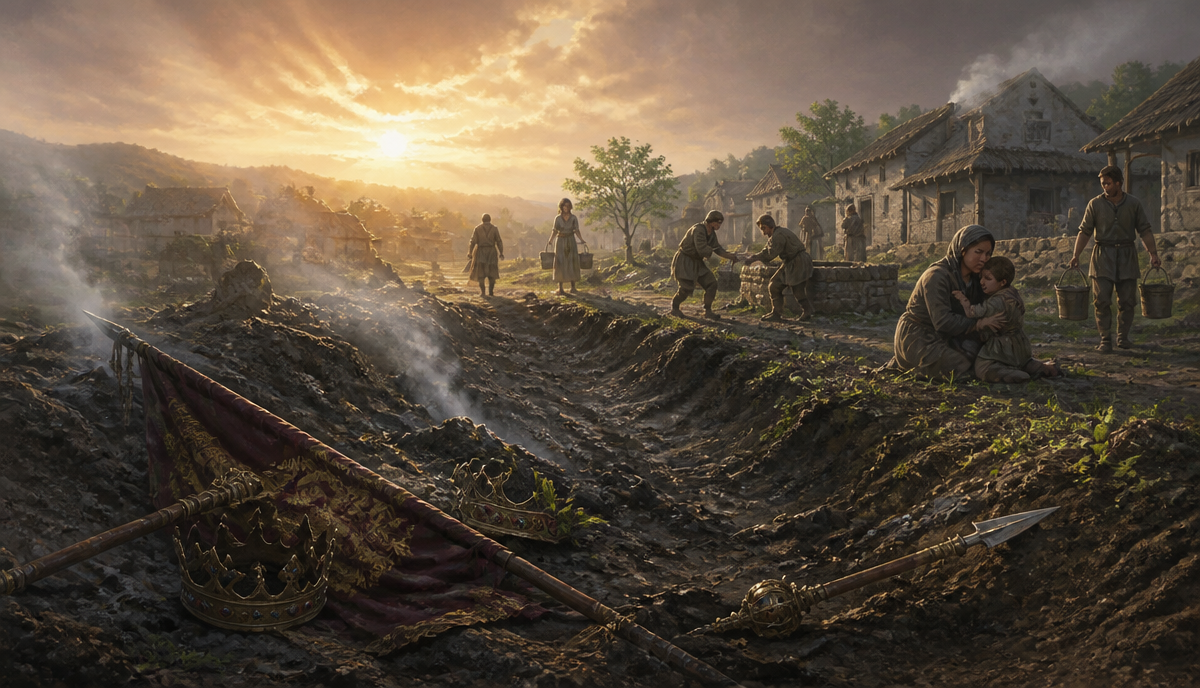
On the surface the king won: the fire was lit, the believers were burned, and the boy died. But the Quran settles the real outcome:
Open surahSurah Al-Buruj 85:11
Verified recitation
إِنَّ ٱلَّذِينَ ءَامَنُوا۟ وَعَمِلُوا۟ ٱلصَّٰلِحَٰتِ لَهُمْ جَنَّٰتٌۭ تَجْرِى مِن تَحْتِهَا ٱلْأَنْهَٰرُ ۚ ذَٰلِكَ ٱلْفَوْزُ ٱلْكَبِيرُ
Indeed, those who believe and do righteous deeds will have gardens beneath which rivers flow. That is the great attainment.
The people of the fire in this world are the people of the gardens in the next, and of those who kindled the fire God said:
Open surahSurah Al-Buruj 85:12
Verified recitation
إِنَّ بَطْشَ رَبِّكَ لَشَدِيدٌ
Indeed, the assault of your Lord is severe.
Then He opened the door of mercy to whoever wished to return:
Open surahSurah Al-Buruj 85:14
Verified recitation
وَهُوَ ٱلْغَفُورُ ٱلْوَدُودُ
And He is the Forgiving, the Most Loving.
As for the king and his kingdom, their mention vanished until not even a name of them remains in the Quran, while the mention of the boy and the believers is still recited in prayer today. That is the true scale of endurance.
The practical lessons sit close to our own lives:
- The strength of truth is not that its bearer escapes, but that he does not change under threat.
- Always ascribe merit to God; the boy's words, "it is God who heals," are the root of his steadfastness.
- Teach your children pure monotheism while they are young; the tyrant began with the young, and so did the truth.
- However entrenched injustice becomes, it has a promised Day, which is why the surah opens with an oath by it.
- Patience joined to certainty is heavier than fire: "Be patient, for you are upon the truth."
The platform offers what supports this theme: reading Surah Al-Buruj in full, listening to recitations by renowned reciters, the azkar to steady the heart in trials, and other stories of divine patterns such as The People of the Elephant, Harut and Marut and Talut and Jalut.
Questions people often ask
Who were the People of the Ditch?
Believers who held to the oneness of God while their king dug trenches, lit fires in them, and offered them the choice between abandoning their faith and burning. They chose the fire.
What does "ukhdud" mean?
In Arabic it is a long trench cut into the ground. The pit in which the fire was lit gave the story its name.
Where is the story mentioned in the Quran?
At the opening of Surah Al-Buruj, in the words "Cursed were the people of the ditch." The detail of the boy and the king comes from the prophetic tradition, which these chapters follow.
Lessons
- The people of the fire in this world are the people of the gardens in the next
- The strength of truth lies in steadfastness, not in escape
- The door of repentance stays open: He is the Forgiving, the Most Loving
Interactive quiz
Answer the questions below, then check your answers. No account needed.
1. In which surah are the People of the Ditch mentioned?
2. What does ukhdud mean?
3. How did the boy answer the man who asked to be healed?
4. What was the boy's supplication on the mountain and in the ship?
5. According to the surah, for what did the tyrants resent the believers?
6. What did the surah declare about the fate of the believers who were burned?
The illustrations are our own, free of copyright restrictions, and do not depict identified religious figures.
Related stories
Data sources
- The Quran: Surah Al-Buruj 1-11
- Sahih Muslim, Book of Asceticism: the hadith of the boy, the sorcerer and the king
- Tafsir al-Tabari, Jami al-Bayan
- Tafsir Ibn Kathir
- Tafsir al-Sadi, Taysir al-Karim al-Rahman