Stories
Talut and Jalut
The story of kingship, testing and victory as told in Surah Al-Baqarah: a people who asked for a king then objected to God's choice, a river that tested every heart, and a small patient band that defeated a vast army. Six chapters with verses, lessons and an interactive quiz.
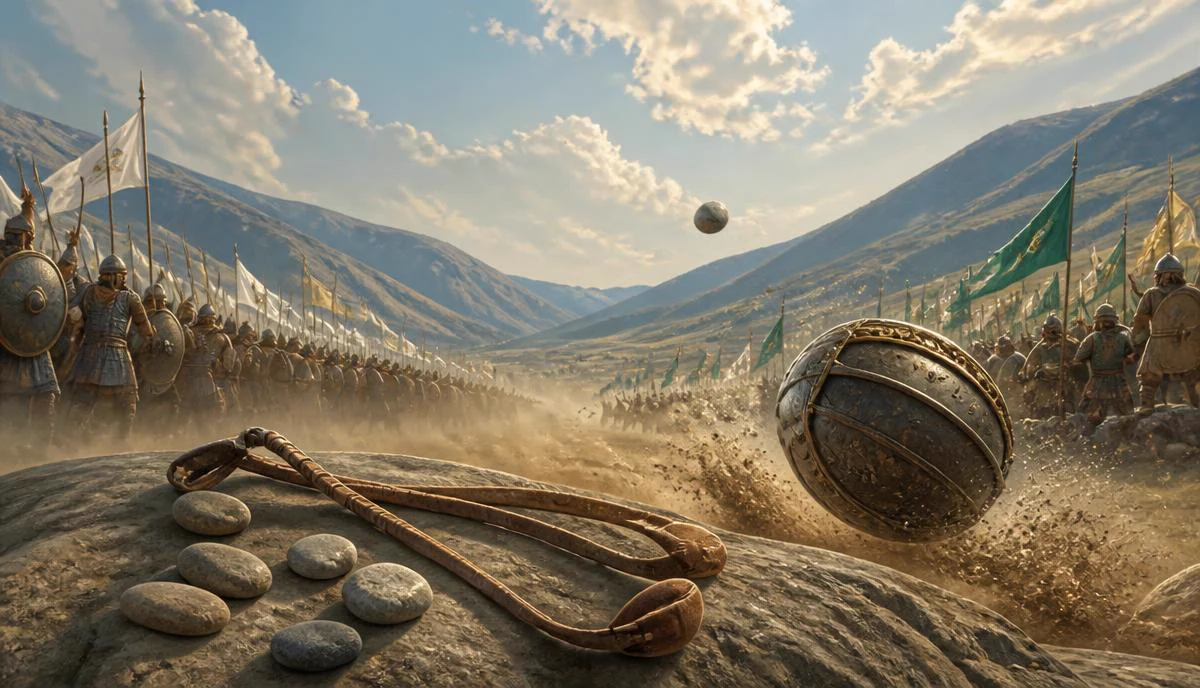
The story narration voice is machine-generated. The text is human-written and reviewed, and Quran verses are recited by a verified reciter.
Chapter 1
A People Ask for a King
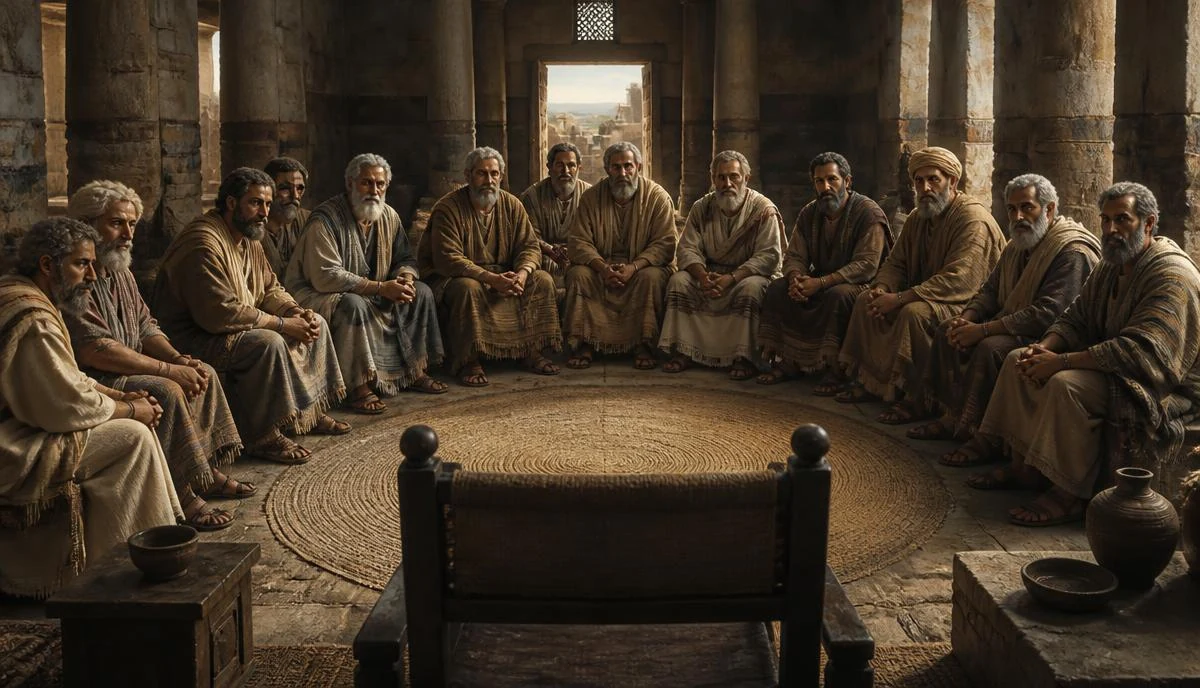
The story opens in Surah Al-Baqarah with a scene of assembly:
Open surahSurah Al-Baqarah 2:246
Verified recitation
أَلَمْ تَرَ إِلَى ٱلْمَلَإِ مِنۢ بَنِىٓ إِسْرَٰٓءِيلَ مِنۢ بَعْدِ مُوسَىٰٓ إِذْ قَالُوا۟ لِنَبِىٍّۢ لَّهُمُ ٱبْعَثْ لَنَا مَلِكًۭا نُّقَٰتِلْ فِى سَبِيلِ ٱللَّهِ ۖ قَالَ هَلْ عَسَيْتُمْ إِن كُتِبَ عَلَيْكُمُ ٱلْقِتَالُ أَلَّا تُقَٰتِلُوا۟ ۖ قَالُوا۟ وَمَا لَنَآ أَلَّا نُقَٰتِلَ فِى سَبِيلِ ٱللَّهِ وَقَدْ أُخْرِجْنَا مِن دِيَٰرِنَا وَأَبْنَآئِنَا ۖ فَلَمَّا كُتِبَ عَلَيْهِمُ ٱلْقِتَالُ تَوَلَّوْا۟ إِلَّا قَلِيلًۭا مِّنْهُمْ ۗ وَٱللَّهُ عَلِيمٌۢ بِٱلظَّٰلِمِينَ
Have you not considered the assembly of the Children of Israel after Moses, when they said to a prophet of theirs, Appoint for us a king so we may fight in the cause of God.
Weakness had settled over the people after Moses, peace be upon him. Their enemy had driven them from their homes and taken their children captive, so they asked for a leader who could unite them. On its surface the request was good: a king, and fighting in the cause of God.
But the prophet answered with a question that exposes the true measure of resolve: would they hold back if fighting were prescribed for them? They insisted that they had no excuse to hold back, having been driven from their homes and their children.
Then came the outcome the Quran records honestly: when fighting was prescribed, most of them turned away and only a few stood firm. Here is the first lesson: between enthusiasm before an obligation and steadfastness after it lies a distance in which many fall. Speaking about obedience is easy; carrying it out reveals hearts.
Lessons
- Enthusiasm before an obligation does not guarantee steadfastness after it
- A nation's weakness begins with weak resolve, not small numbers
- Asking for upright leadership is a legitimate demand
Chapter 2
God's Choice, Not the People's
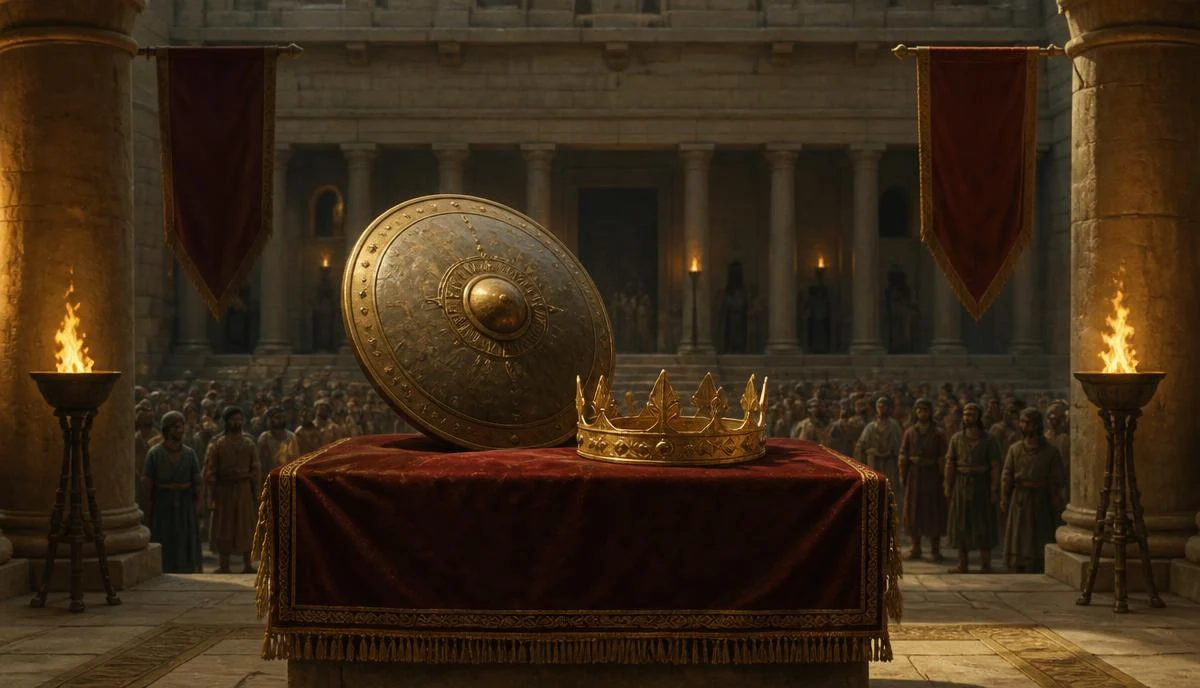
The answer came:
Open surahSurah Al-Baqarah 2:247
Verified recitation
وَقَالَ لَهُمْ نَبِيُّهُمْ إِنَّ ٱللَّهَ قَدْ بَعَثَ لَكُمْ طَالُوتَ مَلِكًۭا ۚ قَالُوٓا۟ أَنَّىٰ يَكُونُ لَهُ ٱلْمُلْكُ عَلَيْنَا وَنَحْنُ أَحَقُّ بِٱلْمُلْكِ مِنْهُ وَلَمْ يُؤْتَ سَعَةًۭ مِّنَ ٱلْمَالِ ۚ قَالَ إِنَّ ٱللَّهَ ٱصْطَفَىٰهُ عَلَيْكُمْ وَزَادَهُۥ بَسْطَةًۭ فِى ٱلْعِلْمِ وَٱلْجِسْمِ ۖ وَٱللَّهُ يُؤْتِى مُلْكَهُۥ مَن يَشَآءُ ۚ وَٱللَّهُ وَٰسِعٌ عَلِيمٌۭ
God has appointed Talut as a king for you.
They objected that they were more worthy of kingship than he was, and that he had not been given abundance of wealth.
Their objection rested on two measures: lineage and money, the measures people use in every age. The correction came: God had chosen him over them and increased him abundantly in knowledge and stature.
So the qualification for leadership in the scale of revelation is knowledge first, then the physical capacity to carry the burden. Knowledge to govern with, and strength to stand firm with. Wealth and pedigree are not mentioned.
The verse then closes with a principle that settles the dispute: authority is a grant God gives to whom He wills, and being all-encompassing and all-knowing He places it where His knowledge places it, not where status places it.
God supported the choice with a tangible sign: the return of the ark carrying a remnant of what Moses and Aaron left, borne by the angels:
Open surahSurah Al-Baqarah 2:248
Verified recitation
وَقَالَ لَهُمْ نَبِيُّهُمْ إِنَّ ءَايَةَ مُلْكِهِۦٓ أَن يَأْتِيَكُمُ ٱلتَّابُوتُ فِيهِ سَكِينَةٌۭ مِّن رَّبِّكُمْ وَبَقِيَّةٌۭ مِّمَّا تَرَكَ ءَالُ مُوسَىٰ وَءَالُ هَٰرُونَ تَحْمِلُهُ ٱلْمَلَٰٓئِكَةُ ۚ إِنَّ فِى ذَٰلِكَ لَـَٔايَةًۭ لَّكُمْ إِن كُنتُم مُّؤْمِنِينَ
The sign of his kingship is that the ark will come to you, containing tranquillity from your Lord.
Tranquillity comes before weaponry, and a settled heart is the first equipment of victory.
Lessons
- Leadership is measured by knowledge and capacity, not lineage and wealth
- Authority is a grant from God placed by His knowledge
- Tranquillity is the first equipment of victory
Chapter 3
The Test of the River: An Examination in a Sip of Water
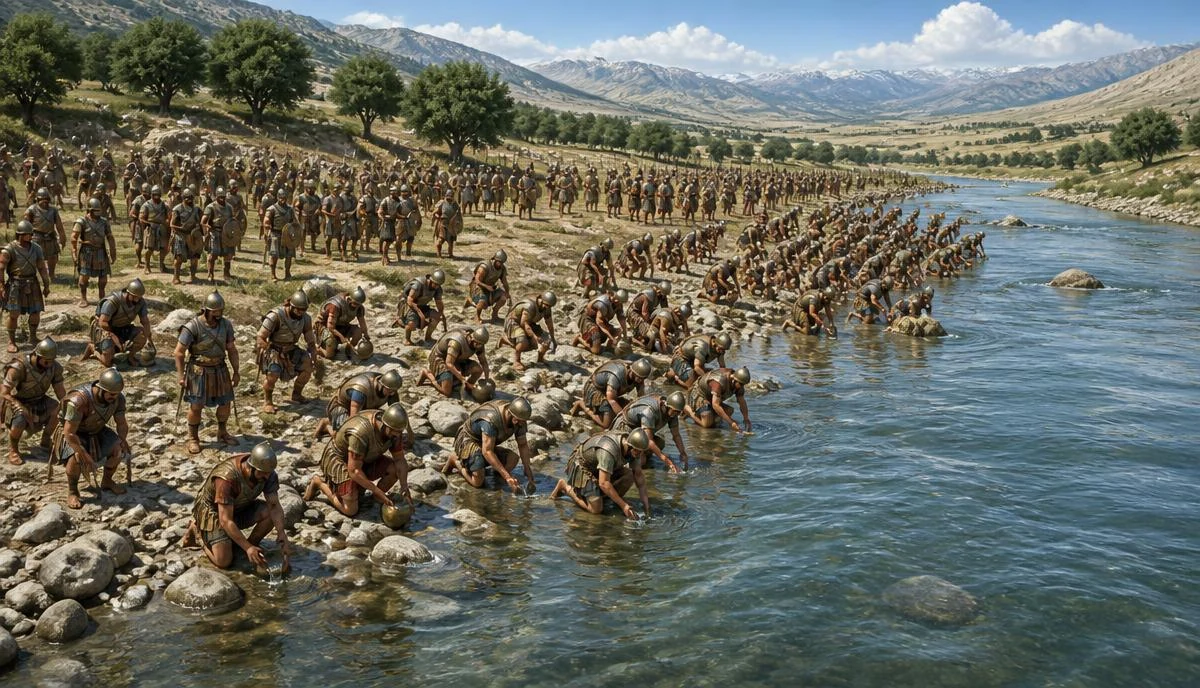
Talut set out with the army, and the test came in the simplest of things: water.
Open surahSurah Al-Baqarah 2:249
Verified recitation
فَلَمَّا فَصَلَ طَالُوتُ بِٱلْجُنُودِ قَالَ إِنَّ ٱللَّهَ مُبْتَلِيكُم بِنَهَرٍۢ فَمَن شَرِبَ مِنْهُ فَلَيْسَ مِنِّى وَمَن لَّمْ يَطْعَمْهُ فَإِنَّهُۥ مِنِّىٓ إِلَّا مَنِ ٱغْتَرَفَ غُرْفَةًۢ بِيَدِهِۦ ۚ فَشَرِبُوا۟ مِنْهُ إِلَّا قَلِيلًۭا مِّنْهُمْ ۚ فَلَمَّا جَاوَزَهُۥ هُوَ وَٱلَّذِينَ ءَامَنُوا۟ مَعَهُۥ قَالُوا۟ لَا طَاقَةَ لَنَا ٱلْيَوْمَ بِجَالُوتَ وَجُنُودِهِۦ ۚ قَالَ ٱلَّذِينَ يَظُنُّونَ أَنَّهُم مُّلَٰقُوا۟ ٱللَّهِ كَم مِّن فِئَةٍۢ قَلِيلَةٍ غَلَبَتْ فِئَةًۭ كَثِيرَةًۢ بِإِذْنِ ٱللَّهِ ۗ وَٱللَّهُ مَعَ ٱلصَّٰبِرِينَ
God will test you with a river. Whoever drinks from it is not of me, and whoever does not taste it is of me, except one who takes a sip with his hand.
The test was not a battle and not money, but self-restraint at the moment of need. Genuine testing does not require grand occasions; discipline in small things is what produces steadfastness in great ones.
Note the wisdom of the command: they were not barred from water entirely. A handful was permitted. Revealed law does not burden people beyond capacity, yet it sets a line by which the sincere are known.
Then most of them drank, and only a few held back. The majority failed a test of one sip of water, after they themselves had asked for battle. The sifting here is a mercy: an army that cannot restrain its own appetite will not stand before an enemy's swords.
Whoever wants to train himself in that restraint should keep a fixed daily portion of azkar and appointments he never breaks with the prayer times, since discipline is worship before it is strategy.
Lessons
- Discipline in small things builds steadfastness in great ones
- Obligation comes within capacity, with a line that distinguishes the sincere
- Sifting the ranks is a mercy, not a punishment
Chapter 4
How Many a Small Band
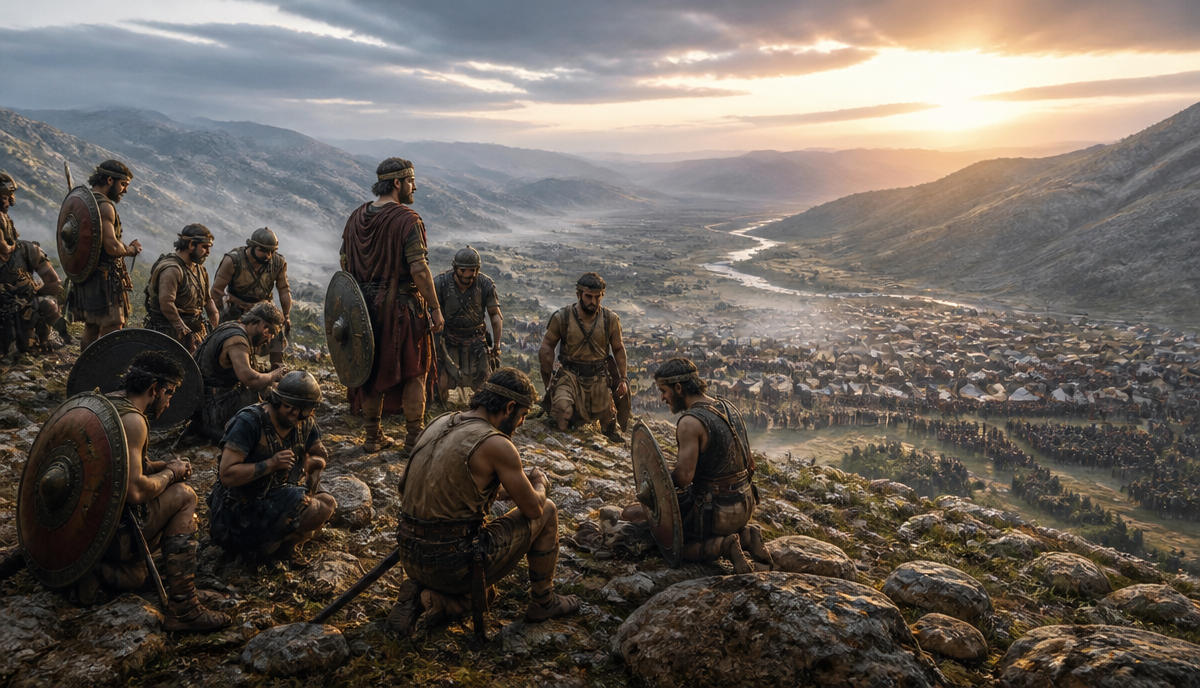
The remaining band reached the field of encounter, and some of them said they had no power that day against Jalut and his soldiers. The arithmetic of numbers was against them, and no one can deny that reality.
But those whose hearts were pure spoke words that became a principle of faith until the end of time: a small band may overcome a great band by God's permission, and God is with the patient.
Notice the precision: they did not claim that the few always defeat the many, but tied the matter to God's permission. What is asked is not contempt for practical means nor intoxication with slogans, but certainty that the outcome rests with God while you give your utmost.
Their supplication was their second piece of equipment:
Open surahSurah Al-Baqarah 2:250
Verified recitation
وَلَمَّا بَرَزُوا۟ لِجَالُوتَ وَجُنُودِهِۦ قَالُوا۟ رَبَّنَآ أَفْرِغْ عَلَيْنَا صَبْرًۭا وَثَبِّتْ أَقْدَامَنَا وَٱنصُرْنَا عَلَى ٱلْقَوْمِ ٱلْكَٰفِرِينَ
Our Lord, pour upon us patience, make our steps firm, and grant us victory over the disbelieving people.
Three requests in order: patience in the heart, firmness in the feet, then victory. Whoever wants victory before patience is asking for fruit before planting.
This supplication is among the most beneficial a Muslim can memorise in hardship, and it appears within Surah Al-Baqarah.
Lessons
- Victory comes by God's permission alongside real effort
- The order of supplication: patience, then firmness, then victory
- Small numbers are no excuse to abandon the truth
Chapter 5
Dawud Kills Jalut
 Open surah
Surah Al-Baqarah 2:251
Verified recitation
فَهَزَمُوهُم بِإِذْنِ ٱللَّهِ وَقَتَلَ دَاوُۥدُ جَالُوتَ وَءَاتَىٰهُ ٱللَّهُ ٱلْمُلْكَ وَٱلْحِكْمَةَ وَعَلَّمَهُۥ مِمَّا يَشَآءُ ۗ وَلَوْلَا دَفْعُ ٱللَّهِ ٱلنَّاسَ بَعْضَهُم بِبَعْضٍۢ لَّفَسَدَتِ ٱلْأَرْضُ وَلَٰكِنَّ ٱللَّهَ ذُو فَضْلٍ عَلَى ٱلْعَٰلَمِينَ
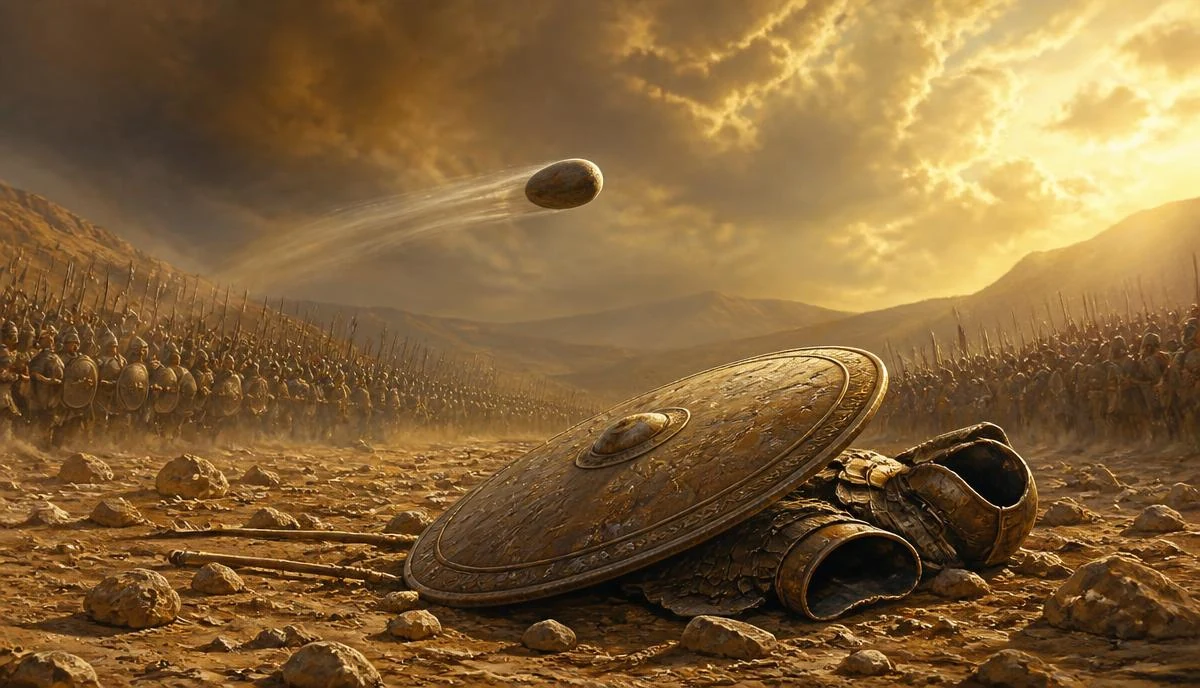
So they defeated them by God's permission, and Dawud killed Jalut, and God gave him kingship and wisdom and taught him from what He willed.
Jalut was the symbol of visible power: a huge frame, heavy armour and a large army. Dawud, peace be upon him, was on that day a youth in the ranks, neither commander nor king. God brought the tyrant's end about through his hands, and afterwards gave him kingship, wisdom and prophethood.
The Quran does not detail the manner of the killing or the instrument used, because the lesson is not in the scene but in the principle: God grants victory through whom He wills and raises whoever is sincere, even from the last row.
There is a lesson in cultivation here too: leadership is made in the field, not in genealogies. Whoever holds firm in the small test is made fit by God for the great charge.
Consider the order in the verse: victory first, then kingship, then wisdom, then teaching. Empowerment follows testing, and learning continues after empowerment. To hear these verses recited, recitations are available in the audio section.
Lessons
- Visible power is no shield against God's decree
- God raises the sincere even from the last row
- Empowerment follows testing
Chapter 6
Were It Not for God's Restraining: The Close and Its Lessons
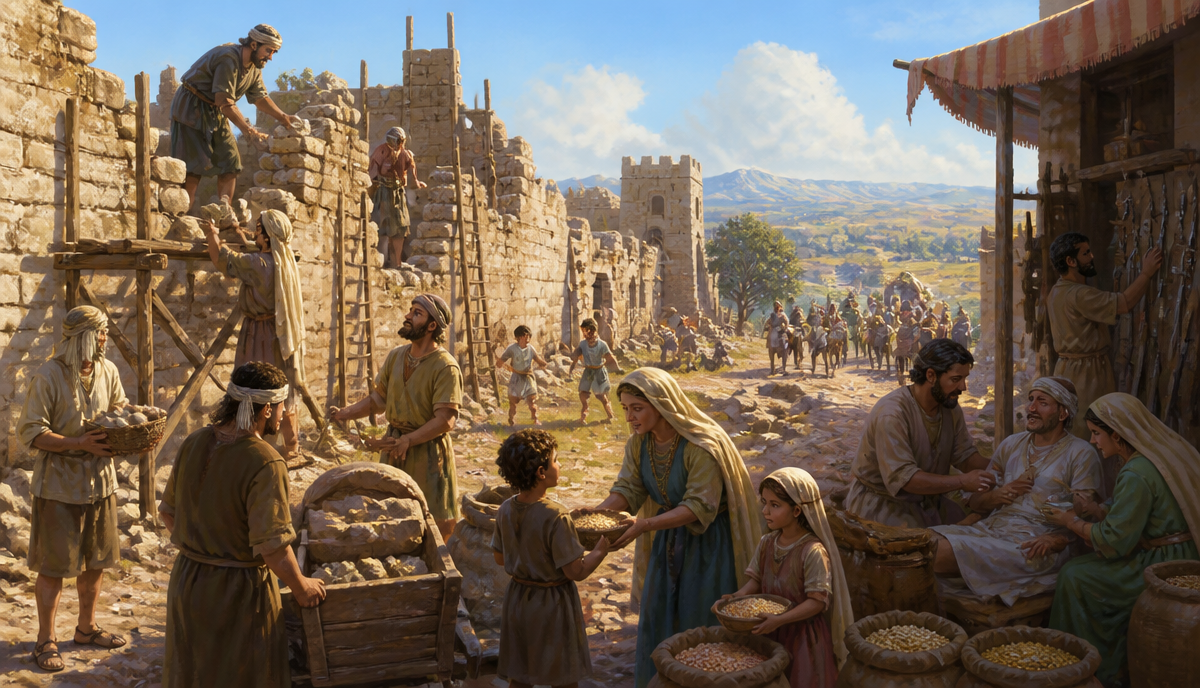
God closed the story with a universal principle: it is God's restraining of people, some by means of others, that keeps the earth from corruption, and this is part of His grace towards the worlds.
The existence of those who push back against injustice is a general mercy for all people, not the triumph of one faction. Were the earth emptied of those who defend the truth, corruption would prevail.
The practical lessons of the story sit close to every Muslim's life:
- Do not promise what you are not truthful about; words spoken before an obligation are a test.
- Advance people of knowledge and capacity into responsibility, not people of wealth and status.
- Train yourself in restraint over small matters so you hold firm in great ones.
- Join supplication to action, since victory comes by God's permission alongside real effort.
- Never belittle yourself or your position; God may place the greatest effect in the hands of the youngest in the ranks.
The platform offers what supports this theme: reading the full Surah Al-Baqarah where these verses were revealed, the azkar to steady the heart, the prayer times for daily discipline, and other stories such as Harut and Marut and Qabil and Habil on trials and the diseases of the heart.
Questions people often ask
Who was Talut?
A king chosen for the Children of Israel after they asked for a leader to fight under. He had neither wealth nor prominent lineage; God gave him knowledge and physical strength.
Who killed Jalut?
Dawud, peace be upon him, then a young man in Talut's army. God afterwards granted him kingship and wisdom.
Was Talut the same as Dawud?
No. Talut was the chosen king who led the army; Dawud was the youth who killed Jalut and later became both prophet and king.
Lessons
- Restraining injustice is a general mercy for all people
- Advance people of knowledge and capacity into responsibility
- Join supplication with genuine effort
Interactive quiz
Answer the questions below, then check your answers. No account needed.
1. In which surah is the story of Talut and Jalut told?
2. In what did God increase Talut according to the verse?
3. What was the sign of Talut's kingship?
4. With what did God test the army along the way?
5. What principle did the patient ones state at the encounter?
6. Who killed Jalut and what did God then give him?
The illustrations are our own, free of copyright restrictions, and do not depict identified religious figures.
Related stories
Data sources
- The Quran: Surah Al-Baqarah 246-251
- Tafsir al-Tabari, Jami al-Bayan
- Tafsir Ibn Kathir
- Tafsir al-Sadi, Taysir al-Karim al-Rahman
- Tafsir al-Qurtubi, al-Jami li-Ahkam al-Quran