Stories
Yusuf and His Brothers
The complete Quranic story of Prophet Yusuf, peace be upon him, told chapter by chapter: from the dream of eleven stars and his brothers’ plot, to the well, the house of Al-Aziz, prison, interpreting dreams, overseeing Egypt’s storehouses, and reunion with Prophet Yaqub, peace be upon him.

The story narration voice is machine-generated. The text is human-written and reviewed, and Quran verses are recited by a verified reciter.
Chapter 1
The Dream and the Beginning of the Trial

Yusuf, peace be upon him, saw eleven stars, the sun, and the moon bowing before him. He told his father, Prophet Yaqub, peace be upon him, about the dream. His wise father understood that it pointed to divine favor, so he advised Yusuf not to tell his brothers, lest jealousy drive them to plot. He also told him that Allah would choose him, teach him the interpretation of events, and complete His favor upon him and the family of Yaqub.
The brothers resented the affection shown to Yusuf and his brother, and jealousy turned into a harmful plan. Some proposed killing Yusuf or casting him into a distant land, but one suggested placing him in the hidden depth of a well where a caravan might find him. The Quran does not name the speakers, so this account does not add unsupported names.
They persuaded their father to let Yusuf accompany them and promised to protect him. Yaqub feared that a wolf might take him while they were inattentive, but they insisted. When they placed Yusuf in the well, Allah revealed that a day would come when Yusuf would remind them of their deed while they did not recognize him. They returned at night weeping and carrying his shirt stained with false blood. Yaqub recognized the deception and chose beautiful patience, seeking Allah’s help.
Open surahSurah Yusuf 12:4-6
Verified recitation
إِذْ قَالَ يُوسُفُ لِأَبِيهِ يَٰٓأَبَتِ إِنِّى رَأَيْتُ أَحَدَ عَشَرَ كَوْكَبًۭا وَٱلشَّمْسَ وَٱلْقَمَرَ رَأَيْتُهُمْ لِى سَٰجِدِينَ قَالَ يَٰبُنَىَّ لَا تَقْصُصْ رُءْيَاكَ عَلَىٰٓ إِخْوَتِكَ فَيَكِيدُوا۟ لَكَ كَيْدًا ۖ إِنَّ ٱلشَّيْطَٰنَ لِلْإِنسَٰنِ عَدُوٌّۭ مُّبِينٌۭ وَكَذَٰلِكَ يَجْتَبِيكَ رَبُّكَ وَيُعَلِّمُكَ مِن تَأْوِيلِ ٱلْأَحَادِيثِ وَيُتِمُّ نِعْمَتَهُۥ عَلَيْكَ وَعَلَىٰٓ ءَالِ يَعْقُوبَ كَمَآ أَتَمَّهَا عَلَىٰٓ أَبَوَيْكَ مِن قَبْلُ إِبْرَٰهِيمَ وَإِسْحَٰقَ ۚ إِنَّ رَبَّكَ عَلِيمٌ حَكِيمٌۭ
Yusuf’s dream and Yaqub’s counsel
Lessons
- A dream may carry glad tidings that require wisdom in sharing.
- Unchecked jealousy can grow into injustice and plotting.
- Beautiful patience joins self-restraint with seeking Allah’s help.
Chapter 2
From the Well to the House of Al-Aziz

A caravan stopped near the well and sent its water drawer. When he lowered his bucket, he found Yusuf and announced the good news. The travelers concealed Yusuf as merchandise, and he was later sold for a small number of silver coins. Those who sold him placed little value on him because they did not know the worth of the young man Allah had preserved. The Quran does not identify the well’s location or the caravan, so this account remains within what the text establishes.
An Egyptian official, called Al-Aziz in the Quran, purchased Yusuf and told his wife to make his stay honorable, hoping that he might benefit them or that they might adopt him. Yusuf had moved from the darkness of the well into a household of influence, while the full wisdom of events remained hidden. The Quran explains that Allah was establishing Yusuf in the land and teaching him the interpretation of events. Allah prevails over His affair, though most people do not know.
Yusuf grew in that household until he reached maturity, when Allah granted him judgment and knowledge. The first trial was not the end of his path. It became the entrance to another stage of preparation. Yusuf was sold, but his true value before Allah was never defined by the price people paid. Divine care continued through causes whose purpose their actors could not yet see.
Open surahSurah Yusuf 12:19-22
Verified recitation
وَجَآءَتْ سَيَّارَةٌۭ فَأَرْسَلُوا۟ وَارِدَهُمْ فَأَدْلَىٰ دَلْوَهُۥ ۖ قَالَ يَٰبُشْرَىٰ هَٰذَا غُلَٰمٌۭ ۚ وَأَسَرُّوهُ بِضَٰعَةًۭ ۚ وَٱللَّهُ عَلِيمٌۢ بِمَا يَعْمَلُونَ وَشَرَوْهُ بِثَمَنٍۭ بَخْسٍۢ دَرَٰهِمَ مَعْدُودَةٍۢ وَكَانُوا۟ فِيهِ مِنَ ٱلزَّٰهِدِينَ وَقَالَ ٱلَّذِى ٱشْتَرَىٰهُ مِن مِّصْرَ لِٱمْرَأَتِهِۦٓ أَكْرِمِى مَثْوَىٰهُ عَسَىٰٓ أَن يَنفَعَنَآ أَوْ نَتَّخِذَهُۥ وَلَدًۭا ۚ وَكَذَٰلِكَ مَكَّنَّا لِيُوسُفَ فِى ٱلْأَرْضِ وَلِنُعَلِّمَهُۥ مِن تَأْوِيلِ ٱلْأَحَادِيثِ ۚ وَٱللَّهُ غَالِبٌ عَلَىٰٓ أَمْرِهِۦ وَلَٰكِنَّ أَكْثَرَ ٱلنَّاسِ لَا يَعْلَمُونَ وَلَمَّا بَلَغَ أَشُدَّهُۥٓ ءَاتَيْنَٰهُ حُكْمًۭا وَعِلْمًۭا ۚ وَكَذَٰلِكَ نَجْزِى ٱلْمُحْسِنِينَ
Yusuf leaves the well and enters the house of Al-Aziz
Lessons
- A person’s worth is not defined by passing human judgment.
- Allah’s care may work through an event whose wisdom is not immediately visible.
- Knowledge and judgment are gifts that require preparation and patience.
Chapter 3
The Trial in the House of Al-Aziz

The wife of Al-Aziz sought to seduce Yusuf and locked the doors, but he sought refuge with Allah and refused betrayal. The Quran states that Allah showed Yusuf His proof, turning evil and indecency away from him, and describes him as one of His chosen servants. The text does not define the nature of that proof, so there is no need for unsupported details. Nor does the Quran give the wife of Al-Aziz the name commonly used in popular retellings.
Yusuf raced toward the door to escape. She pulled his shirt from behind and tore it, and they found her husband at the door. She accused Yusuf, but a witness from her household proposed the shirt as evidence: if it was torn from the front, she spoke truthfully; if from the back, she lied and Yusuf was truthful. When Al-Aziz saw the shirt torn from behind, Yusuf’s innocence was clear.
News spread among the women of the city. The wife of Al-Aziz invited them and brought Yusuf before them. In astonishment, they cut their hands without intending to. She admitted that she had sought to seduce him and that he had remained chaste, then threatened him with prison. Yusuf chose prison over disobedience and asked Allah to turn their plot away. Allah answered him. Even after the signs of innocence appeared, the authorities decided to imprison him for an unspecified time.
Open surahSurah Yusuf 12:23-29
Verified recitation
وَرَٰوَدَتْهُ ٱلَّتِى هُوَ فِى بَيْتِهَا عَن نَّفْسِهِۦ وَغَلَّقَتِ ٱلْأَبْوَٰبَ وَقَالَتْ هَيْتَ لَكَ ۚ قَالَ مَعَاذَ ٱللَّهِ ۖ إِنَّهُۥ رَبِّىٓ أَحْسَنَ مَثْوَاىَ ۖ إِنَّهُۥ لَا يُفْلِحُ ٱلظَّٰلِمُونَ وَلَقَدْ هَمَّتْ بِهِۦ ۖ وَهَمَّ بِهَا لَوْلَآ أَن رَّءَا بُرْهَٰنَ رَبِّهِۦ ۚ كَذَٰلِكَ لِنَصْرِفَ عَنْهُ ٱلسُّوٓءَ وَٱلْفَحْشَآءَ ۚ إِنَّهُۥ مِنْ عِبَادِنَا ٱلْمُخْلَصِينَ وَٱسْتَبَقَا ٱلْبَابَ وَقَدَّتْ قَمِيصَهُۥ مِن دُبُرٍۢ وَأَلْفَيَا سَيِّدَهَا لَدَا ٱلْبَابِ ۚ قَالَتْ مَا جَزَآءُ مَنْ أَرَادَ بِأَهْلِكَ سُوٓءًا إِلَّآ أَن يُسْجَنَ أَوْ عَذَابٌ أَلِيمٌۭ قَالَ هِىَ رَٰوَدَتْنِى عَن نَّفْسِى ۚ وَشَهِدَ شَاهِدٌۭ مِّنْ أَهْلِهَآ إِن كَانَ قَمِيصُهُۥ قُدَّ مِن قُبُلٍۢ فَصَدَقَتْ وَهُوَ مِنَ ٱلْكَٰذِبِينَ وَإِن كَانَ قَمِيصُهُۥ قُدَّ مِن دُبُرٍۢ فَكَذَبَتْ وَهُوَ مِنَ ٱلصَّٰدِقِينَ فَلَمَّا رَءَا قَمِيصَهُۥ قُدَّ مِن دُبُرٍۢ قَالَ إِنَّهُۥ مِن كَيْدِكُنَّ ۖ إِنَّ كَيْدَكُنَّ عَظِيمٌۭ يُوسُفُ أَعْرِضْ عَنْ هَٰذَا ۚ وَٱسْتَغْفِرِى لِذَنۢبِكِ ۖ إِنَّكِ كُنتِ مِنَ ٱلْخَاطِـِٔينَ
Yusuf’s integrity and the evidence of the torn shirt
Lessons
- Seeking Allah’s protection and leaving temptation are means of safety.
- Justice follows evidence rather than social rank.
- A believer may accept temporary hardship to preserve faith.
Chapter 4
Yusuf in Prison
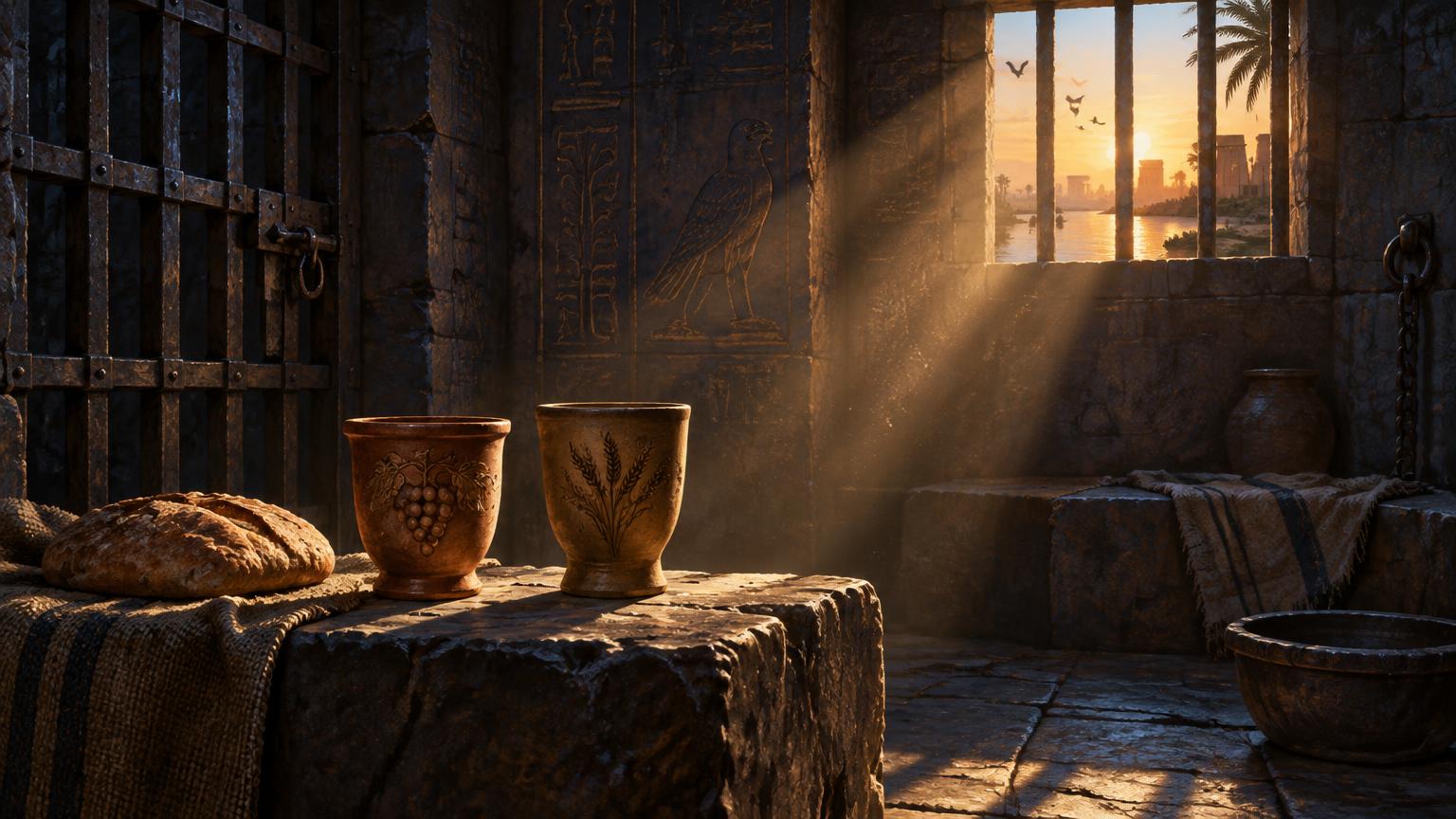
Two young men entered prison with Yusuf, and each saw a dream. They asked him for an interpretation because they recognized him as a person of excellence. Yusuf did not begin with the answer alone. He explained the source of his knowledge and invited them to worship Allah alone. He said that he followed the faith of his forefathers Ibrahim, Ishaq, and Yaqub. Then he asked: are many separate lords better, or Allah, the One, the Supreme?
After conveying this call, Yusuf interpreted the dreams. One prisoner would return to serving his master, while the other would be crucified and birds would eat from his head. The matter occurred as Yusuf had explained. He asked the one who would be released to mention his case to his master, but the man forgot, and Yusuf remained in prison for several years. The Quran does not give an exact number here, so this account does not claim one.
Prison did not turn Yusuf into someone concerned only with himself. He remained a person of excellence whom others trusted. He taught faith in Allah and used the knowledge Allah had given him to benefit people. The walls restricted his location, but they did not prevent him from fulfilling his duty or being prepared for a greater stage whose time had not yet arrived.
Open surahSurah Yusuf 12:36-42
Verified recitation
وَدَخَلَ مَعَهُ ٱلسِّجْنَ فَتَيَانِ ۖ قَالَ أَحَدُهُمَآ إِنِّىٓ أَرَىٰنِىٓ أَعْصِرُ خَمْرًۭا ۖ وَقَالَ ٱلْـَٔاخَرُ إِنِّىٓ أَرَىٰنِىٓ أَحْمِلُ فَوْقَ رَأْسِى خُبْزًۭا تَأْكُلُ ٱلطَّيْرُ مِنْهُ ۖ نَبِّئْنَا بِتَأْوِيلِهِۦٓ ۖ إِنَّا نَرَىٰكَ مِنَ ٱلْمُحْسِنِينَ قَالَ لَا يَأْتِيكُمَا طَعَامٌۭ تُرْزَقَانِهِۦٓ إِلَّا نَبَّأْتُكُمَا بِتَأْوِيلِهِۦ قَبْلَ أَن يَأْتِيَكُمَا ۚ ذَٰلِكُمَا مِمَّا عَلَّمَنِى رَبِّىٓ ۚ إِنِّى تَرَكْتُ مِلَّةَ قَوْمٍۢ لَّا يُؤْمِنُونَ بِٱللَّهِ وَهُم بِٱلْـَٔاخِرَةِ هُمْ كَٰفِرُونَ وَٱتَّبَعْتُ مِلَّةَ ءَابَآءِىٓ إِبْرَٰهِيمَ وَإِسْحَٰقَ وَيَعْقُوبَ ۚ مَا كَانَ لَنَآ أَن نُّشْرِكَ بِٱللَّهِ مِن شَىْءٍۢ ۚ ذَٰلِكَ مِن فَضْلِ ٱللَّهِ عَلَيْنَا وَعَلَى ٱلنَّاسِ وَلَٰكِنَّ أَكْثَرَ ٱلنَّاسِ لَا يَشْكُرُونَ يَٰصَٰحِبَىِ ٱلسِّجْنِ ءَأَرْبَابٌۭ مُّتَفَرِّقُونَ خَيْرٌ أَمِ ٱللَّهُ ٱلْوَٰحِدُ ٱلْقَهَّارُ مَا تَعْبُدُونَ مِن دُونِهِۦٓ إِلَّآ أَسْمَآءًۭ سَمَّيْتُمُوهَآ أَنتُمْ وَءَابَآؤُكُم مَّآ أَنزَلَ ٱللَّهُ بِهَا مِن سُلْطَٰنٍ ۚ إِنِ ٱلْحُكْمُ إِلَّا لِلَّهِ ۚ أَمَرَ أَلَّا تَعْبُدُوٓا۟ إِلَّآ إِيَّاهُ ۚ ذَٰلِكَ ٱلدِّينُ ٱلْقَيِّمُ وَلَٰكِنَّ أَكْثَرَ ٱلنَّاسِ لَا يَعْلَمُونَ يَٰصَٰحِبَىِ ٱلسِّجْنِ أَمَّآ أَحَدُكُمَا فَيَسْقِى رَبَّهُۥ خَمْرًۭا ۖ وَأَمَّا ٱلْـَٔاخَرُ فَيُصْلَبُ فَتَأْكُلُ ٱلطَّيْرُ مِن رَّأْسِهِۦ ۚ قُضِىَ ٱلْأَمْرُ ٱلَّذِى فِيهِ تَسْتَفْتِيَانِ وَقَالَ لِلَّذِى ظَنَّ أَنَّهُۥ نَاجٍۢ مِّنْهُمَا ٱذْكُرْنِى عِندَ رَبِّكَ فَأَنسَىٰهُ ٱلشَّيْطَٰنُ ذِكْرَ رَبِّهِۦ فَلَبِثَ فِى ٱلسِّجْنِ بِضْعَ سِنِينَ
Yusuf calls to Allah and interprets the prisoners’ dreams
Lessons
- A caller to faith can use a question to lead to its foundation.
- Excellence builds trust even in the hardest conditions.
- A delayed release does not mean Allah’s care is absent.
Chapter 5
The King’s Dream and Egypt’s Storehouses

The King of Egypt saw seven fat cows being eaten by seven thin ones, and seven green ears of grain with others dry. His advisers could not explain the dream. After some time, the former prisoner remembered Yusuf and went to ask him. Yusuf did more than interpret the dream. He offered a practical plan: the people should cultivate for seven consecutive years and leave most of the harvest in its ears for preservation. Then seven severe years would consume what had been stored, followed by a year of rain and renewed produce.
The King wanted Yusuf brought out, but Yusuf would not leave until the case of the women had been examined and his innocence made public. The King questioned them, and they said they knew no evil of Yusuf. The wife of Al-Aziz admitted that she had sought to seduce him and that he was truthful. Yusuf did not seek a quiet release. After years in prison, he wanted to reenter society with the truth of his case established.
When the King spoke with Yusuf, he recognized his reliability. Yusuf asked to be placed over the storehouses of the land because he was a knowledgeable guardian. This was not a search for status. It was an offer of competence when the country needed food preservation and careful management of a coming crisis. Allah established Yusuf in the land. Knowledge, trustworthiness, and long-term planning turned a frightening dream into a program that protected people from famine.
Open surahSurah Yusuf 12:43-49
Verified recitation
وَقَالَ ٱلْمَلِكُ إِنِّىٓ أَرَىٰ سَبْعَ بَقَرَٰتٍۢ سِمَانٍۢ يَأْكُلُهُنَّ سَبْعٌ عِجَافٌۭ وَسَبْعَ سُنۢبُلَٰتٍ خُضْرٍۢ وَأُخَرَ يَابِسَٰتٍۢ ۖ يَٰٓأَيُّهَا ٱلْمَلَأُ أَفْتُونِى فِى رُءْيَٰىَ إِن كُنتُمْ لِلرُّءْيَا تَعْبُرُونَ قَالُوٓا۟ أَضْغَٰثُ أَحْلَٰمٍۢ ۖ وَمَا نَحْنُ بِتَأْوِيلِ ٱلْأَحْلَٰمِ بِعَٰلِمِينَ وَقَالَ ٱلَّذِى نَجَا مِنْهُمَا وَٱدَّكَرَ بَعْدَ أُمَّةٍ أَنَا۠ أُنَبِّئُكُم بِتَأْوِيلِهِۦ فَأَرْسِلُونِ يُوسُفُ أَيُّهَا ٱلصِّدِّيقُ أَفْتِنَا فِى سَبْعِ بَقَرَٰتٍۢ سِمَانٍۢ يَأْكُلُهُنَّ سَبْعٌ عِجَافٌۭ وَسَبْعِ سُنۢبُلَٰتٍ خُضْرٍۢ وَأُخَرَ يَابِسَٰتٍۢ لَّعَلِّىٓ أَرْجِعُ إِلَى ٱلنَّاسِ لَعَلَّهُمْ يَعْلَمُونَ قَالَ تَزْرَعُونَ سَبْعَ سِنِينَ دَأَبًۭا فَمَا حَصَدتُّمْ فَذَرُوهُ فِى سُنۢبُلِهِۦٓ إِلَّا قَلِيلًۭا مِّمَّا تَأْكُلُونَ ثُمَّ يَأْتِى مِنۢ بَعْدِ ذَٰلِكَ سَبْعٌۭ شِدَادٌۭ يَأْكُلْنَ مَا قَدَّمْتُمْ لَهُنَّ إِلَّا قَلِيلًۭا مِّمَّا تُحْصِنُونَ ثُمَّ يَأْتِى مِنۢ بَعْدِ ذَٰلِكَ عَامٌۭ فِيهِ يُغَاثُ ٱلنَّاسُ وَفِيهِ يَعْصِرُونَ
The King’s dream and Yusuf’s plan for abundance and famine
Lessons
- Planning for the future is part of sound reliance on Allah.
- Public innocence protects trust when assuming responsibility.
- Trustworthiness needs knowledge, and knowledge needs trustworthiness.
Chapter 6
The Brothers Return and the Shirt

Yusuf’s brothers came to Egypt seeking food during the years of hardship. Yusuf recognized them, while they did not recognize him. He received them well and required them to bring their brother from their father on the next visit. When they returned to Yaqub, he hesitated to send him, then took a solemn pledge that they would bring him back unless overwhelmed. He advised them to enter by separate gates, while affirming that precautions cannot overturn Allah’s decree.
When they returned with Yusuf’s brother, Yusuf welcomed him privately and told him that he was his brother. He then placed the drinking vessel in his brother’s bag as part of a plan Allah enabled. The vessel was found during the search, and the brother remained with Yusuf under the rule the brothers had stated. They returned with the news. Yaqub’s grief deepened and his eyes whitened from sorrow, yet he did not despair. He brought his grief to Allah and told them to search for Yusuf and his brother and never lose hope in Allah’s relief.
They returned again in distress, and Yusuf revealed his identity. They admitted that Allah had favored him. Yusuf chose forgiveness and told them there would be no blame upon them that day. He gave them his shirt and instructed them to place it over their father’s face. When the bearer of good news arrived and placed it over Yaqub’s face, his sight returned by Allah’s permission. The shirt was a means Allah used, not an object with independent or legendary power.
Open surahSurah Yusuf 12:87-93
Verified recitation
يَٰبَنِىَّ ٱذْهَبُوا۟ فَتَحَسَّسُوا۟ مِن يُوسُفَ وَأَخِيهِ وَلَا تَا۟يْـَٔسُوا۟ مِن رَّوْحِ ٱللَّهِ ۖ إِنَّهُۥ لَا يَا۟يْـَٔسُ مِن رَّوْحِ ٱللَّهِ إِلَّا ٱلْقَوْمُ ٱلْكَٰفِرُونَ فَلَمَّا دَخَلُوا۟ عَلَيْهِ قَالُوا۟ يَٰٓأَيُّهَا ٱلْعَزِيزُ مَسَّنَا وَأَهْلَنَا ٱلضُّرُّ وَجِئْنَا بِبِضَٰعَةٍۢ مُّزْجَىٰةٍۢ فَأَوْفِ لَنَا ٱلْكَيْلَ وَتَصَدَّقْ عَلَيْنَآ ۖ إِنَّ ٱللَّهَ يَجْزِى ٱلْمُتَصَدِّقِينَ قَالَ هَلْ عَلِمْتُم مَّا فَعَلْتُم بِيُوسُفَ وَأَخِيهِ إِذْ أَنتُمْ جَٰهِلُونَ قَالُوٓا۟ أَءِنَّكَ لَأَنتَ يُوسُفُ ۖ قَالَ أَنَا۠ يُوسُفُ وَهَٰذَآ أَخِى ۖ قَدْ مَنَّ ٱللَّهُ عَلَيْنَآ ۖ إِنَّهُۥ مَن يَتَّقِ وَيَصْبِرْ فَإِنَّ ٱللَّهَ لَا يُضِيعُ أَجْرَ ٱلْمُحْسِنِينَ قَالُوا۟ تَٱللَّهِ لَقَدْ ءَاثَرَكَ ٱللَّهُ عَلَيْنَا وَإِن كُنَّا لَخَٰطِـِٔينَ قَالَ لَا تَثْرِيبَ عَلَيْكُمُ ٱلْيَوْمَ ۖ يَغْفِرُ ٱللَّهُ لَكُمْ ۖ وَهُوَ أَرْحَمُ ٱلرَّٰحِمِينَ ٱذْهَبُوا۟ بِقَمِيصِى هَٰذَا فَأَلْقُوهُ عَلَىٰ وَجْهِ أَبِى يَأْتِ بَصِيرًۭا وَأْتُونِى بِأَهْلِكُمْ أَجْمَعِينَ
Yaqub forbids despair and Yusuf forgives his brothers
Lessons
- Taking precautions does not contradict surrender to Allah’s decree.
- A believer brings grief to Allah without abandoning hope.
- Forgiveness when one has power is nobler than revenge.
Chapter 7
The Family Reunion and the Dream Fulfilled

Yaqub’s family traveled to Egypt. When they entered upon Yusuf, he welcomed his parents and told them to enter Egypt in safety, if Allah willed. He raised his parents upon the throne, and they bowed before him. Yusuf told his father that this was the interpretation of his earlier dream and that his Lord had made it come true. This bowing was a greeting and honor permitted in an earlier law, not worship of Yusuf. Islamic law does not permit bowing to anyone other than Allah.
Yusuf did not credit his intelligence or office for the outcome. He named Allah’s favors: Allah had brought him out of prison and brought his family from the desert after Satan had caused discord between him and his brothers. In the moment of reconciliation, Yusuf spoke gently and did not reopen the wound of the well. He said that his Lord is subtle in bringing about whatever He wills, guiding events to their destination through paths people may not recognize at the beginning.
Yusuf then turned to Allah with a prayer joining gratitude with concern for a faithful end. Allah had granted him authority and taught him the interpretation of events. Allah was his Protector in this world and the Hereafter, so Yusuf asked to die in submission and to be joined with the righteous. The story closes not merely with power, but with a heart that knows the true Giver. From the well to authority, and from separation to reunion, its thread is worship of Allah, patience, mindfulness, and excellence.
Open surahSurah Yusuf 12:99-101
Verified recitation
فَلَمَّا دَخَلُوا۟ عَلَىٰ يُوسُفَ ءَاوَىٰٓ إِلَيْهِ أَبَوَيْهِ وَقَالَ ٱدْخُلُوا۟ مِصْرَ إِن شَآءَ ٱللَّهُ ءَامِنِينَ وَرَفَعَ أَبَوَيْهِ عَلَى ٱلْعَرْشِ وَخَرُّوا۟ لَهُۥ سُجَّدًۭا ۖ وَقَالَ يَٰٓأَبَتِ هَٰذَا تَأْوِيلُ رُءْيَٰىَ مِن قَبْلُ قَدْ جَعَلَهَا رَبِّى حَقًّۭا ۖ وَقَدْ أَحْسَنَ بِىٓ إِذْ أَخْرَجَنِى مِنَ ٱلسِّجْنِ وَجَآءَ بِكُم مِّنَ ٱلْبَدْوِ مِنۢ بَعْدِ أَن نَّزَغَ ٱلشَّيْطَٰنُ بَيْنِى وَبَيْنَ إِخْوَتِىٓ ۚ إِنَّ رَبِّى لَطِيفٌۭ لِّمَا يَشَآءُ ۚ إِنَّهُۥ هُوَ ٱلْعَلِيمُ ٱلْحَكِيمُ ۞ رَبِّ قَدْ ءَاتَيْتَنِى مِنَ ٱلْمُلْكِ وَعَلَّمْتَنِى مِن تَأْوِيلِ ٱلْأَحَادِيثِ ۚ فَاطِرَ ٱلسَّمَٰوَٰتِ وَٱلْأَرْضِ أَنتَ وَلِىِّۦ فِى ٱلدُّنْيَا وَٱلْـَٔاخِرَةِ ۖ تَوَفَّنِى مُسْلِمًۭا وَأَلْحِقْنِى بِٱلصَّٰلِحِينَ
The family reunion, the fulfilled dream, and Yusuf’s prayer
Lessons
- True forgiveness does not reopen the wound after reconciliation.
- Allah’s subtle care gathers distant events into one wise outcome.
- The greatest success is for blessing to lead to gratitude and a faithful end.
Interactive quiz
Answer the questions below, then check your answers. No account needed.
1. What did Yaqub advise Yusuf after hearing his dream?
2. Who found Yusuf in the well?
3. What evidence showed Yusuf’s innocence at the door?
4. What did Yusuf begin with before interpreting the prisoners’ dreams?
5. What plan did Yusuf propose for the years of abundance?
6. What did Yusuf tell his brothers after revealing his identity?
7. How did Yusuf explain his family’s bowing at the end of the story?
The illustrations are our own, free of copyright restrictions, and do not depict identified religious figures.
Related stories


Data sources
- Surah Yusuf 12:1-111
- Tafsir Ibn Kathir, Surah Yusuf
- Tafsir al-Tabari, Surah Yusuf
- Tafsir al-Sadi, Surah Yusuf