Stories
Musa and Pharaoh
The complete, ordered account of Musa, peace be upon him: born in Egypt while Pharaoh's order to kill the infant boys still stood, set adrift on the Nile and returned by the decree of Allah to the very palace his mother feared, then his youth, his flight to Midian and years of patient shepherding, until he was called in the sacred valley and spoke with his Lord, given the staff and the sign of the hand, sent to Pharaoh where the magicians believed and the king refused, and finally the exodus, the parting of the sea, the drowning of Pharaoh, and after the rescue the trial of the calf and the tablets of the appointed meeting.
The story narration voice is machine-generated. The text is human-written and reviewed, and Quran verses are recited by a verified reciter.
Chapter 1
Egypt When Its People Were Divided
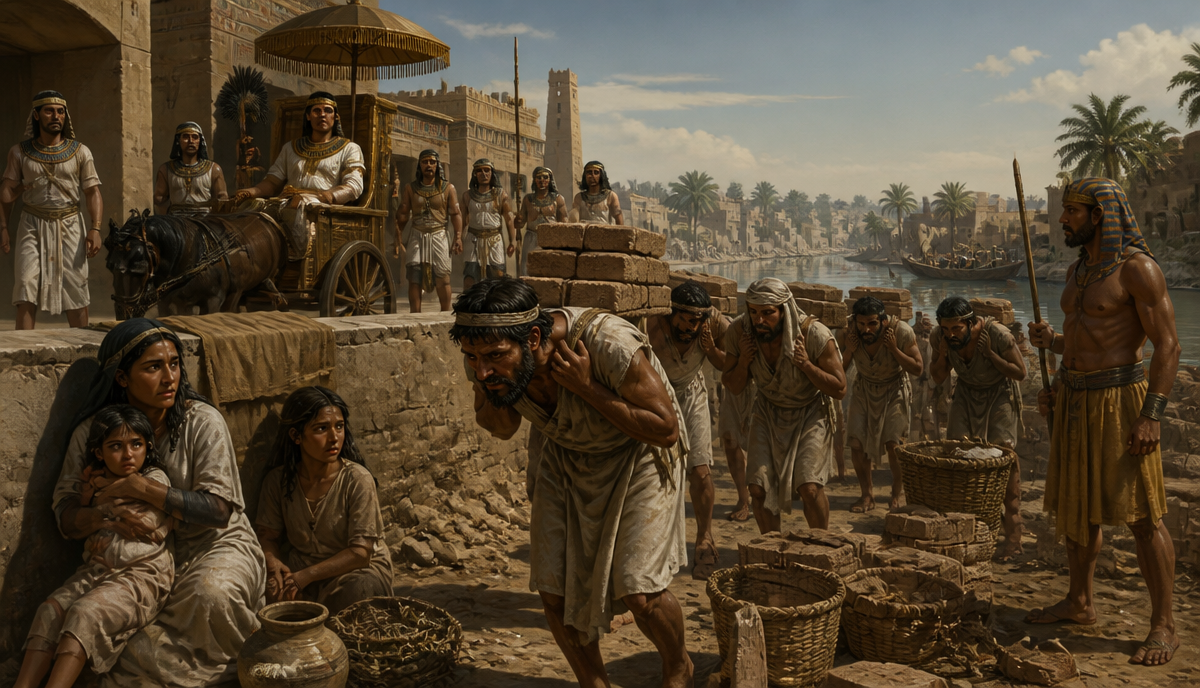
Before Musa, peace be upon him, was born, Egypt was an organised state with temples, quarries and rivers of clay from which cities were raised. Yet the whole structure rested on one principle: that the people be divided, and that one group among them remain too weak to lift its head. Injustice in Egypt was not chaos. It was the careful administration of weakness.
The Quran describes the situation in words that need no commentary:
Open surahSurah Al-Qasas 28:4
Verified recitation
إِنَّ فِرْعَوْنَ عَلَا فِى ٱلْأَرْضِ وَجَعَلَ أَهْلَهَا شِيَعًۭا يَسْتَضْعِفُ طَآئِفَةًۭ مِّنْهُمْ يُذَبِّحُ أَبْنَآءَهُمْ وَيَسْتَحْىِۦ نِسَآءَهُمْ ۚ إِنَّهُۥ كَانَ مِنَ ٱلْمُفْسِدِينَ
إِنَّ فِرْعَوْنَ عَلَا فِى ٱلْأَرْضِ وَجَعَلَ أَهْلَهَا شِيَعًۭا يَسْتَضْعِفُ طَآئِفَةًۭ مِّنْهُمْ يُذَبِّحُ أَبْنَآءَهُمْ وَيَسْتَحْىِۦ نِسَآءَهُمْ ۚ إِنَّهُۥ كَانَ مِنَ ٱلْمُفْسِدِينَ
Note the order in the verse: he exalted himself, then divided, then oppressed, then killed. The self-exaltation came first and the killing came last. Tyranny rarely begins with the sword. It begins when the one who holds power feels himself beyond accountability, then sorts people into ranks, and after that everything becomes possible.
The order to kill the infant boys was, in Pharaoh's eyes, a preventive measure against a child who might one day end his rule. He built policy on killing a possibility that had not yet occurred. That is the first lesson of the account: the tyrant imagines he can fight the future, and the whole story of Musa is the answer to that calculation.
Lessons
- Tyranny begins with arrogance long before it begins with the sword
- Dividing people is an ancient tool for entrenching oppression
- Whoever fights the decree of Allah loses while believing he is taking precautions
Chapter 2
The Infant on the River

The boy was born into a home that possessed no safety at all. His mother knew the order still stood, and that every infant cry in the quarter might be its last. At that very moment revelation came to a woman who was not a prophet, with an instruction that contradicted everything the heart knows about protecting a newborn: place him in the water.
Open surahSurah Al-Qasas 28:7
Verified recitation
وَأَوْحَيْنَآ إِلَىٰٓ أُمِّ مُوسَىٰٓ أَنْ أَرْضِعِيهِ ۖ فَإِذَا خِفْتِ عَلَيْهِ فَأَلْقِيهِ فِى ٱلْيَمِّ وَلَا تَخَافِى وَلَا تَحْزَنِىٓ ۖ إِنَّا رَآدُّوهُ إِلَيْكِ وَجَاعِلُوهُ مِنَ ٱلْمُرْسَلِينَ
وَأَوْحَيْنَآ إِلَىٰٓ أُمِّ مُوسَىٰٓ أَنْ أَرْضِعِيهِ ۖ فَإِذَا خِفْتِ عَلَيْهِ فَأَلْقِيهِ فِى ٱلْيَمِّ وَلَا تَخَافِى وَلَا تَحْزَنِىٓ ۖ إِنَّا رَآدُّوهُ إِلَيْكِ وَجَاعِلُوهُ مِنَ ٱلْمُرْسَلِينَ
The verse holds one command, two reassurances and two promises. The command was hard, the reassurance arrived before the fear had even settled, and the promise was doubled: he will return to you, and he will be among the messengers. She was not told how or when, and that is precisely where faith lives.
The water carried the basket to the one place she feared more than the river: the palace of Pharaoh. The child entered through the very gate where children like him were killed, and came to rest in the household of the king, fed from the wealth of the oppressor and guarded by his soldiers. The one who would bring down that rule was raised inside it.
Allah then returned the boy to his mother when the palace needed a nurse whom the infant would accept. She nursed her own son in safety and was even paid for it. Such an arrangement is not produced by cleverness and cannot be reached by calculation. It is a plan that shows the frightened heart that every cause rests in a single Hand.
Lessons
- In the speech of Allah, reassurance precedes the difficult command
- Fear is not removed by planning alone but by trust joined to action
- The path of rescue can pass through the very place you feared
Chapter 3
The Flight to Midian
Musa, peace be upon him, grew up in the palace, yet his upbringing never erased where he belonged. When he found a man of his own people being beaten he intervened with a single blow, and the Egyptian died without any intention to kill him. He acknowledged his mistake and sought forgiveness from his Lord rather than justifying himself. That is a fundamental difference between a prophet and a tyrant: one admits and seeks pardon, the other adds to the wrong.
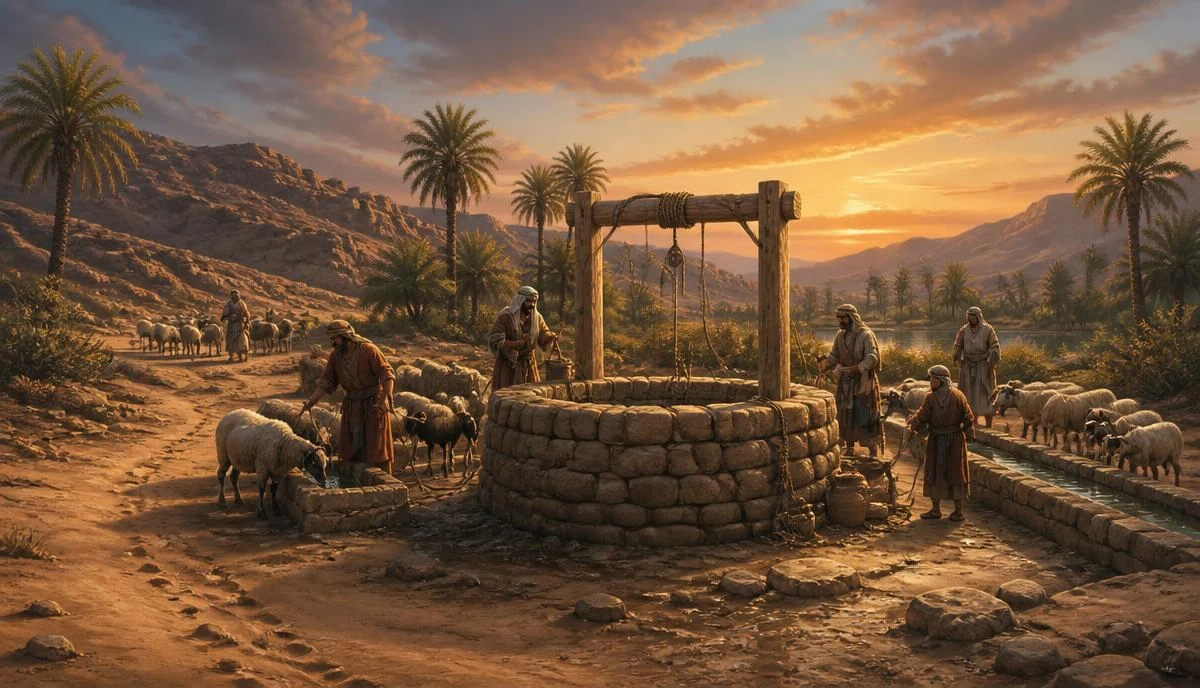
Word reached him that the men of the city were plotting his death, so he left Egypt in fear, without a road he knew or provision he carried, until he reached the water of Midian. There he saw two women waiting their turn among the shepherds. He watered their flock and withdrew to the shade without asking a reward or mentioning his own need to anyone. Then he said within himself one of the most beautiful supplications ever made in a state of need:
Open surahSurah Al-Qasas 28:24
Verified recitation
فَسَقَىٰ لَهُمَا ثُمَّ تَوَلَّىٰٓ إِلَى ٱلظِّلِّ فَقَالَ رَبِّ إِنِّى لِمَآ أَنزَلْتَ إِلَىَّ مِنْ خَيْرٍۢ فَقِيرٌۭ
فَسَقَىٰ لَهُمَا ثُمَّ تَوَلَّىٰٓ إِلَى ٱلظِّلِّ فَقَالَ رَبِّ إِنِّى لِمَآ أَنزَلْتَ إِلَىَّ مِنْ خَيْرٍۢ فَقِيرٌۭ
He did not say: I am hungry, nor: give me. He said that he was in need of whatever good his Lord might send down. The words reveal the courtesy of prophethood: present your condition without dictating the request, and leave the choice to the One who knows.
The answer arrived before he moved from his place: work that sustained him, a home he settled into, and years spent shepherding. Those years were not empty space in the account. They were a school. Whoever tends sheep in the hills learns patience in leading, care for the one that strays, and how to walk at the pace of the weakest rather than his own. That is exactly what he would need with an entire nation in the desert.
Lessons
- Admitting a mistake and seeking forgiveness is the character of prophets
- Doing good without asking a reward opens provision from unexpected doors
- Long years of preparation are not delay but qualification
Chapter 4
The Call in the Sacred Valley

When the term was complete, Musa, peace be upon him, travelled back with his family and lost his way on a cold dark night. He saw a fire on the side of the mountain and went towards it hoping for news or a burning branch for warmth. He found what he had never reckoned with:
Open surahSurah Al-Qasas 28:30
Verified recitation
فَلَمَّآ أَتَىٰهَا نُودِىَ مِن شَٰطِئِ ٱلْوَادِ ٱلْأَيْمَنِ فِى ٱلْبُقْعَةِ ٱلْمُبَٰرَكَةِ مِنَ ٱلشَّجَرَةِ أَن يَٰمُوسَىٰٓ إِنِّىٓ أَنَا ٱللَّهُ رَبُّ ٱلْعَٰلَمِينَ
فَلَمَّآ أَتَىٰهَا نُودِىَ مِن شَٰطِئِ ٱلْوَادِ ٱلْأَيْمَنِ فِى ٱلْبُقْعَةِ ٱلْمُبَٰرَكَةِ مِنَ ٱلشَّجَرَةِ أَن يَٰمُوسَىٰٓ إِنِّىٓ أَنَا ٱللَّهُ رَبُّ ٱلْعَٰلَمِينَ
Here the account turns from the life of a man into a mission. This moment is the reason for the title by which Musa is known in Islamic tradition: the one who spoke with Allah, that is, the one addressed without an intermediary. The title is not a decorative phrase but the description of an event that took place in this valley.
He was then given two tangible signs: the staff that became a moving serpent, and the hand that came out shining white without harm. The choice is precise. The shepherd's staff that had accompanied him for years is the same one that would stand before the greatest king on earth. Allah did not hand him a new weapon; He placed blessing in what was already in his hand.
Faced with the weight of the task he claimed no strength of his own, but made a supplication that teaches everyone charged with more than they can carry:
Open surahSurah Taha 20:25-28
Verified recitation
قَالَ رَبِّ ٱشْرَحْ لِى صَدْرِى وَيَسِّرْ لِىٓ أَمْرِى وَٱحْلُلْ عُقْدَةًۭ مِّن لِّسَانِى يَفْقَهُوا۟ قَوْلِى
قَالَ رَبِّ ٱشْرَحْ لِى صَدْرِى • وَيَسِّرْ لِىٓ أَمْرِى • وَٱحْلُلْ عُقْدَةًۭ مِّن لِّسَانِى • يَفْقَهُوا۟ قَوْلِى
He asked for an expanded heart before an easier task, and for clear speech not for his own sake but so that people would understand. He asked that his brother Harun be with him, and he was answered. A great mission is not carried alone, and there is no shame in asking for help.
Lessons
- The title of the one who spoke with Allah comes from this call in the valley
- Blessing may descend on the means already in your hand rather than a new one
- Ask for an expanded heart before asking for an easier task
Chapter 5
The Confrontation and the Belief of the Magicians
Musa and Harun, peace be upon them, came before Pharaoh with a clear call: worship Allah and let the Children of Israel go. The reply was not a discussion of the truth but a suspicion cast on the messenger himself and a reminder of the favour he had enjoyed in the palace. This method repeats across history: when the oppressor cannot answer the argument, he speaks about the one who brings it.
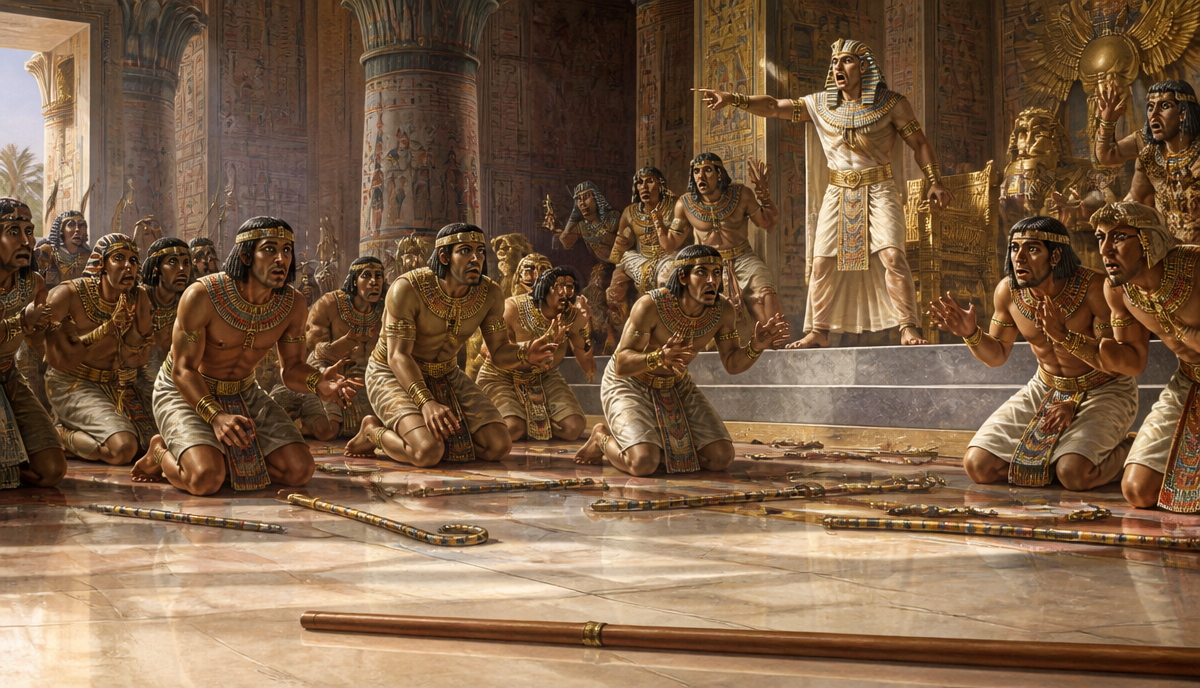
Pharaoh then chose to move the contest to a field he believed he owned: sorcery. He gathered the finest magicians on an appointed day, and they met the staff of Musa with ropes and rods that appeared to the people to be moving. The difference showed in an instant. Sorcery alters what people see; a sign alters what actually is.
The magicians were the most expert people in their craft, and they knew the limits of what they could do. So they were the first to understand that what they had witnessed did not belong to their art. What followed was never part of the king's calculation:
Open surahSurah Al-A'raf 7:120-122
Verified recitation
وَأُلْقِىَ ٱلسَّحَرَةُ سَٰجِدِينَ قَالُوٓا۟ ءَامَنَّا بِرَبِّ ٱلْعَٰلَمِينَ رَبِّ مُوسَىٰ وَهَٰرُونَ
وَأُلْقِىَ ٱلسَّحَرَةُ سَٰجِدِينَ • قَالُوٓا۟ ءَامَنَّا بِرَبِّ ٱلْعَٰلَمِينَ • رَبِّ مُوسَىٰ وَهَٰرُونَ
They arrived in the morning seeking a reward from Pharaoh and left in the evening unafraid of his threat of death. The most striking feature of the moment is that expertise in their craft was their road to faith: whoever knows the limit of trickery recognises a sign when he sees one.
Signs then came upon the people of Pharaoh over years: drought and loss of harvests, the flood, locusts, lice, frogs and blood. Each time they promised belief if the affliction were lifted, and each time it was lifted they broke the promise. This exposes a hard rule: whoever does not accept the truth because it is true will not keep accepting it out of fear for long.
Lessons
- Sorcery changes what people see, while a sign changes what actually is
- Experts in a craft know the limits of that craft best
- Faith driven by fear alone does not last
Chapter 6
The Parting of the Sea and the End of Pharaoh
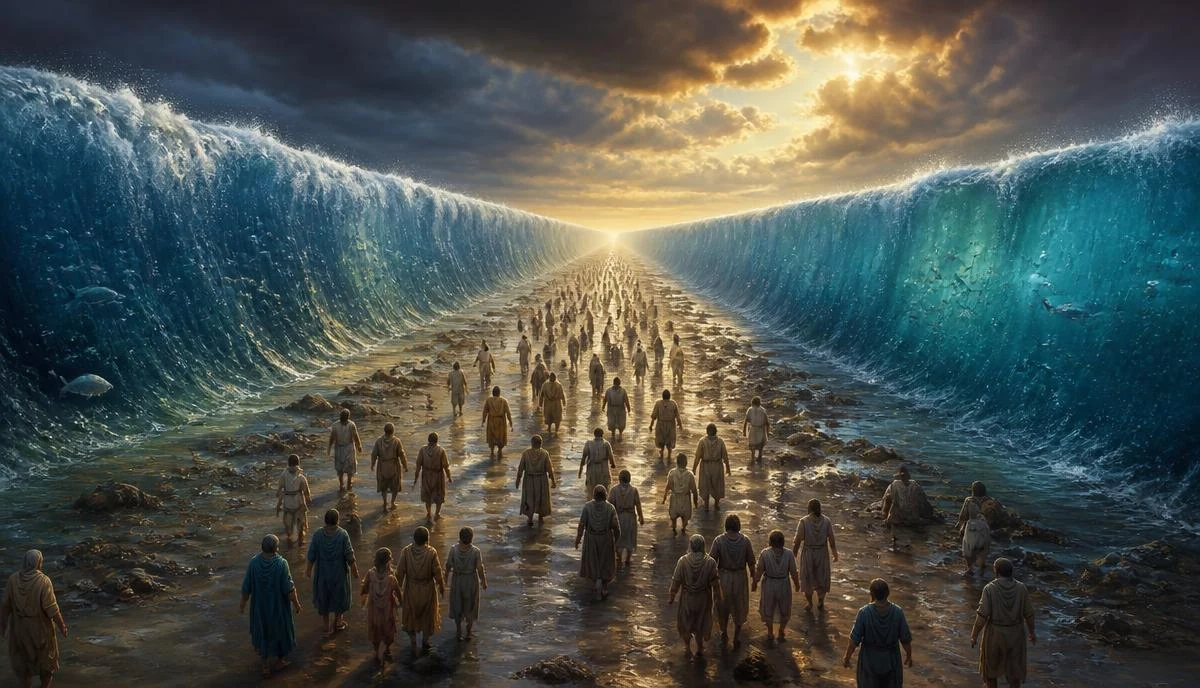
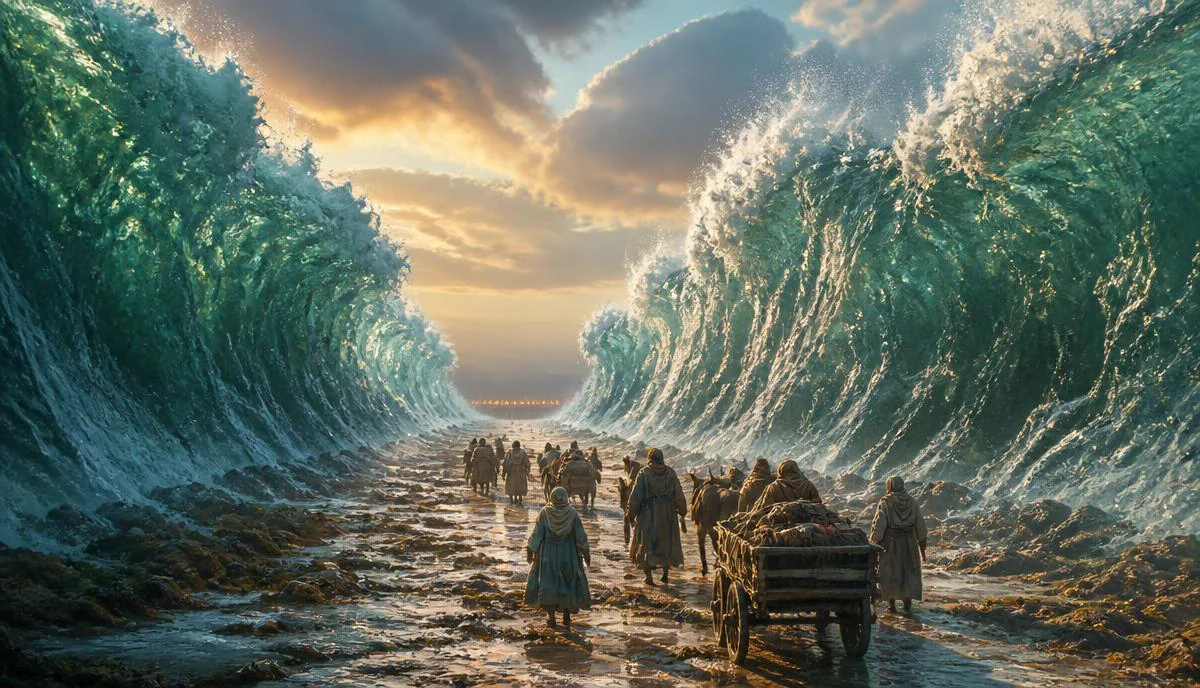
Musa, peace be upon him, was ordered to leave with the Children of Israel by night. He led them until they reached the shore of the sea, and there they stood between water they could not cross and an army closing in behind them. At such a point the reality of faith is tested: by human reckoning there was no way out, water ahead and spears behind.
Then came the command:
Open surahSurah Ash-Shu'ara 26:63
Verified recitation
فَأَوْحَيْنَآ إِلَىٰ مُوسَىٰٓ أَنِ ٱضْرِب بِّعَصَاكَ ٱلْبَحْرَ ۖ فَٱنفَلَقَ فَكَانَ كُلُّ فِرْقٍۢ كَٱلطَّوْدِ ٱلْعَظِيمِ
فَأَوْحَيْنَآ إِلَىٰ مُوسَىٰٓ أَنِ ٱضْرِب بِّعَصَاكَ ٱلْبَحْرَ ۖ فَٱنفَلَقَ فَكَانَ كُلُّ فِرْقٍۢ كَٱلطَّوْدِ ٱلْعَظِيمِ
The sea split until each part of it stood like a great mountain, and a dry road appeared in the midst of the water. The Children of Israel entered and came out. Then Pharaoh and his soldiers entered the same road and it closed upon them. There the king uttered a sentence he had never uttered in all the years of the call:
Open surahSurah Yunus 10:90
Verified recitation
۞ وَجَٰوَزْنَا بِبَنِىٓ إِسْرَٰٓءِيلَ ٱلْبَحْرَ فَأَتْبَعَهُمْ فِرْعَوْنُ وَجُنُودُهُۥ بَغْيًۭا وَعَدْوًا ۖ حَتَّىٰٓ إِذَآ أَدْرَكَهُ ٱلْغَرَقُ قَالَ ءَامَنتُ أَنَّهُۥ لَآ إِلَٰهَ إِلَّا ٱلَّذِىٓ ءَامَنَتْ بِهِۦ بَنُوٓا۟ إِسْرَٰٓءِيلَ وَأَنَا۠ مِنَ ٱلْمُسْلِمِينَ
۞ وَجَٰوَزْنَا بِبَنِىٓ إِسْرَٰٓءِيلَ ٱلْبَحْرَ فَأَتْبَعَهُمْ فِرْعَوْنُ وَجُنُودُهُۥ بَغْيًۭا وَعَدْوًا ۖ حَتَّىٰٓ إِذَآ أَدْرَكَهُ ٱلْغَرَقُ قَالَ ءَامَنتُ أَنَّهُۥ لَآ إِلَٰهَ إِلَّا ٱلَّذِىٓ ءَامَنَتْ بِهِۦ بَنُوٓا۟ إِسْرَٰٓءِيلَ وَأَنَا۠ مِنَ ٱلْمُسْلِمِينَ
He said it with the water in his throat, and it was not accepted, because faith that arrives after every option has been removed is not a choice but compulsion. The man who spent his life telling people that he knew no god for them besides himself did not settle his heart on the truth when he finally said it; he was trying to escape drowning with it.
The verse carries a precise detail: the pursuit itself is described as oppression and transgression, meaning the army entered the sea still persisting in its injustice, without regret. The end was not punishment for one moment but the conclusion of a long road of insistence.
Lessons
- A way can open only after every human calculation has closed
- Faith at the moment when no option remains is compulsion, not choice
- The end is not punishment for one moment but the close of long insistence
Chapter 7
After the Rescue: The Calf and the Tablets
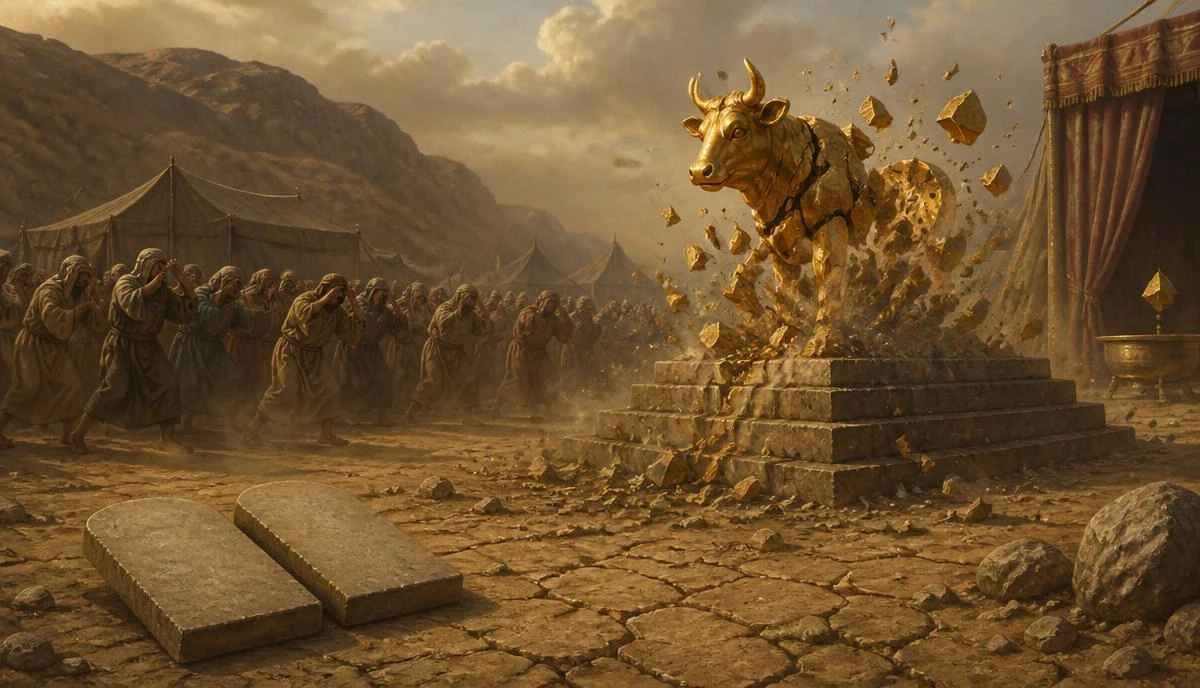
One might expect the rescue to be the end of the test, but it was its beginning. The Children of Israel left Egypt with their bodies, while in many hearts the mark of four centuries of servitude remained: attachment to the tangible and a demand for a god that could be seen.
When Musa, peace be upon him, was absent for the appointed forty nights, the Samiri found his opportunity. He gathered the gold they carried, shaped from it the form of a calf, and gave it a sound resembling a low.
Open surahSurah Taha 20:88
Verified recitation
فَأَخْرَجَ لَهُمْ عِجْلًۭا جَسَدًۭا لَّهُۥ خُوَارٌۭ فَقَالُوا۟ هَٰذَآ إِلَٰهُكُمْ وَإِلَٰهُ مُوسَىٰ فَنَسِىَ
فَأَخْرَجَ لَهُمْ عِجْلًۭا جَسَدًۭا لَّهُۥ خُوَارٌۭ فَقَالُوا۟ هَٰذَآ إِلَٰهُكُمْ وَإِلَٰهُ مُوسَىٰ فَنَسِىَ
When he returned and saw what had happened, his anger was not directed at the crowd alone. He reproached his brother Harun for what had occurred in his absence, and he held the maker of the trial to account. Then he passed a judgement on the Samiri that combined social exclusion with the destruction of the fabricated object of worship:
Open surahSurah Taha 20:97
Verified recitation
قَالَ فَٱذْهَبْ فَإِنَّ لَكَ فِى ٱلْحَيَوٰةِ أَن تَقُولَ لَا مِسَاسَ ۖ وَإِنَّ لَكَ مَوْعِدًۭا لَّن تُخْلَفَهُۥ ۖ وَٱنظُرْ إِلَىٰٓ إِلَٰهِكَ ٱلَّذِى ظَلْتَ عَلَيْهِ عَاكِفًۭا ۖ لَّنُحَرِّقَنَّهُۥ ثُمَّ لَنَنسِفَنَّهُۥ فِى ٱلْيَمِّ نَسْفًا
قَالَ فَٱذْهَبْ فَإِنَّ لَكَ فِى ٱلْحَيَوٰةِ أَن تَقُولَ لَا مِسَاسَ ۖ وَإِنَّ لَكَ مَوْعِدًۭا لَّن تُخْلَفَهُۥ ۖ وَٱنظُرْ إِلَىٰٓ إِلَٰهِكَ ٱلَّذِى ظَلْتَ عَلَيْهِ عَاكِفًۭا ۖ لَّنُحَرِّقَنَّهُۥ ثُمَّ لَنَنسِفَنَّهُۥ فِى ٱلْيَمِّ نَسْفًا
Musa brought the tablets containing the law that would govern their lives: the oneness of Allah, rulings, appointed times and limits. The freedom they gained through the parting of the sea was not an end in itself; it was the condition that allowed them to live under revealed law rather than the will of a king. That is why the tablets came after the rescue and not before it.
Who was the Samiri? A man among the people who fashioned the calf, exploiting the absence of Musa and the weak grasp many still had of an unseen God, until his own inclination led him to build them a deity out of gold.
Why is Musa called the one who spoke with Allah? Because Allah addressed him without an intermediary in the sacred valley by the mountain, as recorded in Surah Al-Qasas, a distinction given to him among the prophets.
What does the story of Musa and Pharaoh teach today? That injustice never settles permanently however long it lasts, that a closed road is not the end of the way, and that liberation from an oppressor outside is completed only by freeing the heart from attachment to the tangible inside.
Why is this account repeated in the Quran more than others? Because it is the widest account in which every form of struggle appears together: a tyrant with an army, experts with a craft, an oppressed nation, a call, a rescue, and then a test after the rescue. Each aspect is mentioned in its own context to serve a different meaning.
Lessons
- Outward liberation is not enough without freeing the heart from attachment to the tangible
- Trials wait for the moment of absence, which is why a community is needed and not one person
- Revealed law came after the rescue to protect freedom from turning back into servitude
Interactive quiz
Answer the questions below, then check your answers. No account needed.
1. With what did the Quran begin its description of Pharaoh's injustice?
2. What did Allah promise the mother of Musa when she was told to set him on the river?
3. What did Musa say after watering the flock for the two women in Midian?
4. Why is Musa known as the one who spoke with Allah?
5. Why were the magicians the first to believe?
6. Why was Pharaoh's belief at the moment of drowning not accepted?
7. What did the Samiri make during the absence of Musa?
The illustrations are our own, free of copyright restrictions, and do not depict identified religious figures.
Related stories


Data sources
- Surah Al-Qasas 28:1-46
- Surah Ta-Ha 20:9-98
- Surah Al-Araf 7:103-155
- Surah Ash-Shuara 26:10-68
- Surah Yunus 10:75-92
- Tafsir Ibn Kathir
- Tafsir al-Tabari