Stories
Lut and His Town
The complete chapter-by-chapter account of Lut, peace be upon him: who he was, how he migrated with Ibrahim, where his town stood in the land of Jordan near the Dead Sea, the sin his people became known for, how they answered his call with threats of expulsion, the arrival of the angels as guests, the command to leave before dawn, who was saved and who perished, exactly how the punishment came as a cry, an overturned town and stones of hardened clay, and the sign that can still be seen in that valley today.
The story narration voice is machine-generated. The text is human-written and reviewed, and Quran verses are recited by a verified reciter.
Chapter 1
A Man Who Left With Ibrahim
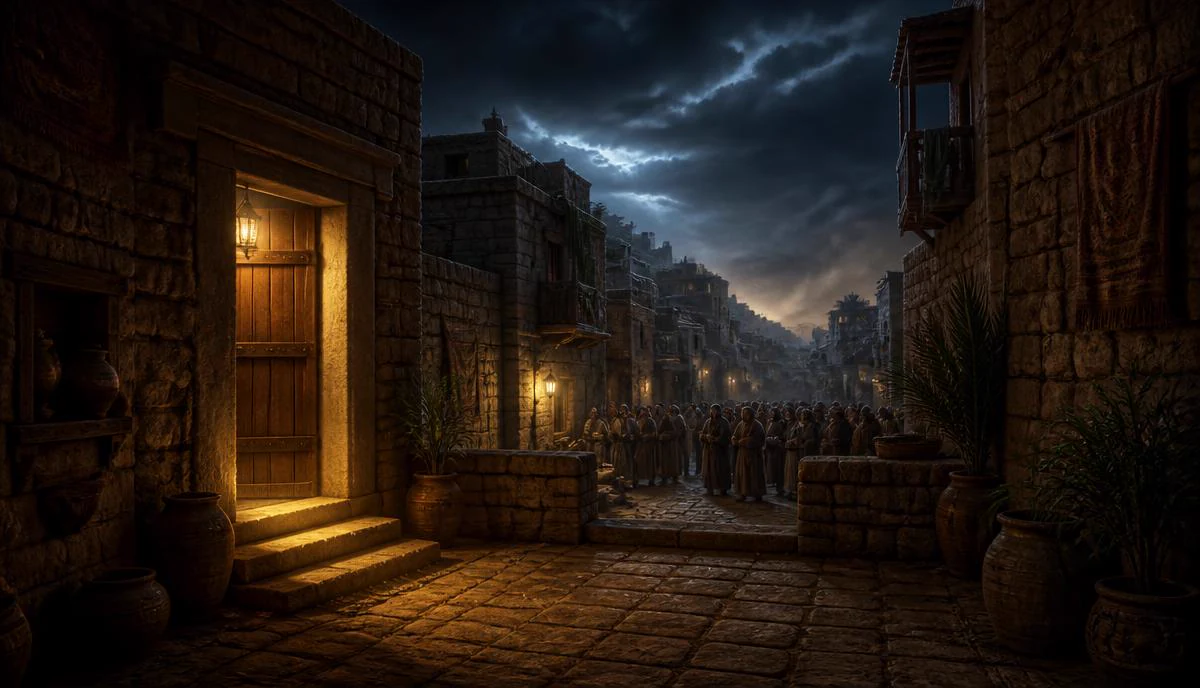
Lut, peace be upon him, is not a stranger to the story of Ibrahim. He was his nephew, and the first person to believe him when his own people in Iraq rejected him. That is why his account in the Quran opens with belief rather than with prophethood:
Open surahSurah Al-'Ankabut 29:26
Verified recitation
۞ فَـَٔامَنَ لَهُۥ لُوطٌۭ ۘ وَقَالَ إِنِّى مُهَاجِرٌ إِلَىٰ رَبِّىٓ ۖ إِنَّهُۥ هُوَ ٱلْعَزِيزُ ٱلْحَكِيمُ
۞ فَـَٔامَنَ لَهُۥ لُوطٌۭ ۘ وَقَالَ إِنِّى مُهَاجِرٌ إِلَىٰ رَبِّىٓ ۖ إِنَّهُۥ هُوَ ٱلْعَزِيزُ ٱلْحَكِيمُ
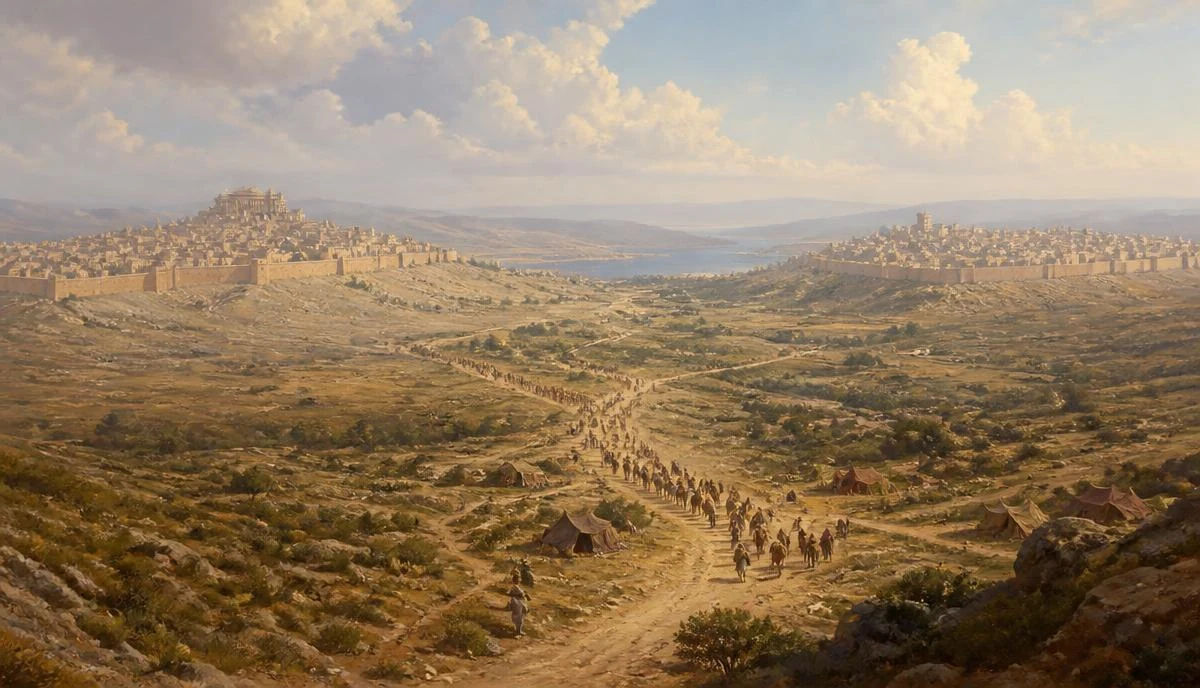
One short sentence carrying a complete stance: in a land entirely against Ibrahim, one man stood with him. Then came the migration. The two of them travelled together toward Syria, and crossed the road from the land of Babylon to the land of Canaan. Afterwards each settled in his own place: Ibrahim remained where he was, while Lut moved east, into the low fertile plain of the land of Jordan, where inhabited towns sat on the trade roads with water, crops and markets.
There Allah sent him as a prophet to the people of those towns. Lut was not sent to a people among whom his father and clan were known and respected. He was sent to the population of a town he had entered as an outsider. That single fact explains much of what follows: why the threat to expel him from the town was an effective weapon, and why on the night of the guests he spoke the words of a man with no one behind him, wishing he had strength against them or some strong support to turn to.
This is not the story of a prophet in a palace, nor of one protected by his tribe. It is the story of one man in a town whose people had settled on a single choice and refused to leave it.
Lessons
- The first to accept the truth may be one man, and that is enough to be recorded in the Quran
- Being an outsider does not remove the duty to speak
- Choosing fertile land is not the same as choosing good neighbours
Chapter 2
Where the Town Stood and Who Lived in It
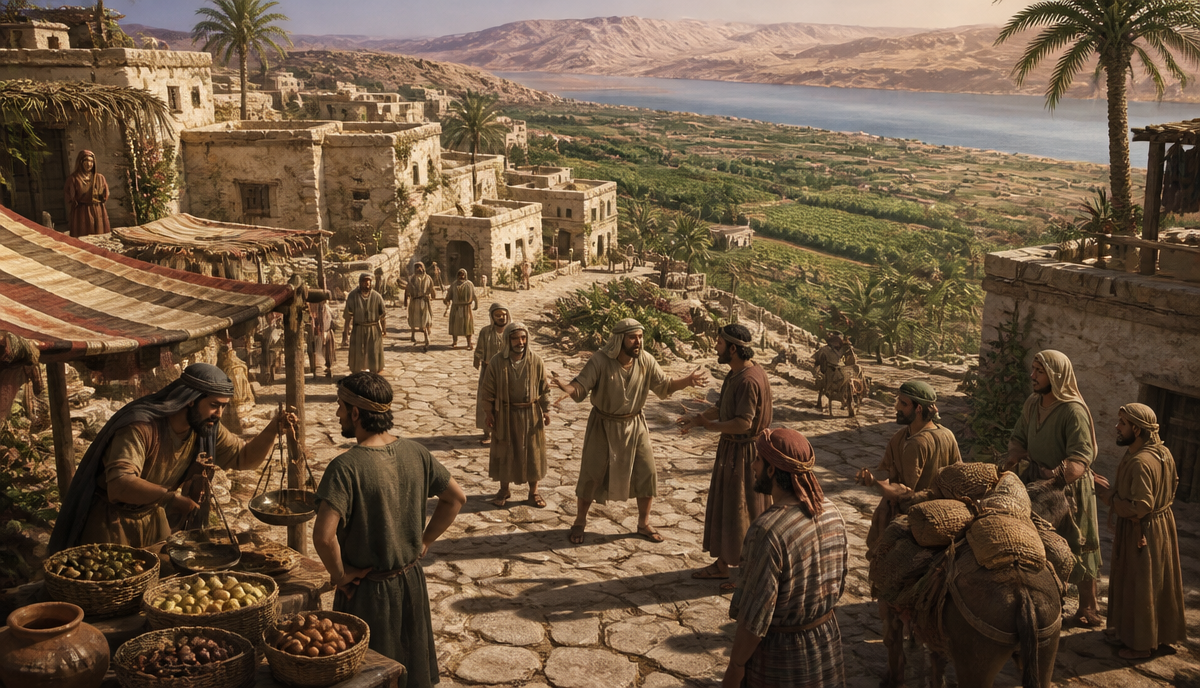
The first question most people ask when they hear this story is where the people of Lut lived. Books of exegesis and history agree: in the low depression south of the Dead Sea in the land of Jordan, a cluster of neighbouring towns of which Sodom is the best known. The Quran calls the place the town and the overturned settlement. It is the lowest inhabited spot on the face of the earth, and in that age it was cultivated land on the caravan road, not the salt waste it is today.
As for who these people were, the Quran identifies them not by lineage but by conduct. Lut found that they had introduced into the world something no one before them had made habitual:
Open surahSurah Al-A'raf 7:80-81
Verified recitation
وَلُوطًا إِذْ قَالَ لِقَوْمِهِۦٓ أَتَأْتُونَ ٱلْفَٰحِشَةَ مَا سَبَقَكُم بِهَا مِنْ أَحَدٍۢ مِّنَ ٱلْعَٰلَمِينَ إِنَّكُمْ لَتَأْتُونَ ٱلرِّجَالَ شَهْوَةًۭ مِّن دُونِ ٱلنِّسَآءِ ۚ بَلْ أَنتُمْ قَوْمٌۭ مُّسْرِفُونَ
وَلُوطًا إِذْ قَالَ لِقَوْمِهِۦٓ أَتَأْتُونَ ٱلْفَٰحِشَةَ مَا سَبَقَكُم بِهَا مِنْ أَحَدٍۢ مِّنَ ٱلْعَٰلَمِينَ إِنَّكُمْ لَتَأْتُونَ ٱلرِّجَالَ شَهْوَةًۭ مِّن دُونِ ٱلنِّسَآءِ ۚ بَلْ أَنتُمْ قَوْمٌۭ مُّسْرِفُونَ
Two qualifiers in the verse define the heart of their crime. The first: no one preceded them with it, meaning they were the first to make it an openly practised norm in a society. The second: they were a people of excess, and excess is crossing every limit, not only this one.
That is why Surah Al-Ankabut describes their gatherings as places where travellers were waylaid, and why the Quran records that they cut the road and committed evil in their assemblies openly. The sin was not the hidden fault of individuals. It had become a public custom that was defended, so that whoever objected became the outsider who had to be removed. That is the point at which a society earns its place in the Quran as a warning for the nations after it.
Lessons
- The town of Lut lay in the low depression south of the Dead Sea in the land of Jordan
- A private fault becomes the ruin of a nation once it turns into a defended public norm
- Excess spreads: whoever crosses the limit in one matter crosses it in others
Chapter 3
Years of Calling, One Answer
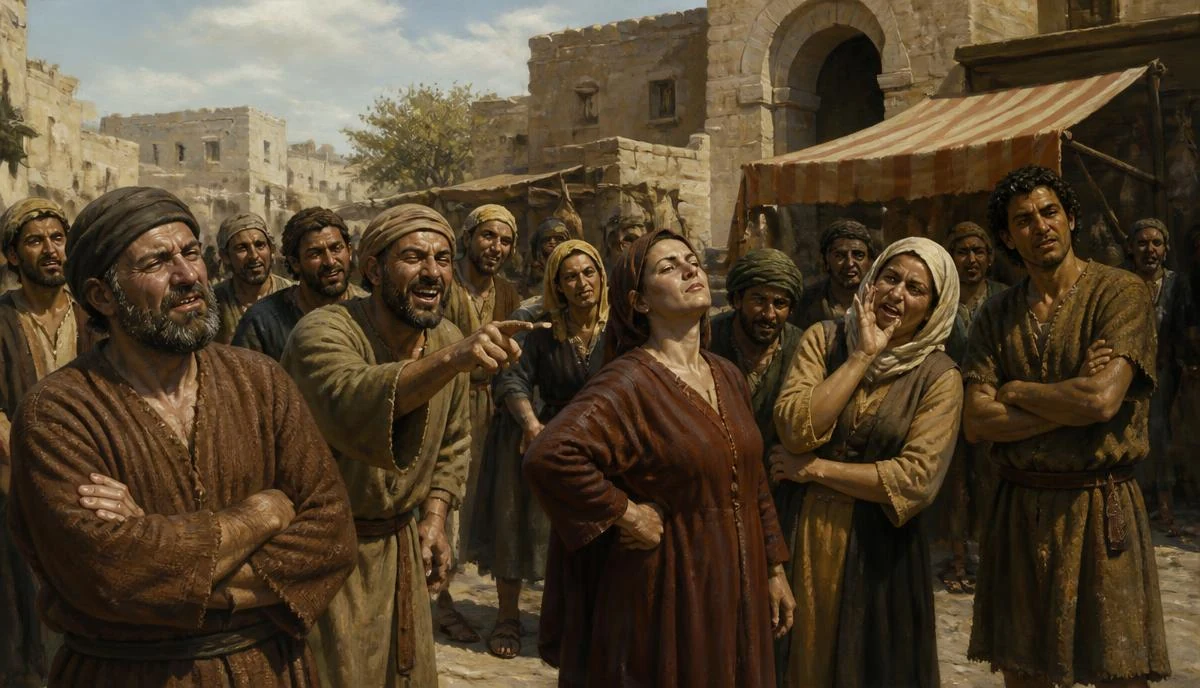
Lut called his people with the plain argument of sound nature before any threat. He put to them a question that stops the mind: do you commit this shameful act while you see clearly? The matter was not ignorance that might be excused, but an act done in full sight and knowledge. He reminded them of purity and of what was lawful, and made plain that what they were doing assaulted the very design of creation rather than merely broke a rule of conduct. The Quran describes him as a trustworthy adviser to them, joining two qualities: counsel that never tires, and honesty that hides nothing.
And the answer? Not a debate, not an argument, but an administrative decision to remove the dissenter:
Open surahSurah An-Naml 27:56
Verified recitation
۞ فَمَا كَانَ جَوَابَ قَوْمِهِۦٓ إِلَّآ أَن قَالُوٓا۟ أَخْرِجُوٓا۟ ءَالَ لُوطٍۢ مِّن قَرْيَتِكُمْ ۖ إِنَّهُمْ أُنَاسٌۭ يَتَطَهَّرُونَ
۞ فَمَا كَانَ جَوَابَ قَوْمِهِۦٓ إِلَّآ أَن قَالُوٓا۟ أَخْرِجُوٓا۟ ءَالَ لُوطٍۢ مِّن قَرْيَتِكُمْ ۖ إِنَّهُمْ أُنَاسٌۭ يَتَطَهَّرُونَ
Look closely at the reason they gave for the expulsion: these are people who keep themselves pure. Purity itself had become the accusation. Nothing is more dangerous to a society than this inversion, where the good becomes objectionable and the objectionable becomes normal, and the presence of an upright person turns into a nuisance that deserves removal.
In Surah Ash-Shuara they say it outright: you will surely be among those driven out. They knew he had no clan behind him, so they raised the one weapon that frightens an outsider. Even so he stayed in the town and kept calling for years, and left only when he was commanded to leave. No excuse remained for the people, and nothing remained in the scale of justice except the arrival of the verdict.
Lessons
- The gravest thing that can happen to a society is for purity to become an accusation
- The duty to speak continues even when the reply is a threat of expulsion
- Punishment arrives only once every excuse has run out
Chapter 4
The Night of the Guests
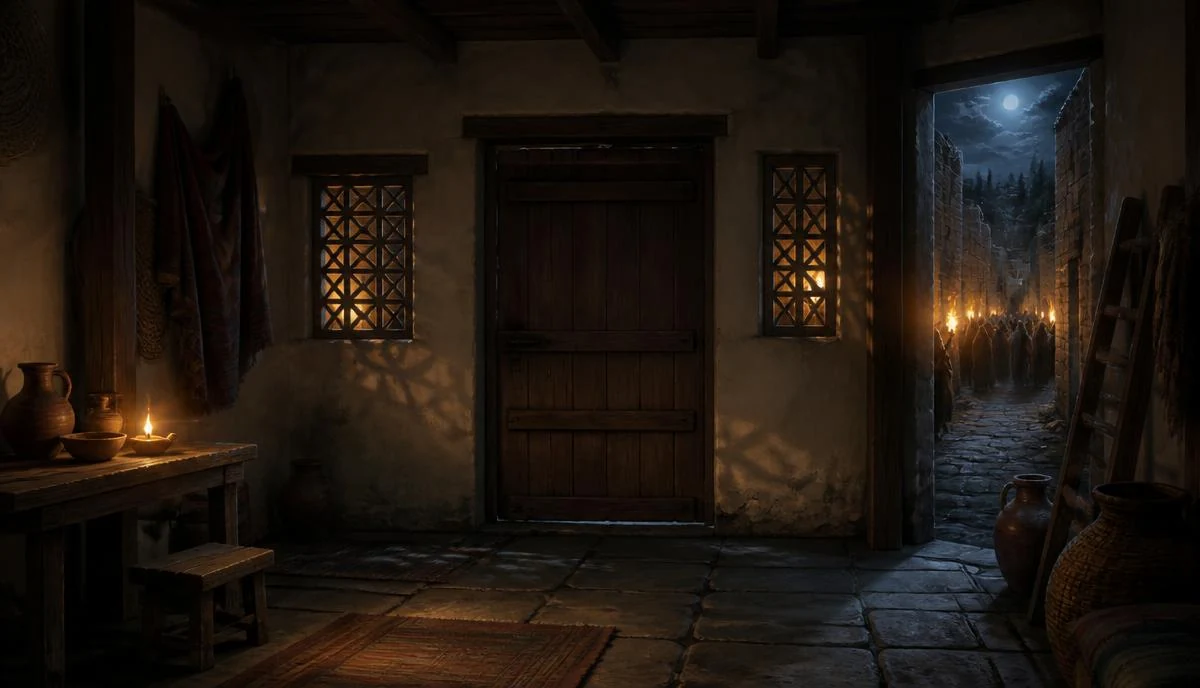
The angels came to the town in the form of men seeking hospitality. Before that they had been with Ibrahim, giving him the news of Ishaq. He asked where they were bound, and when they told him they were sent to the people of Lut he pleaded for them out of mercy and hope, until he was told the decree had already gone forth.
When they entered upon Lut he was distressed, not because he disliked guests but because he feared for them, and he said this is a trying day. Then his people came rushing to his house, saying had we not forbidden you to shelter anyone at all. Lut tried everything to turn them away, reminded them of what was lawful, and begged them to fear Allah and not disgrace him before his guests. They refused. It was then that he spoke the words reported as among the most sorrowful ever uttered by a prophet in a position of weakness: if only I had strength against you, or some strong support to turn to.
At that moment the truth was revealed:
Open surahSurah Hud 11:81
Verified recitation
قَالُوا۟ يَٰلُوطُ إِنَّا رُسُلُ رَبِّكَ لَن يَصِلُوٓا۟ إِلَيْكَ ۖ فَأَسْرِ بِأَهْلِكَ بِقِطْعٍۢ مِّنَ ٱلَّيْلِ وَلَا يَلْتَفِتْ مِنكُمْ أَحَدٌ إِلَّا ٱمْرَأَتَكَ ۖ إِنَّهُۥ مُصِيبُهَا مَآ أَصَابَهُمْ ۚ إِنَّ مَوْعِدَهُمُ ٱلصُّبْحُ ۚ أَلَيْسَ ٱلصُّبْحُ بِقَرِيبٍۢ
قَالُوا۟ يَٰلُوطُ إِنَّا رُسُلُ رَبِّكَ لَن يَصِلُوٓا۟ إِلَيْكَ ۖ فَأَسْرِ بِأَهْلِكَ بِقِطْعٍۢ مِّنَ ٱلَّيْلِ وَلَا يَلْتَفِتْ مِنكُمْ أَحَدٌ إِلَّا ٱمْرَأَتَكَ ۖ إِنَّهُۥ مُصِيبُهَا مَآ أَصَابَهُمْ ۚ إِنَّ مَوْعِدَهُمُ ٱلصُّبْحُ ۚ أَلَيْسَ ٱلصُّبْحُ بِقَرِيبٍۢ
The verse answers every question of that night: who the guests were, why the house was safe, what Lut must do now, and when the punishment would fall. Surah Al-Hijr then records that the eyes of the crowd were blinded at the door, so they turned back unable to see. The man who had wished for strength was, at that very moment, guarded by a strength he could not see.
The strong support he longed for was inside his own house. He simply did not know it yet.
Lessons
- Help may already be inside the house while a person believes he stands alone
- Honouring a guest and defending him belong to the character of the prophets
- The hour of punishment is fixed in the knowledge of Allah, not in human estimation
Chapter 5
Who Left and Who Stayed
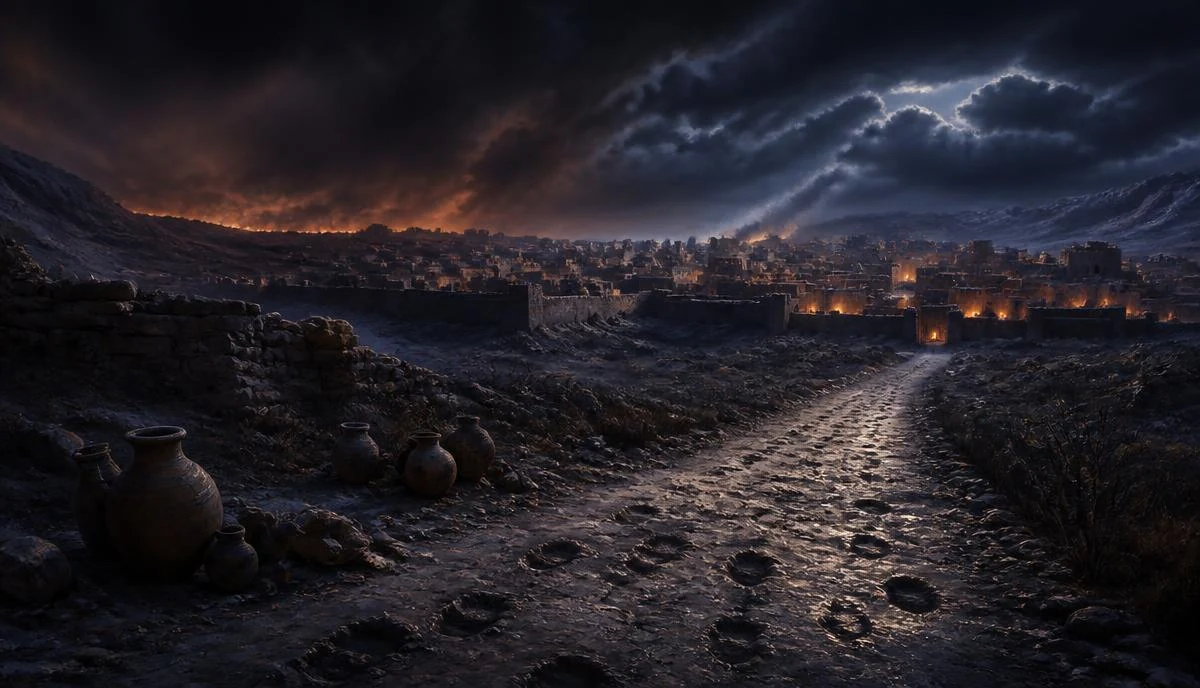
The instruction was clear: leave with your family during a portion of the night, and let none of you look back. So Lut left in the last hours of darkness with his daughters, abandoning his house, his land and the years he had spent calling, carrying nothing worth turning around for.
Not one person from the town left with him. That is why history remembers him as a prophet in whom none of his people believed, and why Allah says of that night that there was no Muslim household in the town except his, so those of the believers who were in it were brought out. The harvest of years of calling was a single family, yet the Quran records Lut as a truthful and sincere prophet, because the measure of conveying a message is the effort made, not the number who respond.
His wife, however, was the exception stated in the text:
Open surahSurah Al-A'raf 7:83
Verified recitation
فَأَنجَيْنَٰهُ وَأَهْلَهُۥٓ إِلَّا ٱمْرَأَتَهُۥ كَانَتْ مِنَ ٱلْغَٰبِرِينَ
فَأَنجَيْنَٰهُ وَأَهْلَهُۥٓ إِلَّا ٱمْرَأَتَهُۥ كَانَتْ مِنَ ٱلْغَٰبِرِينَ
She was the wife of a prophet, living in his house and hearing his words every day, and still she perished with the people. The commentators report that she inclined toward them and pointed them to the guests in her home: her heart was in the town even while her body was in the house of prophethood. That is why the Quran makes her, in Surah At-Tahrim, an example for anyone who imagines that nearness to the righteous is enough, pairing her with the wife of Nuh.
Salvation that night did not come through lineage, address or companionship. It came to whoever actually walked out when he was told to leave.
Lessons
- Deliverance comes through responding, not through proximity to the righteous
- A call is measured by faithful delivery, not by the number who answer
- Looking back at what you were told to leave is attachment to what has already been judged
Chapter 6
How the Punishment Came
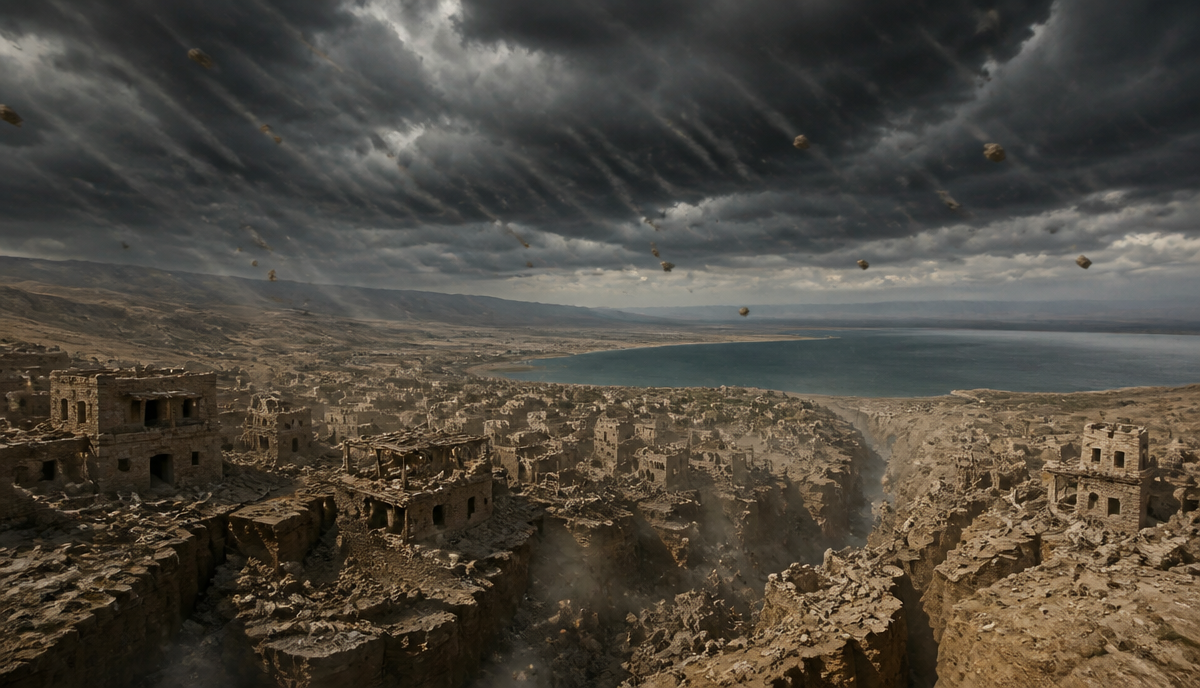
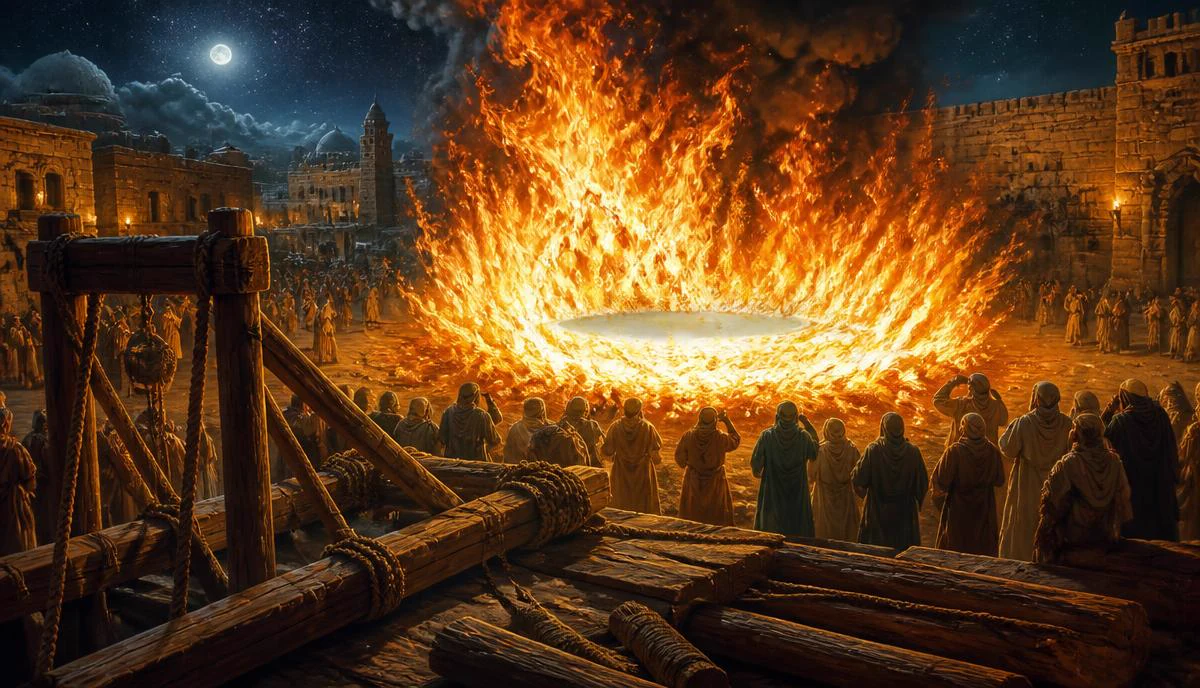
People often ask exactly how the people of Lut were punished. The Quran describes it as three consecutive stages at the break of dawn, not a single blow.
The first stage was the cry. Surah Al-Hijr says the cry seized them at sunrise, a devastating sound that took them inside their own homes.
The second and third stages appear in two connected verses of Surah Hud:
Open surahSurah Hud 11:82-83
Verified recitation
فَلَمَّا جَآءَ أَمْرُنَا جَعَلْنَا عَٰلِيَهَا سَافِلَهَا وَأَمْطَرْنَا عَلَيْهَا حِجَارَةًۭ مِّن سِجِّيلٍۢ مَّنضُودٍۢ مُّسَوَّمَةً عِندَ رَبِّكَ ۖ وَمَا هِىَ مِنَ ٱلظَّٰلِمِينَ بِبَعِيدٍۢ
فَلَمَّا جَآءَ أَمْرُنَا جَعَلْنَا عَٰلِيَهَا سَافِلَهَا وَأَمْطَرْنَا عَلَيْهَا حِجَارَةًۭ مِّن سِجِّيلٍۢ مَّنضُودٍۢ مُّسَوَّمَةً عِندَ رَبِّكَ ۖ وَمَا هِىَ مِنَ ٱلظَّٰلِمِينَ بِبَعِيدٍۢ
We made its highest part its lowest: the town was overturned, its roofs driven beneath it. From this the Quran calls it the overturned settlement. Then stones of sijjil rained upon it, hardened layered clay, falling one after another, marked from your Lord so that not one of them missed its target.
Surah An-Najm compresses the whole scene into two words: and the overturned town He hurled down. Surah Al-Qamar adds that the punishment came only after a warning that was dismissed, for Lut had warned them of the reckoning and they disputed the warning.
The verse closes with a sentence addressed to everyone who reads it afterwards: such punishment is never far from the wrongdoers. These stones are not a tale about a nation that ended. They are a standing law, and its nearness to the unjust is not measured in centuries.
Lessons
- The punishment came in three stages: the cry, then the overturning of the town, then stones of hardened clay
- Marked stones mean a targeted penalty, not a random disaster
- Warning came first, and disputing the warning did not delay the outcome
Chapter 7
The Sign Left in the Valley
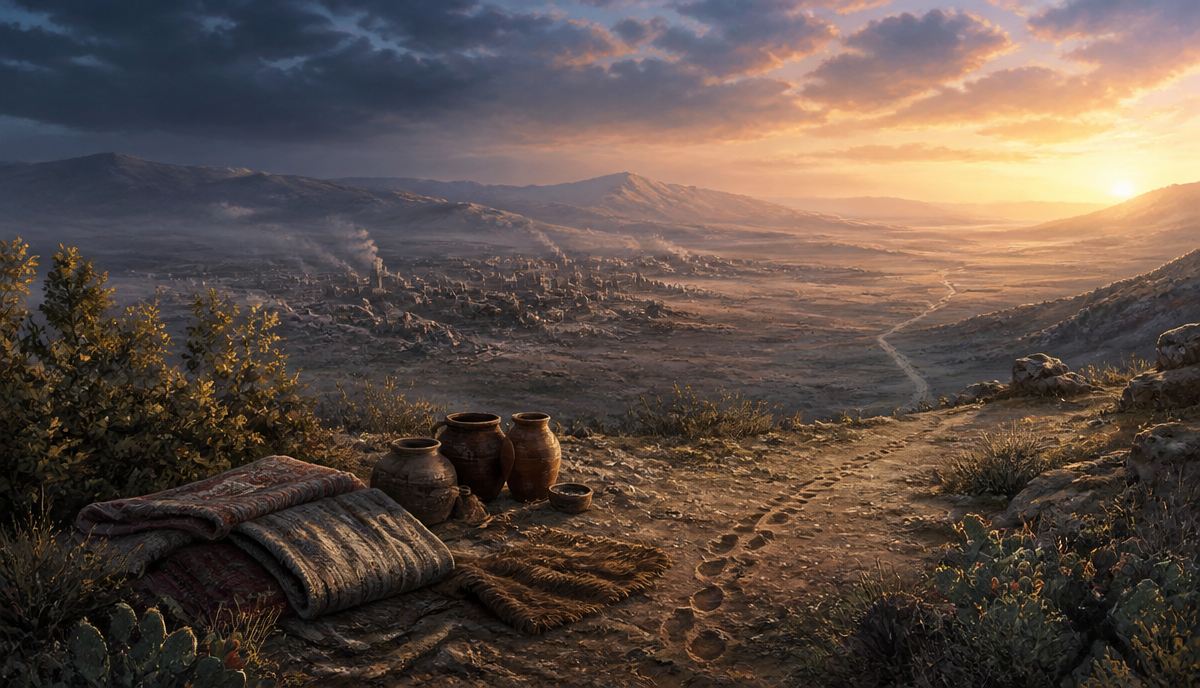
The story does not end with the destruction of the town but with what was left behind. Allah says in Surah Al-Ankabut:
Open surahSurah Al-'Ankabut 29:35
Verified recitation
وَلَقَد تَّرَكْنَا مِنْهَآ ءَايَةًۢ بَيِّنَةًۭ لِّقَوْمٍۢ يَعْقِلُونَ
وَلَقَد تَّرَكْنَا مِنْهَآ ءَايَةًۢ بَيِّنَةًۭ لِّقَوْمٍۢ يَعْقِلُونَ
A clear sign: something visible, not merely a report passed down. Surah Al-Hijr points to its location, saying it lies on a road still travelled. Anyone who passes today through the depression south of the Dead Sea sees ground unlike anything around it: cracked salt, soil mixed with sulphur, the lowest dry point on the surface of the earth, and land once cultivated that now grows nothing.
As for Lut, he and his daughters were saved, and he joined Ibrahim in that region, while prophethood continued in the line of Ibrahim. The Quran mentions Lut alongside Nuh, Hud, Salih and Shuayb, because all their accounts carry the same law: one prophet, one obstinate nation, one known ending.
Three things a reader can carry away today. That a wrong which is publicly defended is far more dangerous to a nation than one committed in secret. That purity can become grounds for expulsion in a society whose scale has been inverted, and that is no reason to surrender it. And that belonging saves no one: the wife of a prophet perished while the household of an outsider was delivered.
To read the account in its own words, see Surah Hud 69-83, Surah Al-Hijr 51-77, Surah Ash-Shuara 160-175, Surah An-Naml 54-58, and Surah Al-Ankabut 26-35.
Lessons
- The trace of the town remains on a travelled road as a sign for those who reason
- Open wrongdoing endangers a nation more than hidden wrongdoing
- Belonging to a righteous household saves no one without action
Interactive quiz
Answer the questions below, then check your answers. No account needed.
1. What was the relationship between Lut and Ibrahim?
2. Where did the town of Lut stand?
3. What reason did the people give for expelling Lut and his household?
4. Who were the guests who entered the house of Lut?
5. Which member of the household of Lut was not saved?
6. How did the punishment of the people of Lut come?
7. What remained of the town after its destruction?
The illustrations are our own, free of copyright restrictions, and do not depict identified religious figures.
Related stories


Data sources
- Surah Hud 11:69-83
- Surah Al-Araf 7:80-84
- Surah Al-Hijr 15:51-77
- Surah Ash-Shuara 26:160-175
- Surah An-Naml 27:54-58
- Surah Al-Ankabut 29:26-35
- Surah Al-Qamar 54:33-39
- Tafsir Ibn Kathir
- Tafsir al-Tabari