Stories
The Cave of Hira
A detailed, source-led account of the beginning of revelation in the Cave of Hira: true dreams, retreat, the command to read, the Prophet’s words “Cover me, cover me,” Khadijah’s reassurance, Waraqa’s testimony, the pause in revelation, and the opening of Al-Muddaththir.
The story narration voice is machine-generated. The text is human-written and reviewed, and Quran verses are recited by a verified reciter.
Chapter 1
The Cave of Hira: Place and Proven Account
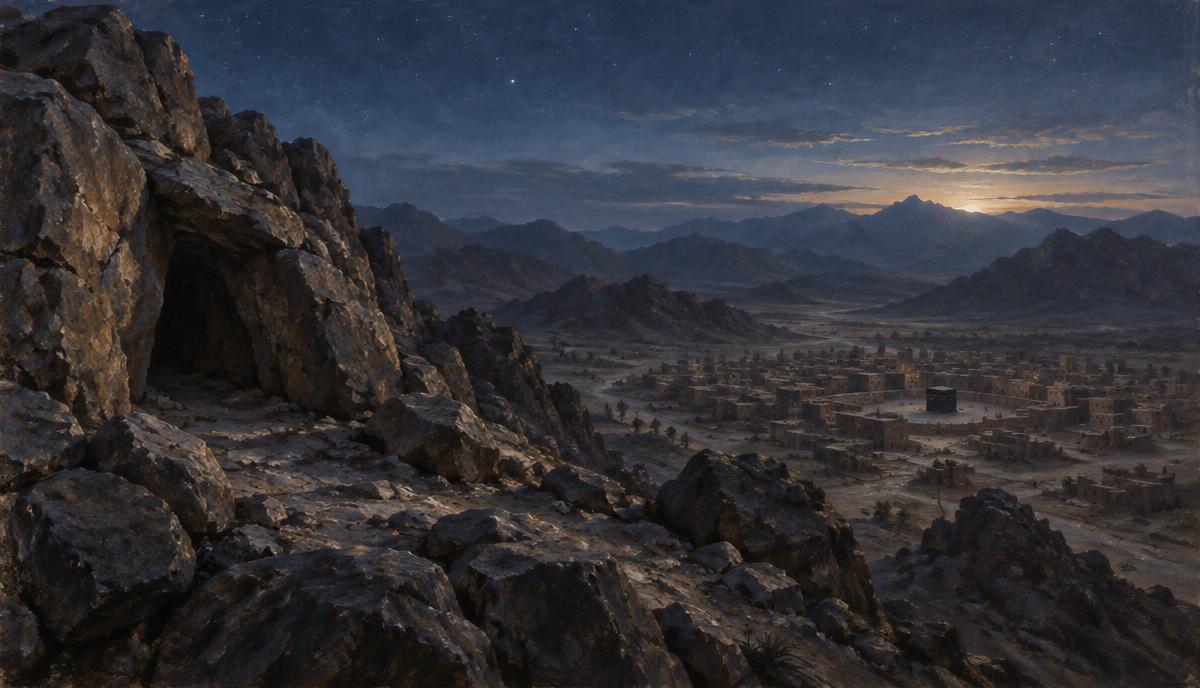
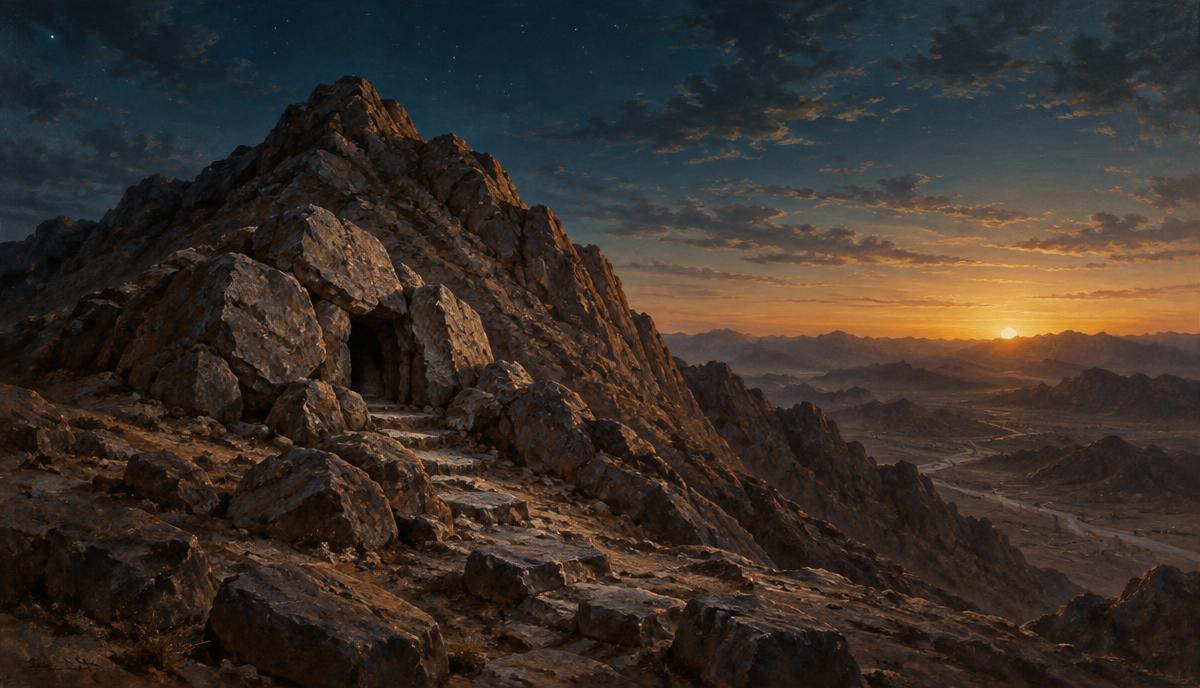
The Cave of Hira is on Jabal al-Nour, east of Makkah. It is a small opening among the mountain rocks. Its renown comes neither from its size nor from a building, but from the event Allah chose to occur there: the beginning of Quranic revelation to Muhammad, peace and blessings be upon him. The most authoritative continuous account is the report of Aishah in Sahih al-Bukhari and Sahih Muslim. It moves from true dreams to the encounter with the angel, the return to Khadijah, and the meeting with Waraqa ibn Nawfal.
A careful account separates sound evidence from details added by later storytelling. The cave’s name and the beginning of revelation there are established. An exact sitting place inside it, a particular rock, a specified meal, or an extended conversation before Gabriel arrived are not established by a sound hadith. Weight in Prophetic biography comes from the truth of each detail, not the number of decorations around it.
The Prophet did not prescribe visiting the cave as a special act of worship after his mission began. Nor is there an authentic report that he returned for blessing or taught a special prayer there. Its historical importance is immense because it witnessed the beginning of revelation, but acts of worship require evidence.
Hira is sometimes confused with the Cave of Thawr. Hira is on Jabal al-Nour and was the setting of the first revelation before the Hijrah. Thawr is on another mountain and sheltered the Prophet and Abu Bakr during the migration. They are two places, two events, and two stages of the Sirah.
This account does not invent a physical portrayal of the Prophet or Gabriel, and it does not put unreported words into their speech. Every dialogue line that follows comes from the Quran or sound hadith. Interpretation will remain visibly distinct from transmitted fact.
Lessons
- Prophetic biography is a trust, and its strength lies in sound evidence rather than imagined detail.
- Hira has established historical importance, but visiting it is not a prescribed ritual.
- Hira and Thawr are distinct caves connected to different events.
Chapter 2
True Dreams and Retreat Before Prophethood
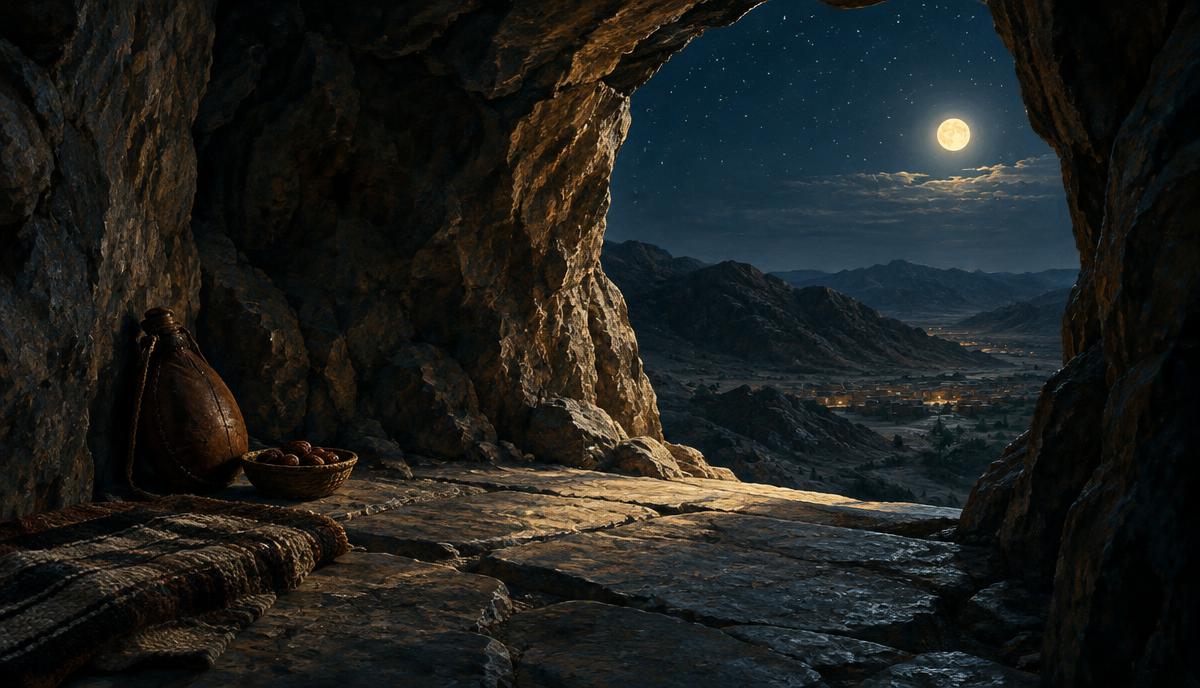
Aishah began the account before the night in the cave. She said that the first form of revelation given to the Messenger of Allah was the true dream in sleep. Every dream came with the clarity of daybreak. She did not list those dreams; she described how clearly they came true. A careful account therefore does not manufacture scenes for them.
Then solitude became beloved to him. He would spend a number of nights in the Cave of Hira in tahannuth, which the report itself explains as worship, before returning to his family. He took provisions, returned to Khadijah, and prepared again. These words matter: the hadith establishes worship and retreat, but does not prescribe a detailed form of worship or a set litany in the cave.
His retreat was not flight from responsibility or abandonment of family. He returned to Khadijah for provisions, and she participated in this preparation through support and tranquility. The report holds contemplation and worship together with return to home and fulfilment of rights.
We do not need to claim that he already knew what awaited him. The report presents the coming of truth in the cave as sudden. Yet Allah had prepared him through truthfulness, purity, distance from the idolatry of his people, true dreams, and love of solitude.
In Islam, revelation is neither a psychological impulse nor human meditation. It is communication from Allah in the manner He wills, including sending an angelic messenger:
Open surahSurah Ash-Shuraa 42:51-52
Verified recitation
۞ وَمَا كَانَ لِبَشَرٍ أَن يُكَلِّمَهُ ٱللَّهُ إِلَّا وَحْيًا أَوْ مِن وَرَآئِ حِجَابٍ أَوْ يُرْسِلَ رَسُولًۭا فَيُوحِىَ بِإِذْنِهِۦ مَا يَشَآءُ ۚ إِنَّهُۥ عَلِىٌّ حَكِيمٌۭ وَكَذَٰلِكَ أَوْحَيْنَآ إِلَيْكَ رُوحًۭا مِّنْ أَمْرِنَا ۚ مَا كُنتَ تَدْرِى مَا ٱلْكِتَٰبُ وَلَا ٱلْإِيمَٰنُ وَلَٰكِن جَعَلْنَٰهُ نُورًۭا نَّهْدِى بِهِۦ مَن نَّشَآءُ مِنْ عِبَادِنَا ۚ وَإِنَّكَ لَتَهْدِىٓ إِلَىٰ صِرَٰطٍۢ مُّسْتَقِيمٍۢ
It is not for any human being that Allah should speak to him except through revelation, from behind a veil, or by sending a messenger to reveal by His permission whatever He wills. He is Most High, All-Wise. And so We have revealed to you a spirit by Our command. You did not know what the Scripture or faith was, but We made it a light by which We guide whoever We will of Our servants. You certainly guide to a straight path.
These verses place Hira within a larger truth: Allah reveals, the Quran is spirit, light, and guidance, and the Prophet faithfully received what Allah sent.
Lessons
- True dreams and retreat prepared the way before the angel came.
- The hadith establishes tahannuth as worship without prescribing a special cave ritual.
- Revelation comes from Allah and is not a human experience produced by meditation.
Chapter 3
When Truth Came and the Angel Said: Read
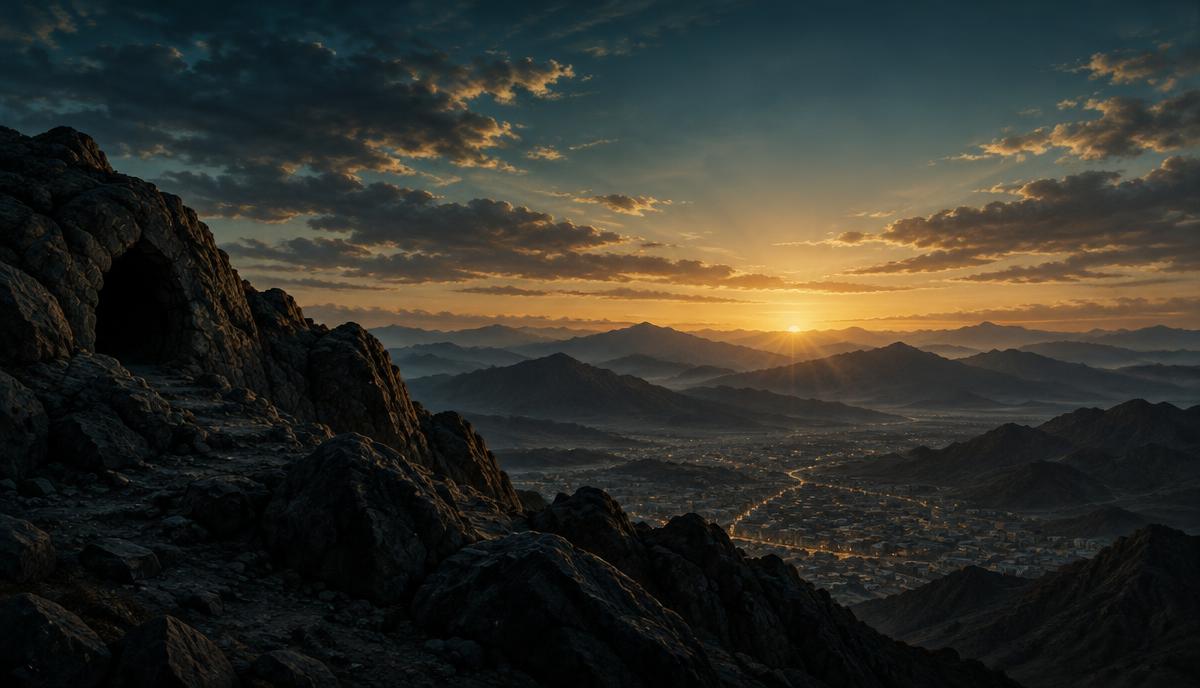
Aishah said, “Until the truth came to him while he was in the Cave of Hira.” The angel came and commanded, “Read.” The Prophet replied, “I am not a reader.” The angel pressed him until he reached the limit of his endurance, released him, and commanded him again. This happened three times.
The Arabic wording “ghattani” conveys a forceful embrace or pressing. The Prophet himself reported its effect: “until I could bear it no more.” The awe of the moment should not be minimized, but neither should details absent from the report be added. The hadith does not portray rejection of revelation. His answer described his condition: “I am not a reader.”
After the third time, the clarification came in the words of the Quran itself:
Open surahSurah Al-'Alaq 96:1-5
Verified recitation
ٱقْرَأْ بِٱسْمِ رَبِّكَ ٱلَّذِى خَلَقَ خَلَقَ ٱلْإِنسَٰنَ مِنْ عَلَقٍ ٱقْرَأْ وَرَبُّكَ ٱلْأَكْرَمُ ٱلَّذِى عَلَّمَ بِٱلْقَلَمِ عَلَّمَ ٱلْإِنسَٰنَ مَا لَمْ يَعْلَمْ
Recite in the name of your Lord who created. Created man from a clinging substance. Recite, and your Lord is the Most Generous. Who taught by the pen. Taught humanity what it knew not.
These five verses are the first Quranic passage revealed according to the majority view supported by Aishah’s explicit report. Jabir’s report about the opening of Al-Muddaththir concerns the resumption of revelation after its pause and the command to warn. The two reports do not conflict: Al-Alaq was first absolutely, while Al-Muddaththir followed the pause with the commission to rise and warn.
The message opened in the name of the creating Lord. Reading is commanded twice, alongside creation, generosity, teaching, and the pen. The human being is created from a clinging substance yet honored with knowledge taught by Allah. This places humanity between humility concerning its origin and gratitude for knowledge.
The verses cannot responsibly be reduced to a slogan about reading while detaching them from “in the name of your Lord.” Knowledge in the first revelation is tied to Allah, directed toward guidance, carried through reading and the pen, and received through the generosity of the Most Generous.
The Prophet was forty when his mission began, as Ibn Abbas reported in Sahih al-Bukhari. His age is established in an independent sound report. An exact numbered date within the month for the encounter is not fixed by an explicit sound text that ends scholarly disagreement.
Lessons
- The opening of Al-Alaq was revealed first; Al-Muddaththir came after the pause.
- The sound report establishes three pressings but does not permit an invented scene.
- The first revelation joins worship of Allah with creation, knowledge, and the pen.
Chapter 4
Ramadan and Laylat al-Qadr: What Is Established
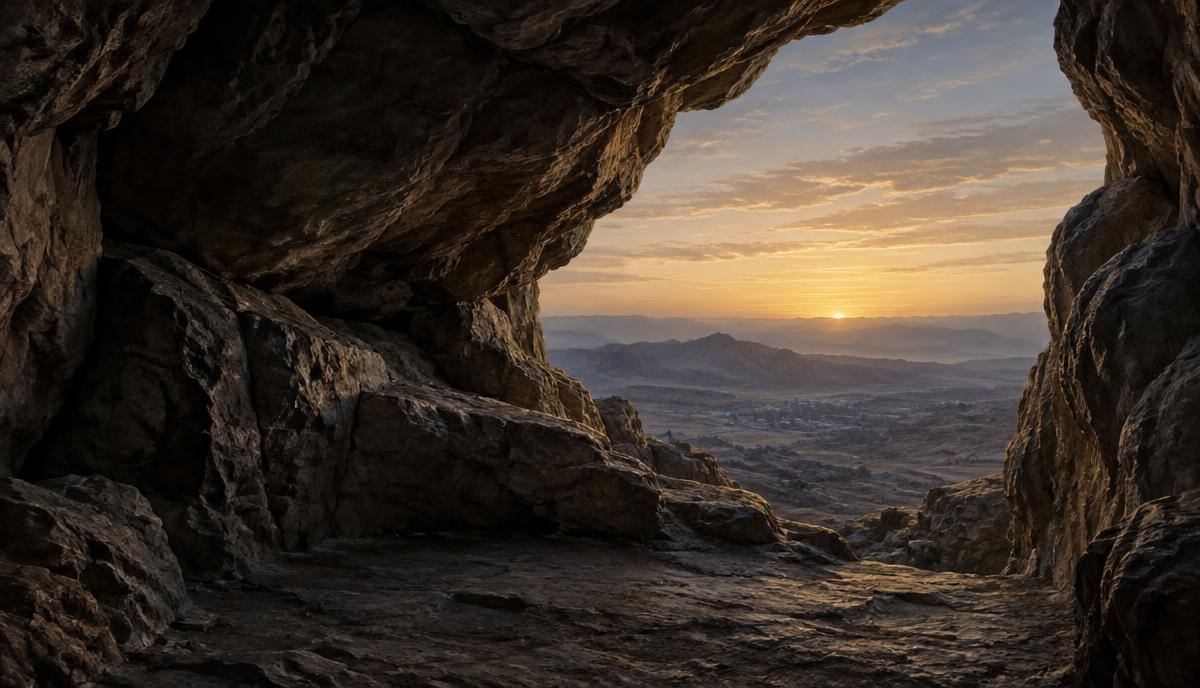
The Quran establishes that its revelation was in Ramadan:
Open surahSurah Al-Baqarah 2:185
Verified recitation
شَهْرُ رَمَضَانَ ٱلَّذِىٓ أُنزِلَ فِيهِ ٱلْقُرْءَانُ هُدًۭى لِّلنَّاسِ وَبَيِّنَٰتٍۢ مِّنَ ٱلْهُدَىٰ وَٱلْفُرْقَانِ ۚ فَمَن شَهِدَ مِنكُمُ ٱلشَّهْرَ فَلْيَصُمْهُ ۖ وَمَن كَانَ مَرِيضًا أَوْ عَلَىٰ سَفَرٍۢ فَعِدَّةٌۭ مِّنْ أَيَّامٍ أُخَرَ ۗ يُرِيدُ ٱللَّهُ بِكُمُ ٱلْيُسْرَ وَلَا يُرِيدُ بِكُمُ ٱلْعُسْرَ وَلِتُكْمِلُوا۟ ٱلْعِدَّةَ وَلِتُكَبِّرُوا۟ ٱللَّهَ عَلَىٰ مَا هَدَىٰكُمْ وَلَعَلَّكُمْ تَشْكُرُونَ
Ramadan is the month in which the Quran was revealed as guidance for humanity, with clear proofs of guidance and the standard to distinguish between right and wrong.
It also establishes that it was sent down on Laylat al-Qadr:
Open surahSurah Al-Qadr 97:1-5
Verified recitation
إِنَّآ أَنزَلْنَٰهُ فِى لَيْلَةِ ٱلْقَدْرِ وَمَآ أَدْرَىٰكَ مَا لَيْلَةُ ٱلْقَدْرِ لَيْلَةُ ٱلْقَدْرِ خَيْرٌۭ مِّنْ أَلْفِ شَهْرٍۢ تَنَزَّلُ ٱلْمَلَٰٓئِكَةُ وَٱلرُّوحُ فِيهَا بِإِذْنِ رَبِّهِم مِّن كُلِّ أَمْرٍۢ سَلَٰمٌ هِىَ حَتَّىٰ مَطْلَعِ ٱلْفَجْرِ
Indeed, We sent it down on the Night of Decree. And what will make you realize what the Night of Decree is? The Night of Decree is better than a thousand months. That night the angels and the Spirit descend, by the permission of their Lord, for every matter. It is all peace until the break of dawn.
For this reason, the majority of scholars connect the beginning of Quranic revelation with Ramadan and Laylat al-Qadr. Sahih Muslim also records, in the hadith about fasting Monday, that Monday was the day on which the Prophet was sent or revelation came to him.
Moving from these sound general proofs to one numbered night, such as the seventeenth, twenty-first, or twenty-seventh, requires a specific proof. Historians differed. We can therefore state with confidence that Quranic revelation began in Ramadan, on Laylat al-Qadr, and on a Monday. We do not claim certainty for a numbered date that lacks a decisive explicit sound report.
Surah Al-Qadr joins the greatness of the time with the greatness of what descended. The night is better than a thousand months, and the angels and the Spirit descend by their Lord’s permission. Al-Baqarah describes the Quran’s function: guidance, clear proofs, and a criterion between truth and falsehood. This is not merely the history of a cave, but the beginning of a Book that would guide.
Revelation on Laylat al-Qadr does not mean the entire Quran was recited to the Prophet in the cave. Aishah’s report establishes that the first five verses of Al-Alaq were recited there, after which the Quran came in stages according to events and divine wisdom. Commentators discuss a prior sending to the lowest heaven, but that interpretive question should not be confused with the wording of the Hira report itself.
Lessons
- The Quran establishes Ramadan and Laylat al-Qadr as the time of its revelation.
- A specific numbered night remains disputed and should not be presented as certainty.
- After the opening of Al-Alaq, the Quran was revealed to the Prophet in stages.
Chapter 5
“Cover Me, Cover Me”: The Exact Wording and Khadijah’s Response
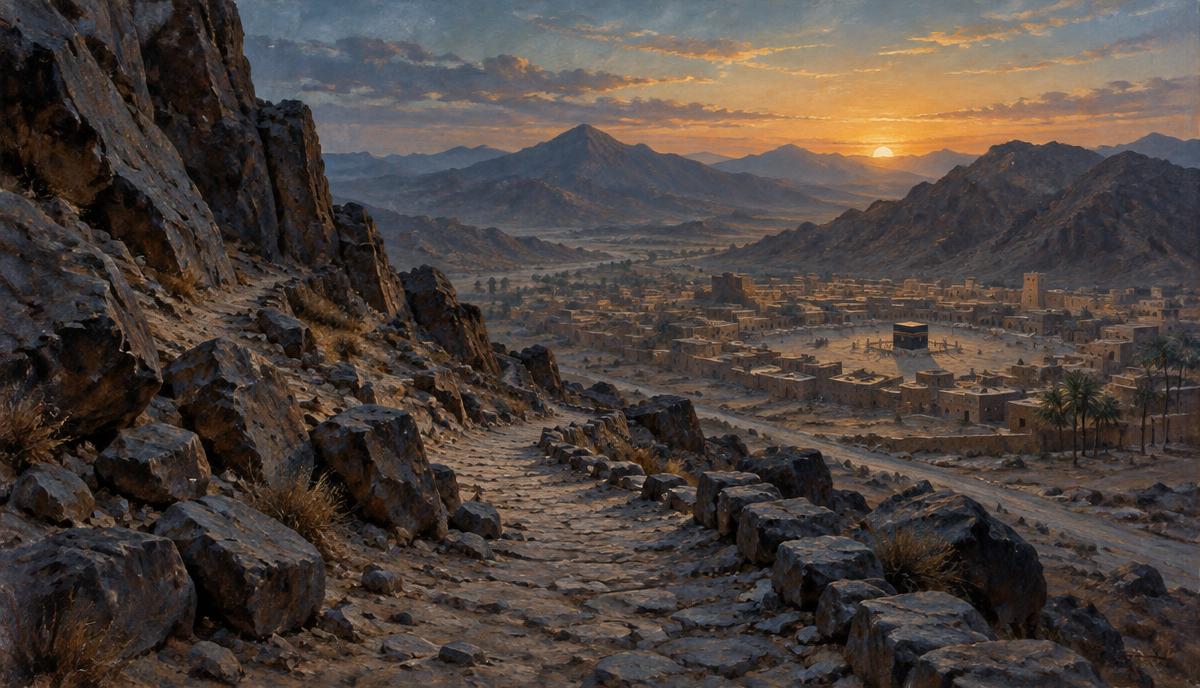
The Messenger of Allah returned from the cave with his heart trembling. He entered upon Khadijah bint Khuwaylid and said, according to both Sahih al-Bukhari and Sahih Muslim, “Zammiluni, zammiluni,” meaning, “Cover me, cover me.” They covered him until the fear left him. He then told Khadijah what had happened and said, “I feared for myself.”
The established Arabic wording is the plural imperative “zammiluni,” not the commonly repeated feminine singular “zammilini.” Although the request in context was directed within Khadijah’s home, fidelity requires preserving the transmitted wording. The root refers to wrapping a person in garments.
His trembling does not diminish Prophethood. He had encountered an immense event unlike anything before it. The report truthfully conveys its human effect, then shows Allah’s protection and the tranquility found in his home. Honoring the Prophet does not mean erasing an authentic part of his life, but understanding it in a manner free from exaggeration or disrespect.
Khadijah replied, “Never. By Allah, Allah will never disgrace you.” Her reassurance was not an unsupported claim. She grounded it in the character she had witnessed: he maintained family ties, carried the burden of the weak, helped the destitute, honored guests, and supported people through the calamities of truth.
The Arabic expressions cover family duty, support for those unable to carry their burdens, generosity toward those without means, hospitality, and assistance in rightful hardship. Khadijah’s testimony joined private character with public service.
This is among the best-attested scenes of marital loyalty in the Sirah. She listened, reassured, reasoned from his character, and then took him to a person familiar with earlier scripture. She did not claim knowledge of the unseen, dismiss his fear, or stop at emotion. She joined affection, judgment, and action.
Out of respect for the people in this scene, this account does not invent the interior of the home, Khadijah’s appearance, or extra dialogue. The sound text is more eloquent and more honorable than a manufactured scene.
Lessons
- The exact wording at the first revelation is the plural “zammiluni,” not “zammilini.”
- Truthful human emotion does not conflict with the perfection of Prophethood.
- Khadijah grounded her reassurance in the Prophet’s established noble character.
Chapter 6
Waraqa ibn Nawfal: The Bearer of Revelation Sent to Moses
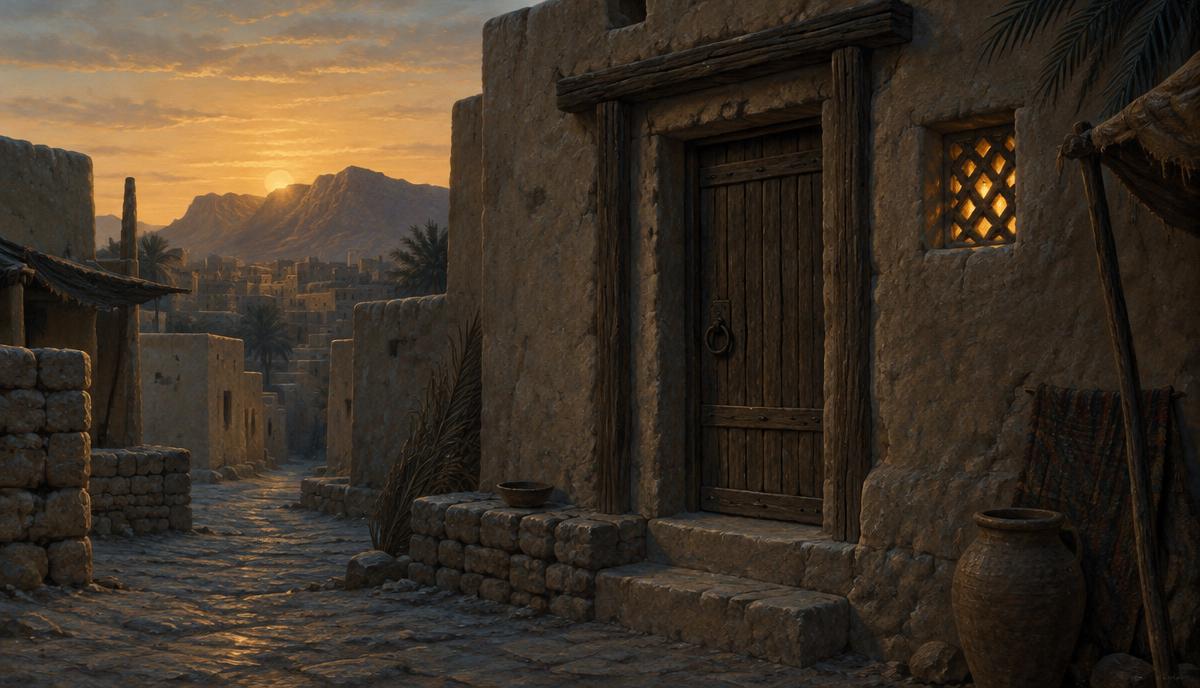
Khadijah took the Prophet to Waraqa ibn Nawfal ibn Asad ibn Abd al-Uzza, her cousin. The sound report describes him as a man who had embraced Christianity before Islam, wrote from the Gospel in Hebrew as Allah enabled him, and had become an elderly blind man.
Khadijah said, “My cousin, listen to your nephew.” Waraqa asked, “My nephew, what have you seen?” The Messenger of Allah told him what he had experienced. The hadith does not say that Waraqa saw the angel. He heard the account and recognized its signs from the knowledge he possessed.
Waraqa said, “This is the Namus whom Allah sent to Moses.” Hadith commentators explain Namus as the keeper of the divine secret, meaning Gabriel, the bearer of revelation. Moses is the prophet named in the sound narration, and the wording should not be exchanged for another name merely because a reader expects it.
Waraqa then wished that he were young and strong when the Prophet’s people would expel him. The Prophet asked in surprise, “Will they drive me out?” His people had known him as truthful and trustworthy, and he had not yet publicly called them to abandon their gods and established order.
Waraqa answered from the history of revelation: no man had brought something like this without facing hostility. This did not mean truth would fail. It meant that truth challenges interests tied to falsehood. He promised that if he lived to see that day, he would support the Prophet with firm support.
Waraqa died soon afterward and did not live through the long confrontation. A careful account does not add claims about his final days or eternal destiny beyond the evidence being cited. What the sound report establishes is that he recognized the sign of revelation, wished to give support, and foretold the coming opposition.
The meeting connects the missions of the prophets. The bearer of revelation who came to Muhammad was the one sent to Moses, and the source of revelation is one. The Quran, however, is the final message entrusted to Muhammad for delivery.
Lessons
- Waraqa recognized the sign of revelation through his knowledge of earlier scripture.
- Namus in the report refers to Gabriel, the bearer of revelation.
- Calling to truth may provoke opposition when it challenges interests and customs.
Chapter 7
The Pause in Revelation and the Call of Al-Muddaththir
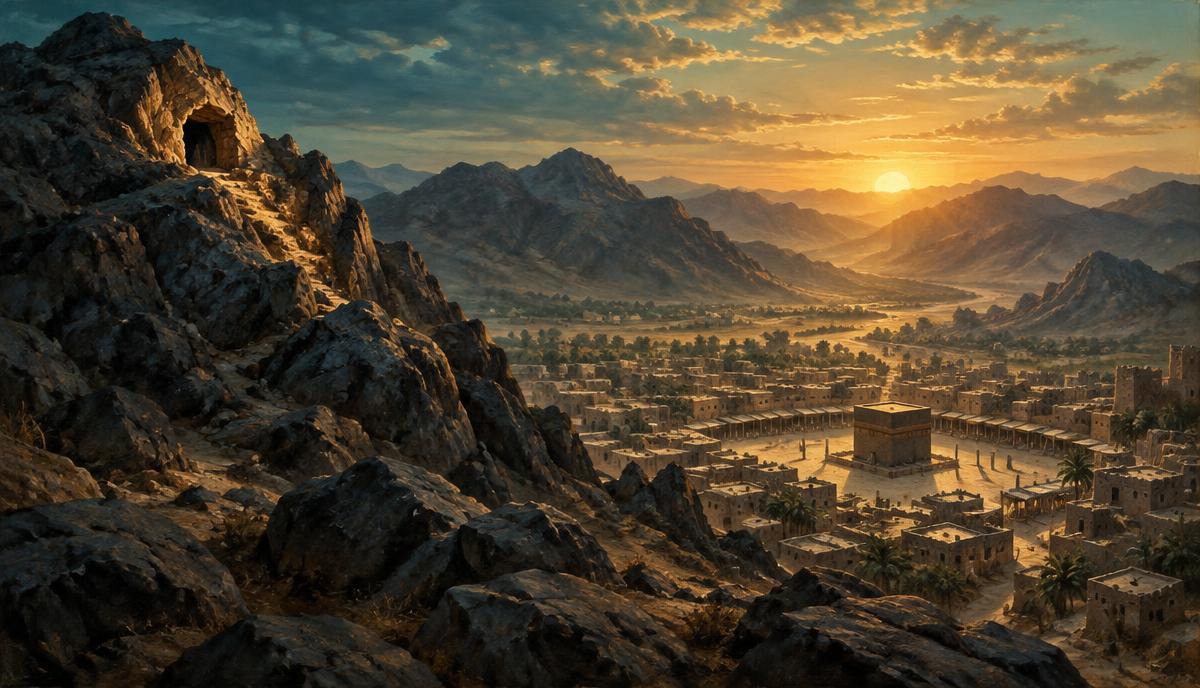
At the end of Aishah’s report, she said that Waraqa died soon afterward and revelation paused. The Arabic term fatrah means a temporary interval between revelations, not the end of the mission. No explicit sound hadith fixes one undisputed duration for this pause, so a careful account does not insist on a set number of days, months, or years.
Jabir ibn Abdullah reported that the Prophet spoke about this pause. While walking, he heard a voice from the sky and looked up. He saw the angel who had come to him at Hira, seated on a chair between heaven and earth. He was struck with fear and returned to his family.
Sound routes of this report use wording that should not be blurred together. One version in Sahih al-Bukhari says, “Cover me, cover me,” followed by their wrapping him. Another sound version says, “Wrap me and pour cold water over me.” Thus the Arabic “daththiruni” is authentically reported in the context of revelation resuming after the pause. It does not replace “zammiluni, zammiluni” in Aishah’s account of the return from the first encounter. The feminine singular “zammilini” is not the wording of the two Sahih collections.
Then Allah revealed:
Open surahSurah Al-Muddaththir 74:1-7
Verified recitation
يَٰٓأَيُّهَا ٱلْمُدَّثِّرُ قُمْ فَأَنذِرْ وَرَبَّكَ فَكَبِّرْ وَثِيَابَكَ فَطَهِّرْ وَٱلرُّجْزَ فَٱهْجُرْ وَلَا تَمْنُن تَسْتَكْثِرُ وَلِرَبِّكَ فَٱصْبِرْ
O you covered up. Arise and warn. Magnify your Lord. Purify your garments. Shun idols. Do not give, seeking greater gain. And persevere for your Lord.
Jabir said that revelation then became intense and continuous. The stage moved from preparation and receiving the first Quranic words to the commission to rise, warn, magnify the Lord, remain pure, abandon idols, and persevere for Allah. Al-Muddaththir was not the first passage absolutely according to the stronger majority position. It was the opening revealed after the pause and the beginning of the command to warn.
Revelation carried real weight. When asked how revelation came, the Prophet explained that it sometimes came like the ringing of a bell, the hardest form for him, then left him after he had retained what was said. At other times the angel appeared in the form of a man and spoke to him. Aishah said she saw revelation descend on a bitterly cold day and, when it ended, sweat was flowing from his forehead. This sound report explains the awe of the beginning without turning it into fantasy.
Verified questions about Hira and the first revelation
Which is correct in Arabic: zammilini or zammiluni?
Aishah’s report in both Sahih collections has the plural “zammiluni, zammiluni.” The wording “daththiruni” is also sound in routes of Jabir’s report about revelation resuming after the pause. The feminine singular “zammilini” is not the wording of the authentic report.
What was the first Quranic passage revealed?
The opening of Surah Al-Alaq, beginning with “Read in the name of your Lord,” was first according to Aishah’s explicit report. The opening of Al-Muddaththir came after the pause with the command to warn.
What did the Prophet do in Hira?
He practiced tahannuth, explained in the report as worship, for a number of nights. No detailed ritual form is established.
How old was the Prophet when revelation began?
He was forty, as Ibn Abbas reported in Sahih al-Bukhari.
Did revelation begin in Ramadan?
The Quran states that it was revealed in Ramadan and on Laylat al-Qadr. Sahih Muslim establishes that the commissioning or revelation occurred on a Monday. The numbered night remains disputed.
Is visiting Hira a Sunnah or special worship?
There is no sound report that the Prophet prescribed visiting the cave after his mission for worship or blessing. A historical visit should not be assigned a special religious merit without evidence.
From “Read” to “Arise and warn,” the mission’s structure becomes clear: knowledge in Allah’s name, standing for Allah, warning people, and persevering on the path. Hira remained the place that witnessed the beginning, but the light did not remain in the cave. The Messenger carried it to Makkah and then to the world.
Lessons
- The pause was temporary, and its duration should not be asserted without evidence.
- “Daththiruni” is sound in a route about revelation resuming; “zammiluni” is sound at the first return and in other routes.
- The opening of Al-Muddaththir marks the commission to rise, warn, and persevere.
- The weight of revelation is established in sound hadith and needs no fictional exaggeration.
Interactive quiz
Answer the questions below, then check your answers. No account needed.
1. Where did revelation first come to the Prophet?
2. How did the first preparation for revelation begin?
3. What was the first Quranic passage revealed?
4. What wording is established when he returned from the first encounter?
5. What followed the pause in revelation?
The illustrations are our own, free of copyright restrictions, and do not depict identified religious figures.
Related stories

Data sources
- The Quran: 2:185, 42:51-52, 74:1-7, 96:1-5, 97:1-5
- Sahih al-Bukhari 2, 3, 4, 3238, 3902, 4922, 4925, 4953, 4982
- Sahih Muslim 160a, 160b, 161
- Fath al-Bari by Ibn Hajar: Book of Revelation, commentary on hadith 3
- Tafsir Ibn Kathir: Al-Alaq, Al-Qadr and Al-Muddaththir
- Sirat Ibn Hisham: the beginning of revelation, used only for historical context after the two Sahih collections